

How Middle East Conflict Could Disrupt China’s Oil Supply and Economy


.
U.S. and Israeli military strikes on Iran have hit global energy markets, triggering disruptions in shipping and oil supply that could hit China especially hard as the world’s largest oil importer.
Over the past week, tensions around the Strait of Hormuz—a critical gateway for Middle Eastern energy exports and a major chokepoint for global shipping—have pushed oil prices higher, prompted some insurers to withdraw their war-risk coverage, and forced shipowners to reconsider whether it is safe to sail through the Persian Gulf.
Analysts told The Epoch Times that how serious the impact is depends on the duration of the conflict. If tensions ease and shipping routes stabilize, the economic effects may remain limited. But if the conflict drags on—or access to the strait remains restricted—China’s heavy reliance on oil from Persian Gulf producers adds extra pressure to the situation for the country.
The Strait of Hormuz is a thin corridor between Iran and Oman that connects the Persian Gulf to the Indian Ocean. Roughly a fifth of global oil and gas moves through it, making it one of the world’s most important energy chokepoints.
.
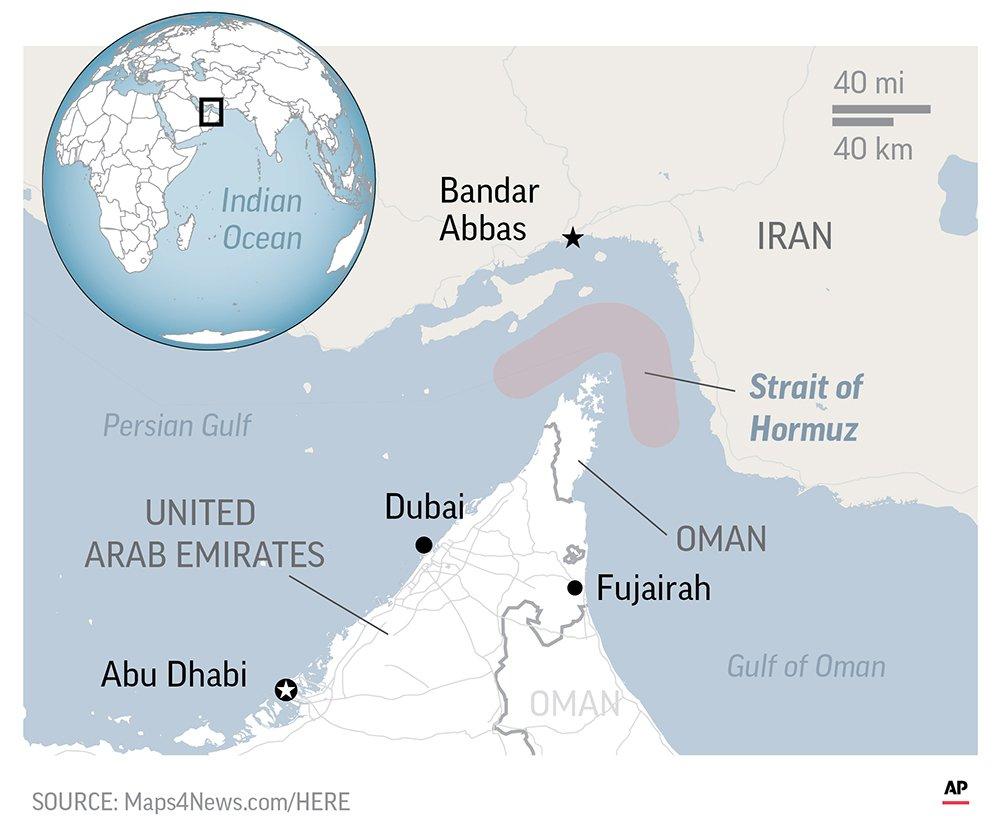
The Strait of Hormuz, though considered an international waterway, cuts through Iranian territorial waters.
.
Since the U.S.–Israel strikes, Iran’s Islamic Revolutionary Guard Corps has threatened to attack ships entering the Strait of Hormuz while broadcasting messages to maritime traffic that passage would not be tolerated.
Freight costs also jumped.
Why China Is Especially Exposed
China has spent years trying to diversify its energy supplies, but its dependence on Middle Eastern routes remains significant.Natural gas shipments face similar exposure. The same Columbia University analysis notes that about a third of China’s liquefied natural gas (LNG) imports come from Qatar and the United Arab Emirates—cargo that typically passes through the strait.
Columbia University research has previously estimated that Qatar alone supplies around 28 percent of China’s LNG imports.
Dependence on Discounted, Sanctioned Oil
The current crisis is also exposing a quieter vulnerability: China’s heavy use of discounted crude from sanctioned countries.The draw is price. U.S.-based China affairs analyst Wang He told The Epoch Times that oil from sanctioned countries often sells at deep discounts compared to global benchmarks because of the legal and logistical risks.
He said sanctions and the “shadow fleet” can push discounts even further while also driving up shipping costs—meaning buyers push harder for lower prices while middlemen charge for the risk.
That discount matters most for China’s “teapot refineries”—small, independent refiners concentrated largely in Shandong province, Wang said. These plants are major buyers of discounted crude and together account for roughly a quarter of China’s refining capacity.
“Official Chinese data shows Venezuela making up less than 1 percent of China’s oil imports, and Iran doesn’t even appear among the top 10 suppliers,” Wang said. “But Western estimates suggest Iranian crude may actually account for roughly 12 to 13 percent of China’s imports, much of it moving through smuggling networks and ‘shadow’ trade channels.”
He said that the lack of transparency itself creates policy risks for the Chinese regime.
Economy Under Pressure
Wang said higher energy prices would add strain to an economy that is already struggling to generate pricing power.China’s producer price index (PPI)—a key gauge of factory-gate prices—was still falling year over year at the start of 2026, according to China’s National Bureau of Statistics.
“If rising oil prices are transmitted into the domestic economy, they could bring imported inflation and potentially help China emerge from deflation—but it’s a double-edged sword,” Wang said.
Sun estimated that a disruption in Iran-related supply could leave China facing a short-term gap of about 1.3 million barrels per day, pushing China’s delivered oil import costs up 20 to 30 percent.
He said China could try to replace some of those barrels with more from Russia, Brazil, Iraq, and Canada, but warned those supplies would generally cost more and travel farther—shrinking China’s cushion if the crisis drags on.
Sun also said a prolonged spike in oil prices, on top of China’s property downturn and weak domestic demand, could create stagflationary conditions. “China’s CPI could rise to 0.5 to 1 percent, while GDP growth might fall below 4.5 percent under those conditions,” he said.
Qiu Wanjun, a finance professor at Northeastern University in Boston, told The Epoch Times that China has long relied on discounted oil from sanctioned countries—such as Iran, Venezuela, and Russia—to help keep its export-oriented manufacturing competitive.
He said if oil prices surge and shipping through the Strait of Hormuz remains severely constrained for an extended period, China could face heavier stagflation pressure.
Qiu described a familiar chain reaction: higher oil prices raise logistics costs, which can push up the price of delivery services, shipping, and retail goods. Higher energy costs can also make fertilizers, farm machinery, and cold-chain transport more expensive—costs that often show up later in food prices.
Meanwhile, tighter margins in manufacturing and shipping can lead to hiring freezes or layoffs, Qiu said.
Xie Tian, a professor at the Aiken School of Business at the University of South Carolina, said low-income workers, farmers, and gig workers such as food delivery riders would be among the most exposed.
Limited Room to Maneuver
Wang said Beijing has options—strategic stockpiles, administrative controls, and some flexibility to redirect imports—but there is no quick fix if the Strait of Hormuz stays highly risky for shippers.The crisis also highlights the geopolitical risks in Beijing’s Middle East strategy, Wang added.
Wang said that if the conflict drags on, Chinese projects in Iran could face suspension, damage, or total loss.
On the U.S. side, Washington has been signaling it wants to keep energy trade moving.
What's Your Reaction?
 Like
0
Like
0
 Dislike
0
Dislike
0
 Love
0
Love
0
 Funny
0
Funny
0
 Wow
0
Wow
0
 Sad
0
Sad
0
 Angry
0
Angry
0















Comments (0)