

Trump's "Economic Fury": U.S. Sanctions China's Largest Sanctioned Refinery Over Iran Oil Trade
The United States has hit one of China's biggest independent oil refineries with sweeping sanctions, accusing it of funneling billions of dollars into Iran's economy — and directly into the pockets of the Iranian military. It is the most aggressive move yet in Washington's campaign to strangle Tehran's oil revenue.

.
Washington Targets a Giant
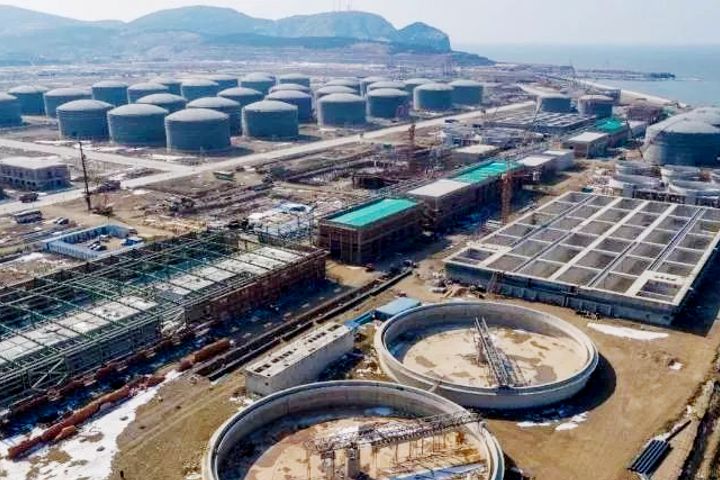
The Trump administration escalated its pressure on Iran's oil trade on April 24, 2026, when the U.S. Treasury Department's Office of Foreign Assets Control (OFAC) imposed sanctions on Hengli Petrochemical (Dalian) Refinery Co., Ltd. — China's second-largest independent "teapot" refinery and one of Iran's largest customers for crude oil and petroleum products, having purchased billions of dollars' worth of Iranian petroleum.
The refinery operates a massive complex on Changxing Island in the port city of Dalian in northeastern China. The facility processes roughly 400,000 barrels of crude oil per day, making it one of the biggest independent refineries in China. With an estimated annual revenue of around $35 billion, Hengli is no backroom operation — it is a Fortune Global 500 company.
The action also went beyond a single firm. OFAC simultaneously targeted approximately 40 shipping firms and vessels that operate as part of Iran's shadow fleet, whose transportation of petroleum and petrochemicals provides a financial lifeline to Iran's unstable regime.
Funding Iran's Military — Not Just Its Economy
U.S. officials made clear this is not merely a commercial dispute. Since at least 2023, Hengli has received Iranian crude oil shipments overseen by the oil sales arm of Iran's Armed Forces General Staff, Sepehr Energy Jahan Nama Pars Company, generating hundreds of millions of dollars in revenue for the Iranian military.
In plain terms: every tanker of Iranian crude that arrived at Dalian helped pay for Iran's weapons programs and the proxy militias it supports across the Middle East. The company operates on behalf of Iran's Armed Forces General Staff, using a network of intermediaries and vessels to move sanctioned crude, with proceeds helping fund the country's military programs and regional proxy groups.
Treasury Secretary Scott Bessent put it bluntly: "Economic Fury is imposing a financial stranglehold on the Iranian regime, hampering its aggression in the Middle East and helping to curtail its nuclear ambitions."
What Is a "Teapot" Refinery?
The term "teapot" refers to smaller, privately owned, independent Chinese refineries — as opposed to the giant state-run companies like Sinopec or PetroChina. These independent operators are the backbone of Iran's oil sales to China, because they are willing to take risks that state firms avoid.
China's giant state refiners have avoided buying Iranian crude since the U.S. reimposed sanctions in 2019, with independent teapots becoming the main buyers of discounted Iranian barrels that are shunned elsewhere. Iranian oil sold to China is frequently relabeled — disguised as crude from Malaysia or Indonesia — to obscure its true origin.
China purchased more than 80 percent of Iran's shipped oil last year, according to analytics firm Kpler. The scale of this trade is enormous: China, the world's biggest oil importer, brought in a record 1.8 million barrels per day of Iranian crude in March 2026, according to Vortexa Analytics.
Why This Escalation Matters
Previous U.S. sanctions on China-related entities in Iran's oil trade had focused on smaller, more peripheral players. Hengli is a different category entirely.
Since February 2025, OFAC has sanctioned over 1,000 Iran-related persons, vessels, and aircraft as part of this campaign. But Hengli's size makes this designation a significant step up. It is the largest Chinese refiner to be directly targeted in Washington's renewed crackdown, and it signals that the Trump administration is willing to take on major industrial players — not just shell companies and obscure middlemen.
The timing is also notable. The sanctions were announced shortly after a 30-day waiver allowing already-loaded Iranian oil tankers to complete their deliveries had expired, and in the same week that Treasury Secretary Bessent warned Chinese banks they could face penalties if Iranian funds were found flowing through their accounts.
The Shadow Fleet: How Iran Moves Its Oil
Central to the entire operation is what authorities call the "shadow fleet" — a network of aging tankers that transport sanctioned oil while concealing its origin through ship-to-ship transfers, flag changes, and fraudulent cargo documentation.
Since at least 2023, Hengli received Iranian crude cargoes from several sanctioned shadow-fleet vessels, including the BIG MAG, the GALE, and the ARES — three vessels alone that delivered more than five million barrels of Iranian crude oil to the facility.
Friday's action targeted 19 such vessels along with dozens of affiliated shipping firms operating across Hong Kong, the UAE, Panama, and beyond. U.S. officials warned that further designations are coming.
Hengli's Response: Denial and Damage Control
Hengli's Shanghai-listed parent company denied all allegations, stating that the sanctions have no factual or legal basis and that it will work to have them lifted. The company also said it holds sufficient crude inventories to meet its processing needs for more than three months, and that it will continue settling oil purchases in Chinese yuan — bypassing the U.S. dollar.
In a move that raised eyebrows among trading experts, Hengli also rapidly restructured its Singapore-based trading arm, Hengli Petrochemical International, reducing the sanctioned refinery's ownership stake from 100% to just 5%. Several trading executives expressed skepticism that this maneuver would be enough to reassure international business partners.
The financial markets reacted quickly. Shares of Hengli Petrochemical fell nearly 10% following the announcement.
Beijing Pushes Back
China's government rejected the sanctions in categorical terms. The Chinese embassy in Washington called on the U.S. to stop politicizing trade and using sanctions as a weapon against Chinese companies. Beijing has consistently described U.S. unilateral sanctions as illegal under international law and has refused to recognize their authority over Chinese firms.
But Washington appears undeterred. The Hengli case comes just weeks before President Trump's planned visit to Beijing in May — suggesting the administration may be using sanctions as leverage heading into high-stakes diplomatic talks.
What Comes Next?
Analysts point out that sanctioning refineries alone may not be enough. As long as Chinese banks remain free to process payments for Iranian oil, the trade can continue — just with more friction and at higher cost. The real game-changer would be secondary sanctions on Chinese financial institutions, a step Bessent has already publicly threatened.
A wind-down window under General License V runs through May 14, 2026, before the full force of the prohibitions takes effect. After that date, any entity that continues doing business with the sanctioned Dalian refinery risks exposure to U.S. secondary sanctions itself.
For Iran, losing Hengli as a reliable buyer — even partially — would be a serious blow. For Beijing, the message from Washington is becoming increasingly hard to ignore: the era of consequence-free Iranian oil trading may be drawing to a close.
.
Sources:
- U.S. Department of the Treasury – OFAC Press Release, April 24, 2026: https://home.treasury.gov/news/press-releases/sb0472
- CNBC – "U.S. imposes sanctions on Chinese 'teapot' refinery for buying Iranian oil": https://www.cnbc.com/2026/04/25/us-china-sanctions-iran-oil.html
- Al Jazeera – "US sanctions China's 'teapot' refinery for buying Iranian oil": https://www.aljazeera.com/news/2026/4/25/us-sanctions-chinas-teapot-refinery-for-buying-iranian-oil
- South China Morning Post – "US sanctions China-based oil refinery and 40 shippers over Iran oil": https://www.scmp.com/news/world/united-states-canada/article/3351389/us-sanctions-china-based-oil-refinery-and-40-shippers-over-iran-oil
- Bloomberg – "US Targets Iran Oil Exports With Sanctions on Chinese Refinery, Shadow Fleet": https://www.bloomberg.com/news/articles/2026-04-24/us-sanctions-china-refinery-iran-shadow-fleet-ahead-of-talks
.
What's Your Reaction?
 Like
0
Like
0
 Dislike
0
Dislike
0
 Love
0
Love
0
 Funny
0
Funny
0
 Wow
0
Wow
0
 Sad
0
Sad
0
 Angry
0
Angry
0













Comments (0)