

Behind the Handshake: Beijing Quietly Builds an Economic Arsenal Against Washington
While publicly signaling goodwill toward a new U.S.-China summit, Beijing has been methodically expanding its economic pressure tools against Washington — from rare earth controls to sweeping new laws that allow asset seizures of foreign companies. Analysts warn this is not just tit-for-tat retaliation, but a long-term strategic buildup.

Rare Earth Minerals
.
A Smile in Public, a Fist Behind the Back
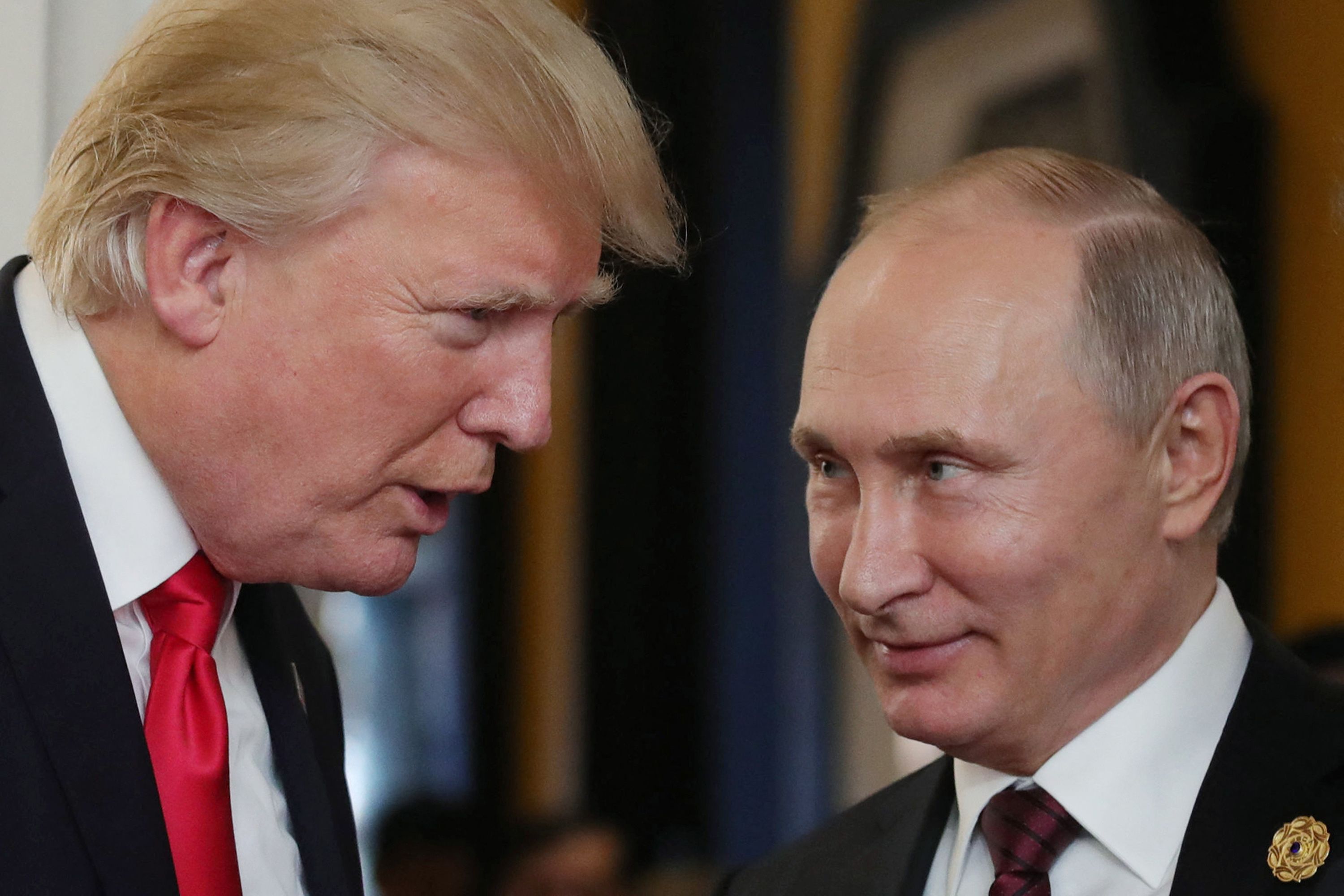
When President Donald Trump met Chinese leader Xi Jinping in South Korea last October, he called the summit a resounding success. The White House announced that Beijing would ease rare earth export controls and stop targeting American businesses. Diplomats on both sides spoke of a new chapter.
What followed told a different story.
Behind the scenes of carefully managed diplomatic optics, China's government has been quietly assembling a much broader toolkit of economic pressure mechanisms — one designed not merely to respond to U.S. actions, but to give Beijing unprecedented leverage over Washington in any future standoff.
New Laws, New Powers — and No Warning
In April 2026, Chinese Premier Li Qiang signed two sweeping new regulations — the first of their kind in the People's Republic. The rules grant Chinese authorities the power to investigate foreign companies, governments, and individuals accused of discriminating against Chinese supply chains or of applying what Beijing calls "unjustified extraterritorial jurisdiction" against Chinese entities.
The penalties are serious: denial of entry into China, expulsion, and outright seizure of assets. The rules took effect immediately, without any public consultation period or opportunity for affected businesses to respond.
Michael Hart, president of the American Chamber of Commerce in China, put the implications bluntly: foreign companies that reduce their dependence on Chinese suppliers now risk being investigated and punished — while China faces no comparable consequence for reducing purchases from American firms.
The Rare Earth Card — Still on the Table
China's growing leverage rests heavily on its dominance over critical minerals. According to the International Energy Agency, China accounts for approximately 91% of global rare earth refining — and a staggering 94% of global production of the powerful permanent magnets used in electric vehicles, wind turbines, defense systems, and AI data centers.
When Beijing imposed export controls on seven heavy rare earth elements in April 2025, the effects were felt almost immediately: carmakers across the United States and Europe scrambled to secure supplies, and rare earth prices in importing countries surged — in some European markets reaching up to six times their Chinese equivalent, according to IEA data.
A subsequent second wave of controls was temporarily suspended until November 2026 following the Trump-Xi meeting in Busan. But analysts caution this pause is strategic breathing room, not a genuine retreat. As TD Economics noted, China accounts for nearly all global rare earth refining, making a rapid replacement of Chinese supplies "nearly impossible" before the current truce expires.
A Broader Arsenal Taking Shape
Rare earths are just one element of a rapidly expanding Chinese economic toolkit. Since late 2025, Beijing has also:
- Required semiconductor manufacturers operating in China to use at least 50% domestically produced equipment when expanding capacity
- Banned certain U.S. and Israeli cybersecurity software from Chinese companies
- Ordered state-funded data centers to phase out foreign AI chips — effectively forcing domestic substitution while squeezing U.S. tech suppliers out of the market
- Begun internal discussions on limiting exports of advanced solar manufacturing equipment to the United States
- Restricted exports of silver, tungsten, and antimony — materials critical to defense technology and advanced manufacturing
The conflict surrounding Iran sharpened Beijing's focus further. When U.S. Treasury Secretary Scott Bessent threatened in mid-April to sanction buyers of Iranian oil — of which China purchases around 80% — a Chinese state media account affiliated with CCTV responded by framing the new regulations as deliberate legal countermeasures, signaling that Beijing intends these tools to reach far beyond traditional trade disputes.
Washington Pushes Back — but Faces Structural Disadvantages
The United States has not been passive. Washington has launched trade probes into Chinese industrial overcapacity and forced labor practices, while tightening export restrictions on advanced semiconductors and chipmaking equipment — moves that have measurably slowed China's access to cutting-edge chip manufacturing technology.
But the structural imbalance in critical minerals remains a serious vulnerability. A multi-institutional analysis drawing on data from more than 50 organizations — including the European Parliament Research Service, the OECD, and the Center for Strategic and International Studies (CSIS) — concluded that rebuilding independent supply chains outside China could take 20 to 30 years. The window for decisive action, the report warned, may be as short as 12 to 18 months.
A concrete example of this leverage: negotiations over a potential multibillion-dollar Chinese purchase of Boeing aircraft have reportedly stalled in part because Washington is insisting on guaranteed shipments of yttrium — a rare earth element essential for jet engine production — as a precondition.
"If You Want Peace, Prepare for War"
Analysts who follow Beijing's strategy say the pattern is deliberate. China is using the relative calm of the current trade truce to construct a menu of economic coercive instruments that, until recently, was almost exclusively wielded by Washington.
Joe Mazur, geopolitics analyst at Beijing-based consultancy Trivium China, described it as classic deterrence logic: "If you want peace, prepare for war." Beijing hopes for a durable and broadly rooted truce with the United States — but it is simultaneously ensuring that any future confrontation finds it far better armed than before.
The European Chamber of Commerce in China, in an April 2026 report on Beijing's export controls, warned that China's new extraterritorial reach could disrupt global supply chains on an unprecedented scale, creating economic damage that extends well beyond the bilateral U.S.-China relationship.
What Comes Next
With the trade truce set to expire in November 2026, both sides are racing against the clock — the U.S. to build alternative supply chains, China to identify and consolidate new pressure points.
Trivium's Mazur captured the dynamic succinctly: Beijing will keep testing which economic levers cause the most pain in Washington. "They're going to keep throwing things at the wall to see what sticks."
For American businesses and policymakers, the message is increasingly clear: the smiling diplomacy at the summit table and the regulatory offensive running quietly beneath it are two sides of the same Chinese strategy.
.
Sources:
- Reuters – "Under cover of trade truce with Trump, China expands economic pressure toolkit" (April 26, 2026): https://www.reuters.com/world/china/under-cover-trade-truce-with-trump-china-expands-economic-pressure-toolkit-2026-04-26/
- International Energy Agency (IEA) – "With new export controls on critical minerals, supply concentration risks become reality": https://www.iea.org/commentaries/with-new-export-controls-on-critical-minerals-supply-concentration-risks-become-reality
- European Parliament Think Tank – "China's rare-earth export restrictions" (November 2025): https://www.europarl.europa.eu/thinktank/en/document/EPRS_ATA(2025)779220
- TD Economics – "Fractured Supply Chains & U.S. Contingency Planning: Rare Earth Minerals": https://economics.td.com/us-rare-earth-minerals-fractured-supply-chains
- Clark Hill PLC – "China Hits 'Pause' on Rare-Earth Export Controls and What it Means for Supply Chains": https://www.clarkhill.com/news-events/news/china-hits-pause-on-rare-earth-export-controls-and-what-it-means-for-supply-chains/
.
What's Your Reaction?
 Like
0
Like
0
 Dislike
0
Dislike
0
 Love
0
Love
0
 Funny
0
Funny
0
 Wow
0
Wow
0
 Sad
0
Sad
0
 Angry
0
Angry
0















Comments (0)