

US Blocks Chip Equipment Shipments to China's Second-Largest Chipmaker
Washington has ordered major American semiconductor equipment companies to stop delivering certain tools to Hua Hong, China's second-largest chipmaker. The move is part of a broader strategy to prevent Beijing from closing the gap in advanced AI chip manufacturing — but it comes at a potential cost of billions in lost sales for U.S. industry.


.
Washington Tightens the Screws on Chinese Chip Ambitions
The U.S. Department of Commerce sent formal letters to multiple American chip equipment manufacturers last week, instructing them to halt specific shipments to facilities operated by Hua Hong Group and its contract manufacturing arm, Huali Microelectronics. The letters, confirmed by two sources familiar with the matter, target plants that U.S. officials believe are being prepared to produce China's most advanced semiconductors to date.
Among the companies believed to have received these directives are three of the biggest names in the global chip equipment industry: Lam Research, Applied Materials, and KLA — all of which count China among their most significant markets.
Why Hua Hong Is in the Crosshairs
The action follows a Reuters exclusive report from March 2026, which revealed that Hua Hong had made significant progress in developing a 7-nanometer (7-nm) chipmaking process — a technology critical for manufacturing high-performance artificial intelligence chips. Until now, China's SMIC (Semiconductor Manufacturing International Corporation) was the only domestic company known to have reached that level.
A nanometer, in this context, refers to the size of transistors on a chip — the smaller the transistor, the more powerful and efficient the chip. Reaching 7-nm production would mark a major step forward for China's semiconductor self-sufficiency, a core goal of Beijing's industrial policy under the "Made in China 2025" and related programs.
The U.S. restrictions specifically target two Hua Hong facilities believed to be either under construction or in the process of being upgraded to produce these more advanced chips.
Billions at Stake for U.S. Industry
The restrictions could carry a steep price tag for American companies. One source told Reuters that U.S. chip equipment suppliers stand to lose billions of dollars in sales — particularly painful when deliveries are already in progress for facilities mid-construction or mid-upgrade.
Washington does not deny the economic cost. The Commerce Department, however, declined to comment on the specifics of the letters. Lam Research, Applied Materials, and KLA also did not respond to requests for comment before publication.
China may attempt to find alternative suppliers — including European, Japanese, or increasingly capable domestic Chinese equipment makers — though analysts note that fully replacing leading U.S. technology in this sector remains a significant challenge in the near term.
Geopolitical Timing: A Tense Backdrop
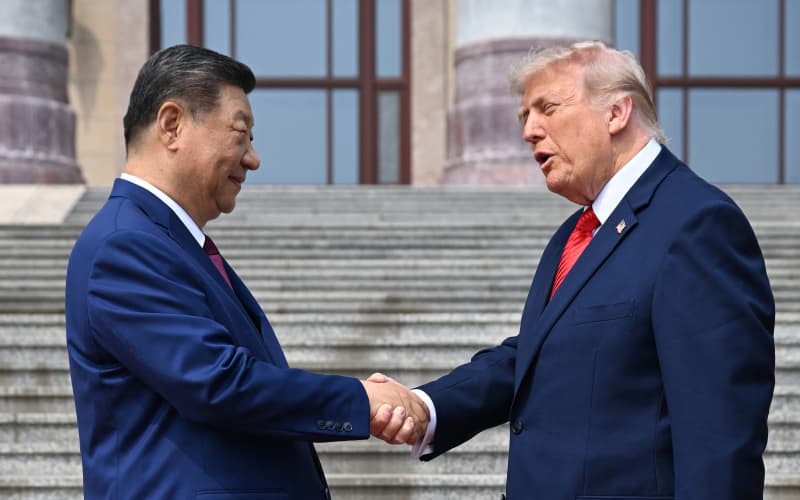
The timing adds another layer of complexity. The restrictions come just weeks before a scheduled face-to-face meeting between President Donald Trump and Chinese President Xi Jinping in Beijing, set for mid-May 2026. While the Trump administration has pursued a policy of firm technological competition with China, direct diplomatic engagement has continued in parallel.
Analysts see the move as consistent with a long-running U.S. policy of using export controls to protect its technological edge in AI and advanced computing — areas increasingly viewed as critical to national security and economic dominance.
A Broader Pattern of Tech Containment
Since 2022, the Commerce Department has progressively tightened restrictions on exports of advanced chip-related technology to China. These measures have targeted not only finished chips but also the equipment used to manufacture them — the so-called "chokepoints" in the semiconductor supply chain where American companies still hold dominant positions.
The latest action signals that the Biden-era export control framework is not just being maintained under the Trump administration — it is actively being expanded. Whether Beijing will respond with retaliatory measures, and how that might affect the May summit, remains an open question.
.
Sources
- Reuters – "Exclusive: US orders chip equipment companies to halt some shipments to Hua Hong, China's second-largest chipmaker" (April 28, 2026): https://www.reuters.com/world/china/us-orders-chip-equipment-companies-halt-some-shipments-hua-hong-chinas-second-2026-04-28/
- Reuters – "China's No. 2 chipmaker readies 7-nm production as Beijing ramps up self-sufficiency" (March 2026): https://www.reuters.com/world/asia-pacific/chinas-no-2-chipmaker-readies-7-nm-production-beijing-ramps-up-self-suffiency-2026-03-16/
- Reuters – "Trump to visit China May 14-15, White House says" (March 2026): https://www.reuters.com/world/china/trump-visit-china-may-14-15-white-house-says-2026-03-25/
.
What's Your Reaction?
 Like
0
Like
0
 Dislike
0
Dislike
0
 Love
0
Love
0
 Funny
0
Funny
0
 Wow
0
Wow
0
 Sad
0
Sad
0
 Angry
0
Angry
0











Comments (0)