

China's Double Game: How Beijing Plays Both Sides in the Iran War
Since U.S. and Israeli forces launched airstrikes on Iran on February 28, 2026, China has walked a carefully constructed tightrope — publicly calling for peace while quietly providing Tehran with diplomatic cover, dual-use technology, and economic lifelines. As a high-stakes Xi-Trump summit approaches, Beijing's strategy reveals a great power playing for long-term advantage, not short-term principle.

.
A recent analysis of the situation at Udumbara.net
.
A War China Did Not Want — But Won't Ignore
When U.S. and Israeli forces struck Iran on February 28, 2026, triggering the most significant Middle East conflict in decades, Beijing found itself in an uncomfortable position. China had no desire for a regional war — but it had even less desire to stay completely out of it.
For over seven weeks, President Xi Jinping said virtually nothing publicly about the conflict. Then, on April 15, he broke his silence. Speaking with Abu Dhabi's Crown Prince, Xi warned that the global world order is "crumbling into disarray" and pledged that China would play a "constructive role" in the Middle East. The measured words carried a clear message: Beijing is still watching, and Beijing still matters.
.
Public Neutrality, Private Influence
On paper, China calls itself neutral. In practice, the picture is considerably more complex.
Chinese Foreign Minister Wang Yi made 26 phone calls to counterparts across the region — including Iran, Israel, Russia, and the Gulf states — since the conflict began. On March 31, China and Pakistan jointly announced a five-point peace proposal calling for a ceasefire and the resumption of normal shipping through the Strait of Hormuz. The African Union publicly welcomed the initiative. The Trump administration, however, expressed little enthusiasm.
U.S. officials have nonetheless acknowledged Beijing's role in encouraging Iran to participate in peace talks held in Pakistan. That acknowledgment speaks volumes: China, without formally being at the negotiating table, managed to position itself as a relevant back-channel broker.
.
The Hormuz Factor: Energy as a Weapon
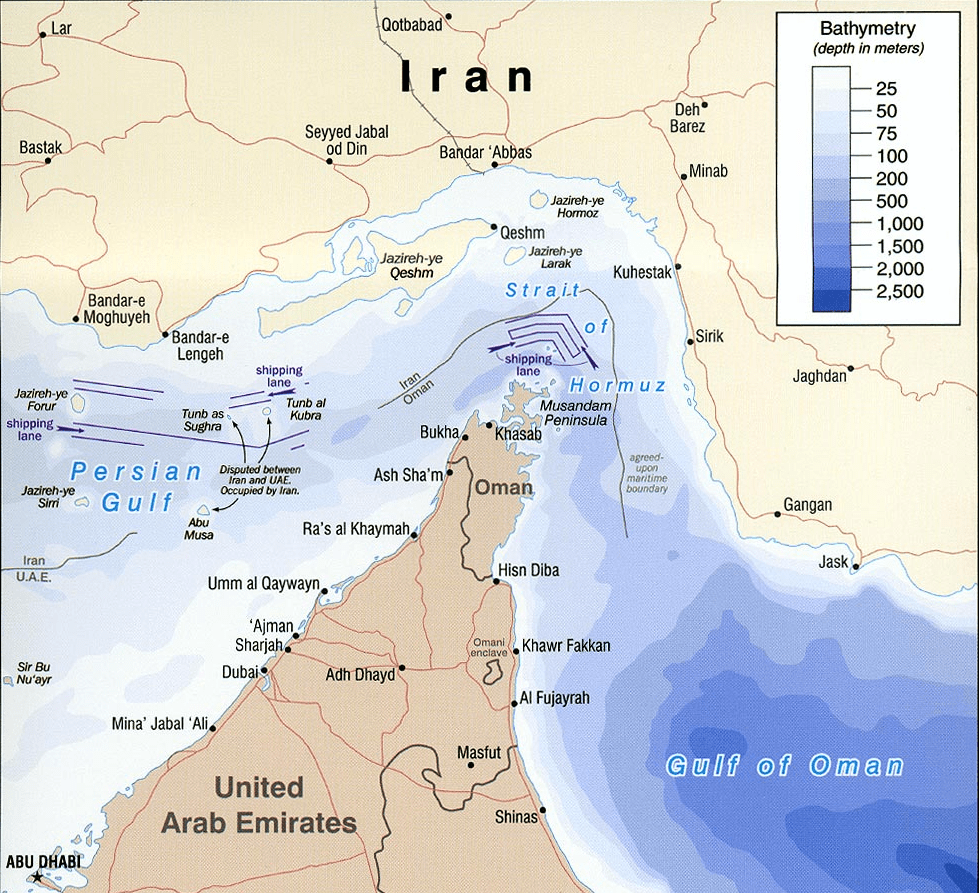
The Strait of Hormuz is the reason China cannot afford to be a passive spectator. Around a quarter of all global seaborne oil exports pass through this narrow chokepoint between Iran and the Arabian Peninsula. China imports approximately 1.4 million barrels of Iranian crude oil per day — representing more than 80 percent of Tehran's total oil exports.
When the Trump administration imposed a naval blockade targeting Iranian ports in mid-April, the consequences for China were immediate. Ship-tracking data compiled by Bloomberg show that commercial transits through Hormuz plummeted from an average of 135 vessels per day before the war to just 11 on a single day in mid-April. Beijing's Foreign Ministry wasted no time labeling the blockade "dangerous and irresponsible."
Trump, for his part, made his expectations clear. Before traveling to Beijing for a planned summit with Xi, he publicly stated that he expected China to help reopen the strait — and suggested he would be receiving a "big, fat hug" from Xi once the visit happened. Treasury Secretary Scott Bessent later indicated that any delay to the summit would be logistical, not political.
.
A Summit That Changes the Calculus
The planned Xi-Trump summit in Beijing — originally scheduled for late March, then delayed by the war — looms over every Chinese foreign policy calculation. It would mark the first visit by a sitting U.S. president to China since Trump's first term in 2017.
Both sides have political incentives to keep the relationship from breaking down further. The two leaders already met in Busan, South Korea, in October 2025, where they agreed to a one-year truce in their trade war. With that truce still fragile and tariffs capable of surging back to triple digits, neither Washington nor Beijing wants the Iran conflict to derail what could be a defining moment in bilateral relations.
Trump signaled his own strategic reading of Xi in an unusual way: after reports emerged that China had allegedly supplied Iran with a spy satellite and was planning to send anti-missile systems, Trump said he had exchanged personal letters with Xi. According to Trump, Xi assured him directly that China was "not doing that." Beijing called the weapons allegations a "smear campaign."
.
The Shadow Game: Dual-Use Technology and Strategic Ambiguity
Behind the diplomatic pleasantries, intelligence agencies and analysts point to a murkier picture. The U.S. accused Chinese state-owned chipmaker SMIC of supplying chipmaking tools to Iran's military. The United States-China Economic and Security Review Commission stated that China's BeiDou satellite navigation system had been used by Iran to direct attacks across the region. Several sanctioned Iranian vessels carrying rocket propellant components were tracked making voyages from China to Iran since the war began.
Analysts from Modern Diplomacy describe the broader strategy bluntly: China and Russia are providing Iran with an international safety net — logistical, intelligence, and technological support — without engaging in direct combat. The goal, they argue, is to bleed American resources and military attention away from the Pacific, buying Beijing time to consolidate its position around Taiwan without major international scrutiny.
Former Chinese diplomat Wang Yiwei, now director of Renmin University's Institute of International Affairs, put it more diplomatically: "The U.S. is passing the bucks onto China as it is incapable of reopening the Strait of Hormuz. When Washington can't win the war with Iran, it blames Beijing."
.
A New Phase in Chinese Diplomacy?
What we are witnessing may represent a genuine evolution in how Beijing projects power globally. China has historically prided itself on strict non-interference in other nations' conflicts. The Iran crisis has forced a deviation from that script — not through military deployment, but through the kind of quiet, calibrated influence that Beijing is refining into an art form.
The CCP's leadership understands that the post-Cold War world order is being rewritten in real time. In that rewriting, China wants a prominent authorial role — but without putting its signature on the messy parts. It mediates without committing. It profits without fighting. It criticizes American unilateralism while benefiting from the instability that unilateralism creates.
.
What It Means for the World
The Iran conflict has exposed both the limits and the latent power of Chinese diplomacy. Beijing cannot compel Tehran to agree to a peace deal it doesn't want. It cannot force open the Strait of Hormuz. And it cannot fully shield itself from the economic fallout of a prolonged energy crisis in Asia.
But China has demonstrated something arguably more valuable for its long-term ambitions: it can present itself to the Global South as an alternative to American power — a nation that calls for restraint, promotes multilateral solutions, and refuses to be drawn into military adventures. Whether that image reflects reality is, increasingly, beside the point.
With a Xi-Trump summit still on the horizon and the Strait of Hormuz still only partially open, the world is watching whether China's balancing act holds — or breaks under pressure.
.
Sources:
- Bloomberg – "US Blockade Fans China Tensions as Further Iran War Diplomacy Pledged" (April 15, 2026): https://www.bloomberg.com/news/newsletters/2026-04-15/us-blockade-fans-china-tensions-as-further-iran-war-diplomacy-pledged
- Bloomberg / The Spokesman-Review – "Trump Risks Showdown With Xi Before Summit Over Hormuz Blockade" (April 15, 2026): https://www.spokesman.com/stories/2026/apr/15/trump-risks-showdown-with-xi-before-summit-over-ho/
- South China Morning Post – "Could Trump's Hormuz Blockade Derail China Summit With Xi Jinping?" (April 13, 2026): https://www.scmp.com/news/china/diplomacy/article/3349942/could-trumps-hormuz-blockade-derail-china-summit-xi-jinping
- CNBC – "Trump Signals Possible Delay to Beijing Summit" (March 16, 2026): https://www.cnbc.com/2026/03/16/trump-possible-delay-beijing-summit-china-iran-strait-of-hormuz-.html
- Chinese Ministry of Foreign Affairs – Official Press Conference Transcripts, April 7 & 8, 2026: https://www.fmprc.gov.cn/eng/xw/fyrbt/202604/t20260407_11887704.html | https://www.fmprc.gov.cn/eng/xw/fyrbt/202604/t20260408_11888565.html
- Modern Diplomacy – "China's Position After the Failure of the US-Iran Negotiations" (April 13, 2026): https://moderndiplomacy.eu/2026/04/13/chinas-position-after-the-failure-of-the-us-iran-negotiations/
- Wikipedia – "China in the 2026 Iran War": https://en.wikipedia.org/wiki/China_in_the_2026_Iran_war
.
What's Your Reaction?
 Like
0
Like
0
 Dislike
0
Dislike
0
 Love
0
Love
0
 Funny
0
Funny
0
 Wow
0
Wow
0
 Sad
0
Sad
0
 Angry
0
Angry
0












Comments (0)