

Balikatan 2026: The West's Largest Show of Force in Asia Begins – With Japan Fighting Alongside for the First Time
The biggest edition yet of the annual U.S.-Philippine military exercises has launched today, April 20, bringing together over 17,000 troops from seven nations. For the first time in history, Japan is participating as a full combat partner – a milestone that sends an unmistakable message to Beijing.

.
"Shoulder to Shoulder" — But the Circle Is Growing
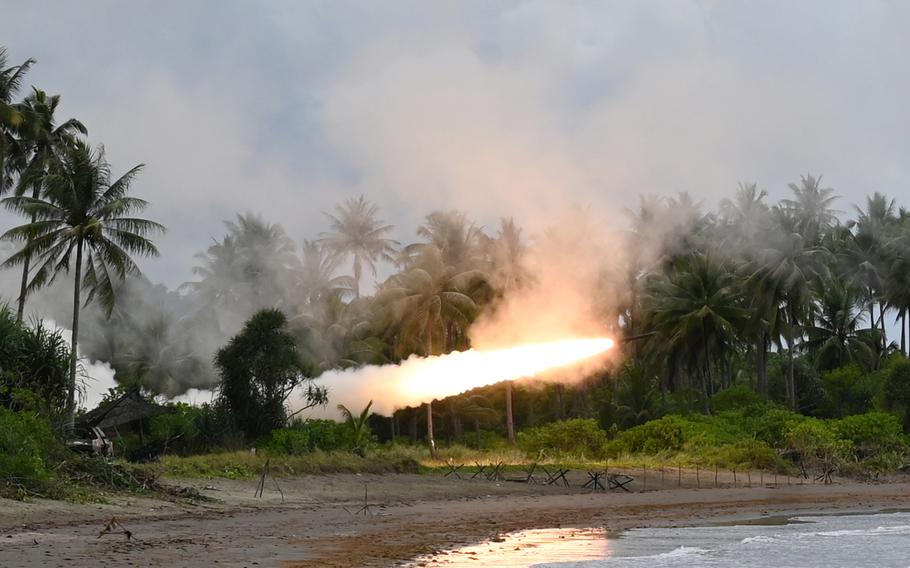
The beaches and skies of the Philippines are once again the stage for the most significant allied military exercises in the Asia-Pacific. Balikatan 2026 — the Tagalog phrase means "shoulder to shoulder" — officially kicked off today and will run through May 8. What began decades ago as a modest bilateral drill between Manila and Washington has transformed into something far more substantial: a multinational demonstration of readiness spanning land, sea, air, cyber, and space.
This year's edition is being described by military officials as the largest in the exercise's history. More than 17,000 troops from the United States and six allied nations will train across multiple locations in the Philippines through May 8, according to U.S. and Philippine officials. Participating nations include Australia, Canada, France, Japan, New Zealand, and the host nation itself. Seventeen additional countries are sending observers, surpassing the previous 2024 record of 16,000 participants.
Japan Steps Into the Arena
The headline development of Balikatan 2026 is one that would have seemed improbable just a few years ago: Japan is no longer just watching from the sidelines.
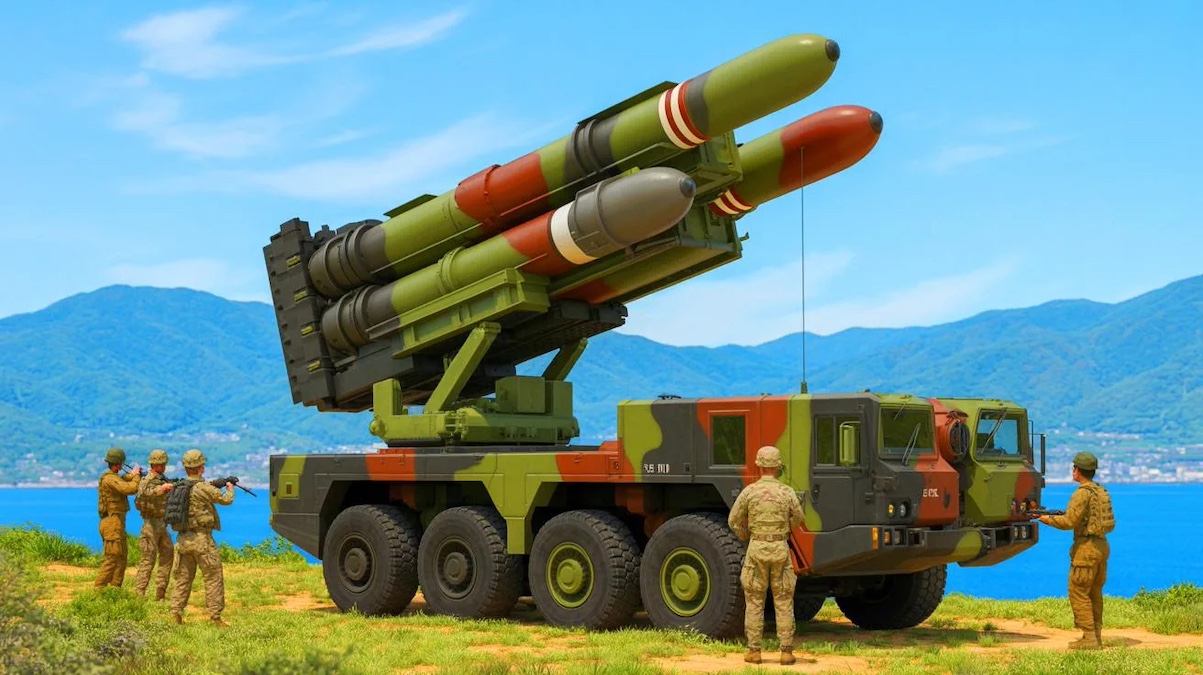
The Japan Self-Defense Forces have contributed approximately 1,400 personnel, making Japan the third-largest participant after the United States and the Philippines. The deployment includes a helicopter carrier, a landing ship, a destroyer, C-130H transport aircraft, and Type 88 surface-to-ship missile systems.
The Japanese military will use a Type 88 cruise missile to sink a target vessel off northern Paoay — a live-fire demonstration that marks an entirely new level of engagement. Japan's Defense Minister Shinjiro Koizumi is expected to attend to personally observe the maritime strike phase.
This shift didn't happen overnight. Japan and the Philippines signed a Reciprocal Access Agreement in 2024, which was brought into force in September 2025, enabling the deployment of combat-capable Japanese units to Philippine soil for the first time. Prior to this, Japan's Balikatan involvement was limited to observers and a handful of non-combat personnel.
Analysts say the deeper meaning extends beyond the Philippines itself. "Japan has provided considerable military support to the Philippines and seems to be focusing efforts there. Tokyo considers this as related to Taiwan's defense," said Grant Newsham, a retired U.S. Marine and author of When China Attacks: A Warning to America.
What the Drills Actually Look Like
The exercises are far from symbolic. Training will include maritime security, coastal defense, integrated joint fires, anti-submarine warfare, search-and-rescue operations, and logistics exercises such as ship-to-shore offloads.
The Northern Luzon Command area will host multinational maritime events, integrated air and missile defense, counter-landing live-fire exercises, and a joint maritime strike activity. The western province of Palawan — facing the disputed South China Sea directly — is also a key exercise zone, with media access granted for counter-landing drills.
Military planners describe the drills as a test of interoperability across multiple domains, including cyber warfare and anti-submarine operations, as participating navies conduct coordinated training along the western Philippine coastline.
Philippine Army Major General Francisco Lorenzo Jr. put it plainly: "Training shoulder to shoulder with our oldest allies ensures readiness for any challenge together."
The China-Shaped Elephant in the Room
Both U.S. and Philippine officials have been careful to state that the exercises are not directed at any specific country. But the geopolitical backdrop is impossible to ignore.
The exercises come amid rising tensions in the South China Sea, where the Philippines has accused China of increasingly aggressive behavior — allegations Beijing has denied. Chinese coast guard vessels have repeatedly blocked and harassed Philippine supply boats heading to disputed reefs. Reports have surfaced of Chinese aircraft deploying flares near Philippine Coast Guard patrols, with Manila alleging harmful conduct at contested reefs — claims Beijing dismissed as "not credible."
The legal framework matters here. A 2016 international arbitration tribunal ruled that China's expansive territorial claims in the South China Sea have no legal basis under international law. Beijing has refused to recognize the ruling. Retired U.S. Marine Grant Newsham put it bluntly: "Never forget that the South China Sea is international waters and Chinese behavior is illegal — akin to what pirates would do."
There is also the Taiwan dimension. Philippine President Ferdinand Marcos warned last November that given his country's proximity to Taiwan, "a war over Taiwan will drag the Philippines, kicking and screaming, into the conflict." Balikatan exercises in northern Luzon, which faces the Taiwan Strait, are seen partly as preparation for precisely that scenario.
A Broader Alliance Taking Shape
The growth of Balikatan reflects a broader strategic realignment across the Indo-Pacific. Countries that once stayed carefully neutral are now making choices.
Analysts note that rising regional anxiety about U.S. defense commitment and capacity in the Indo-Pacific has prompted partners like Japan to step up — not to replace the United States, but to reinforce deterrence and share the burden.
Victor Andres Manhit, president of the Stratbase ADR Institute, described this year's exercises as "the correct path forward" for Philippine defense strategy, saying they send "a clear and unambiguous message that the Philippines and its partners are prepared to defend the rules-based international order against coercion, intimidation, and unlawful claims."
The Philippines has also been steadily expanding its treaty network. On March 26, the Philippines signed a military access agreement with France, adding yet another European partner to a security architecture once dominated exclusively by Washington.
U.S. spokesperson Colonel Robert Bunn called the alliance "ironclad" and reaffirmed Washington's commitment to a "free and open Indo-Pacific."
A New Era of Indo-Pacific Security
Balikatan began in the 1990s as a small bilateral drill focused on counterinsurgency. Today it involves thousands of troops and simulates large-scale conflict scenarios, including amphibious operations, missile defense, and critical infrastructure protection. The evolution mirrors the threat environment itself.
"This is not just about one exercise; it reflects a longer-term effort to build interoperability, legal access arrangements, and a more durable security architecture in the maritime Indo-Pacific," one regional security analyst observed.
For Beijing, watching seven nations rehearse coordinated combat operations — including Japan, with whom China shares deep historical grievances and ongoing territorial disputes — the message is unmistakable: the region is organizing, and it is doing so with growing resolve.
.
Sources:
- Stars and Stripes – US, allies to deploy 17,000 troops for Philippine military exercise: https://www.stripes.com/theaters/asia_pacific/2026-04-14/balikatan-exercise-philippines-china-21370121.html
- Radio Free Asia – Japan's combat role in Philippines war games signals shift in regional strategy: https://www.rfa.org/english/southchinasea/2026/04/08/japan-philippines-military-exercise-balikatan/
- The Manila Times – PH, US begin war games: https://www.manilatimes.net/2026/04/20/news/ph-us-begin-war-games/2323599
- Rappler – Balikatan 2026: 17,000 troops in 'biggest' edition of PH-US war games yet: https://www.rappler.com/newsbreak/explainers/philippines-united-states-balikatan-2026-biggest-joint-exercise/
- The Defense News – Japan Deploys 1,400 Troops and Naval Assets to Philippines for Balikatan 2026: https://www.thedefensenews.com/news-details/Japan-Deploys-1400-Troops-and-Naval-Assets-to-Philippines-for-Balikatan-2026-in-First-Combat-Role/
- US News – US, Australia, Philippines Hold Second Joint Drills in South China Sea This Year: https://www.usnews.com/news/world/articles/2026-04-12/us-australia-philippines-hold-second-joint-drills-in-south-china-sea-this-year
.
What's Your Reaction?
 Like
1
Like
1
 Dislike
0
Dislike
0
 Love
1
Love
1
 Funny
0
Funny
0
 Wow
1
Wow
1
 Sad
0
Sad
0
 Angry
0
Angry
0












Comments (0)