

Is Your Home Making You Sick? Hidden Toxins Lurking in Your Fridge and Cleaning Cabinet
Most people think of their home as a safe haven – but everyday items like refrigerated food and common cleaning products may quietly harm your health. Here is what science says, and what you can do about it.


.
The Fridge Is Not as Safe as You Think
Opening the refrigerator feels reassuring. Food is stored, preserved, protected. But food safety experts warn that improper storage habits can turn the average fridge into a source of serious health risks.
One major concern is overstocking. When a refrigerator is packed too full, cold air cannot circulate properly. Food near the back gets forgotten, stays too long, and begins to deteriorate – sometimes without any visible signs.
This applies especially to frozen goods. Protein-rich items such as meat, fish, and poultry can suffer from what experts call "freezer burn" – a form of quality deterioration caused by temperature fluctuations or extended storage. After one to two years in the freezer, these products may no longer be safe or nutritious to eat.
The Mold Danger You Cannot See
Whole grains and legumes pose a particular risk. Peanuts, red beans, mung beans, soybeans, and corn are all vulnerable to moisture and mold – even when stored in seemingly dry conditions. The problem is that the mold itself is often invisible to the naked eye.
What mold leaves behind, however, is not invisible in its effects. Fungal toxins such as aflatoxin and ochratoxin (toxic byproducts produced by certain molds) can damage DNA, suppress the immune system, and interfere with normal cell function. According to peer-reviewed epidemiological research, long-term consumption of mold-contaminated food is closely linked to increased risks of liver, kidney, and esophageal cancer.
The World Health Organization (WHO) classifies aflatoxin as a Group 1 carcinogen – meaning there is sufficient evidence it causes cancer in humans.
Simple Rules for a Safer Refrigerator
Food safety professionals recommend a few straightforward habits:
- Keep it under 70% full – This ensures adequate air circulation and makes it easier to identify older items before they go bad.
- First in, first out – Place newly purchased items at the back, older ones at the front. This prevents food from being forgotten and expiring unnoticed.
- Portion and label – Large packages should be divided into single-use portions immediately after purchase, sealed, and labeled with the date. Repeated thawing and refreezing accelerates spoilage.
- Separate raw and cooked food – Cooked food belongs on upper shelves, raw meat and fish on lower ones. Drips from raw food can contaminate cooked items and transfer harmful bacteria.
When cleaning the fridge, avoid using undiluted bleach on interior surfaces. Residues can adhere to walls and shelves and migrate into food over time. Food safety experts recommend wiping surfaces with clean water or a cloth lightly dampened with 75% isopropyl alcohol instead.
Your Food Containers May Be Part of the Problem
The food itself is not the only concern. What it is stored in matters too.
Plastics labeled with the recycling codes #3 (PVC) and #7 (PC/polycarbonate) are particularly problematic. PVC contains chemical plasticizers, while polycarbonate plastics contain bisphenol A (BPA) – a synthetic compound that has been shown to interfere with hormonal systems in the body.
Research published in peer-reviewed toxicology journals has confirmed that higher temperatures dramatically increase BPA leaching from polycarbonate containers. The longer food is stored in such containers – and the warmer the environment – the greater the chemical exposure.
Even plastics marketed as "heat-resistant" (typically codes #2, #5, and #6) generally have thermal limits only slightly above 100°C (212°F). Exposure to significantly higher temperatures – for example in a microwave or dishwasher – can cause partial breakdown of the material.
Food safety authorities, including the U.S. Food and Drug Administration (FDA), have taken steps to restrict BPA in certain products such as baby bottles. For everyday storage, stainless steel or glass containers remain the safest and most chemically stable options.
"Natural" Cleaning Products: Don't Always Believe the Label
The cleaning products aisle is full of promises – "natural," "plant-based," "enzyme-powered." But experts urge consumers to read labels carefully rather than trust marketing claims.
The term "enzyme cleaner" can be misleading. Enzymes used in commercial products are typically synthesized in industrial processes, not harvested from nature. Their effectiveness for household surface cleaning also remains a subject of debate among chemists.
More importantly, mixing different cleaning products – even seemingly harmless ones – can produce dangerous chemical reactions. Combining bleach with ammonia-based cleaners, for example, releases toxic chloramine gases. Even accidental combinations in drain pipes or shared spray bottles carry real risk.
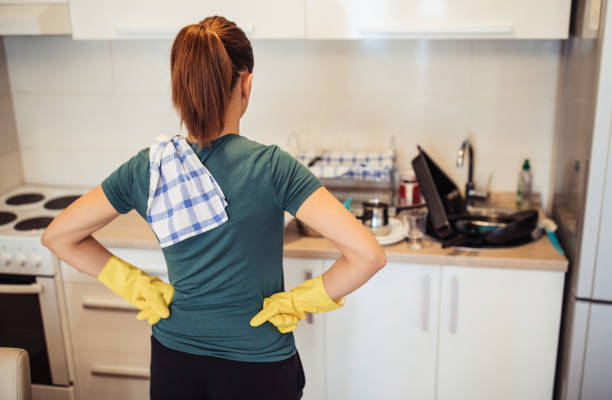
When using any chemical cleaner, basic safety precautions apply: wear rubber gloves, ensure adequate ventilation, and never combine products from different manufacturers without checking compatibility.
Two Ingredients That Actually Work: Baking Soda and White Vinegar
For those who prefer simpler, verifiable solutions, two common pantry staples cover most household cleaning needs effectively and safely.
Baking soda solution – Mix one part baking soda with twenty parts water. This mild alkaline solution is effective for general kitchen cleaning: stovetops, range hoods, countertops, and tiled surfaces. It neutralizes grease and odors without harsh fumes.
White vinegar solution – Dilute one part white vinegar with ten parts water. The mild acidity makes it particularly effective against limescale and mineral deposits on faucets, bathroom mirrors, shower glass, and windows.
Both substances are inexpensive, widely available, and free from synthetic fragrances – an important consideration, given that fragrance-containing laundry and cleaning products are a documented source of indoor air pollution.
The Hidden Cost of Fresh-Smelling Cleaners
Studies have found that scented household products – including laundry detergents, fabric softeners, and surface sprays – release volatile organic compounds (VOCs) such as terpenes into indoor air. These compounds can react with ozone to form ultrafine particles and secondary chemical pollutants associated with respiratory irritation, allergic reactions, and, in some cases, longer-term lung health concerns.
The U.S. Environmental Protection Agency (EPA) lists VOCs as a significant contributor to indoor air pollution, noting that concentrations indoors can be two to five times higher than outdoors – even in urban environments.
The simple recommendation: when buying cleaning products, opt for fragrance-free versions wherever possible.
.
Sources
- World Health Organization – Aflatoxins Fact Sheet: https://www.who.int/news-room/fact-sheets/detail/mycotoxins
- U.S. Food and Drug Administration – BPA in Food Contact Applications: https://www.fda.gov/food/food-additives-petitions/bisphenol-bpa
- U.S. Environmental Protection Agency – Volatile Organic Compounds' Impact on Indoor Air Quality: https://www.epa.gov/indoor-air-quality-iaq/volatile-organic-compounds-impact-indoor-air-quality
- National Institutes of Health / National Library of Medicine – Ochratoxin A and Cancer Risk (peer-reviewed overview): https://www.ncbi.nlm.nih.gov/pmc/articles/PMC6520964/
- European Food Safety Authority – Aflatoxins in Food: https://www.efsa.europa.eu/en/topics/topic/aflatoxins
.
What's Your Reaction?
 Like
0
Like
0
 Dislike
0
Dislike
0
 Love
0
Love
0
 Funny
0
Funny
0
 Wow
0
Wow
0
 Sad
0
Sad
0
 Angry
0
Angry
0















Comments (0)