

China Quietly Builds Its Economic War Chest — While the Trade Truce Holds
While the United States and China remain technically at peace in their trade war, Beijing has spent the past six months quietly arming itself with a new generation of economic pressure tools. From rare earths to solar panels, new laws to chip restrictions — China is not standing still.


.
A Handshake in Busan, a Race to Arm Up
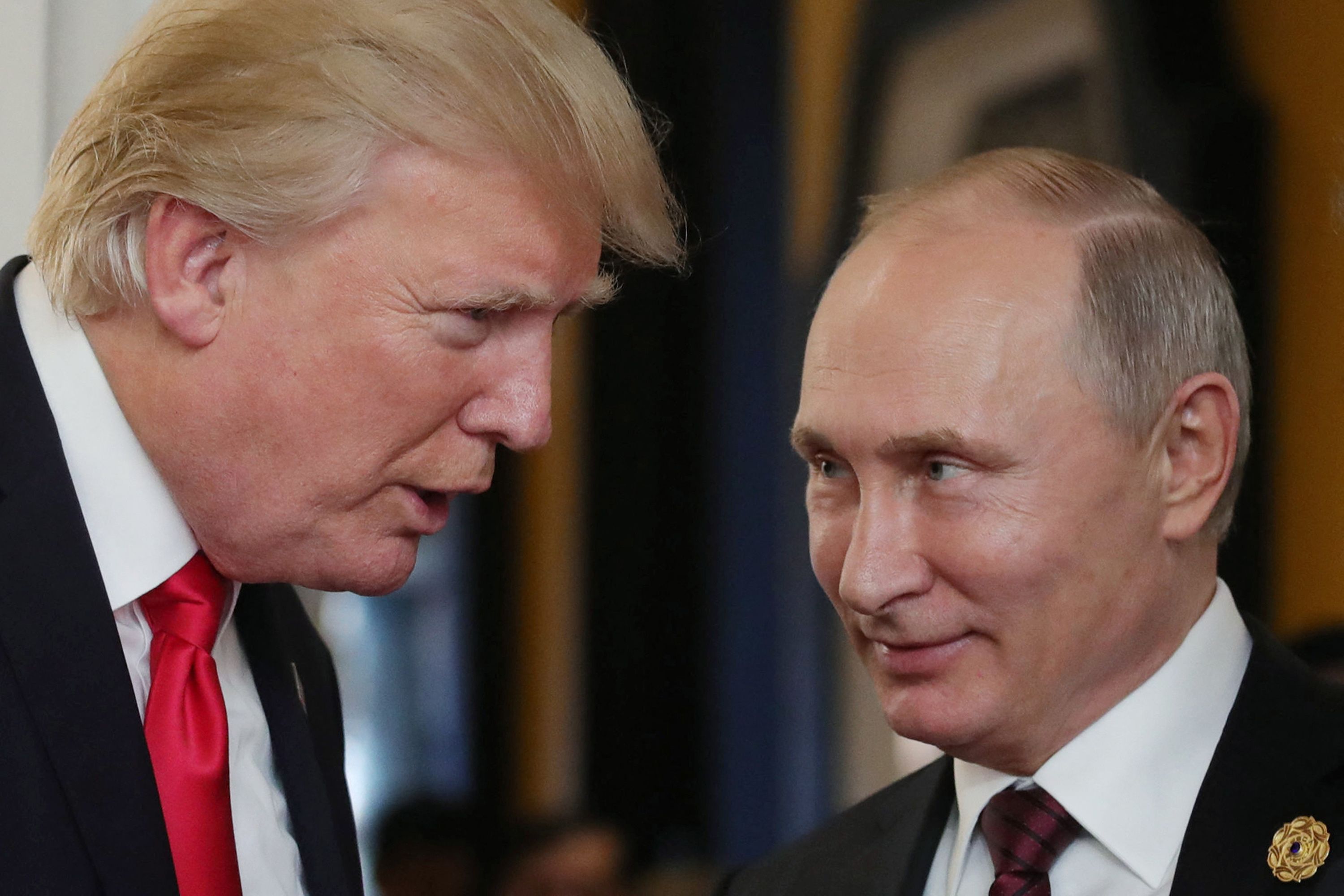
When Presidents Xi Jinping and Donald Trump shook hands in Busan, South Korea, last October, the world exhaled. The two countries had agreed to step back from the brink of a full-scale trade war. Tariffs were trimmed, soybean purchases resumed, and rare earth exports were kept flowing to the United States.
But behind the scenes, Beijing wasted no time. While the trade truce officially remains in place — it is set to expire in November 2026 — China has been methodically expanding its ability to strike back, should the ceasefire collapse. What has emerged is a sweeping toolkit of economic countermeasures that analysts say goes far beyond the standard tariff response.
More Than Just Tariffs: A New Playbook
Traditionally, trade disputes between major powers play out through tariffs — taxes on imports designed to punish the other side. China has played that game before. But experts say Beijing has now moved to a different level entirely.
Since last October, China has enacted laws to punish foreign companies that shift supply chains away from China, tightened its rare earth export controls, banned foreign AI chips from state-funded data centers, and barred U.S. and Israeli cybersecurity software from Chinese firms. The pattern is deliberate and systematic.
A social media account affiliated with China's state broadcaster CCTV put it bluntly: "In the past, our countermeasures were largely concentrated in the trade domain. But today's international friction is comprehensive, and those tools are no longer sufficient."
A Timeline of Quiet Escalation
Here is what Beijing has done, step by step, since the Busan agreement:
Rare Earths as a Weapon — October 2025
The trade truce itself was partly triggered by Beijing's earlier threats to cut off rare earth exports. Those restrictions caused shortages in U.S. auto supply chains within weeks, helping push Trump toward negotiations. Shortly before the Busan summit, China dramatically widened its export controls on rare earths — adding five additional elements, including holmium, erbium, and europium — and tightened scrutiny of semiconductor-related materials. Even foreign rare earth producers using Chinese materials now face new compliance requirements.
Chips, Batteries, and AI — November to December 2025
In November 2025, Beijing introduced export controls on high-end lithium-ion batteries, battery components, and related technology. Days later, new rules required that all state-funded data center projects use only domestically made artificial intelligence chips — a direct blow to foreign suppliers like Nvidia.
By the end of December, China announced that chipmakers adding new production capacity must source at least 50 percent of their manufacturing equipment domestically — part of a broader push to build a self-sufficient semiconductor industry that no longer depends on the West.
Cutting Out U.S. and Israeli Software — January 2026
In January, Chinese authorities instructed domestic companies to stop using cybersecurity software from more than a dozen American and Israeli firms, citing national security concerns. Shortly after, China extended its rare earth export restrictions to Japanese companies — a move widely seen as a warning to Tokyo not to deepen its security alignment with Washington.
New Legal Powers for Retaliation — April 2026
Perhaps the most significant development came in April, when China's State Council signed two landmark regulations — both entirely new in Chinese law.
The first grants authorities broad powers to investigate and take action against foreign governments, companies, or international organizations accused of taking "discriminatory measures" against China's industrial or supply chains. The rules took effect immediately, with no opportunity for business feedback, according to Michael Hart, president of the American Chamber of Commerce in China. "Companies now face an asymmetry," Hart said. "China can reduce purchases from foreign firms with little consequence, while a foreign company that cuts its dependence on China risks investigation."
The second regulation authorizes countermeasures against countries exercising what Beijing calls "unlawful extraterritorial jurisdiction" — a legal tool that could be used against secondary sanctions or the spillover effects of foreign export control regimes.
Solar Panels in the Crosshairs — April 2026
Most recently, Chinese officials opened discussions with solar manufacturing equipment makers about potentially limiting the export of advanced panel-production technology to the United States. China produces an estimated 80 percent or more of the world's solar panel components — giving Beijing enormous leverage over an industry that Washington has been trying to build up domestically.
What This Means for Companies and Trading Partners
The implications extend well beyond the United States. Businesses operating in China, or that rely on Chinese materials or components, now face a new kind of uncertainty. Beijing's regulatory tools are no longer just about tariffs — they are about control over entire supply chains, technology flows, and legal liability.
Experts say the pattern represents something more than reactive tit-for-tat. China is using the trade truce to build out a menu of economic influence tools that was, until recently, almost exclusively Washington's domain.
What Happens Next?
The Busan truce expires in November 2026, and a new summit between Xi and Trump is planned for mid-May. The outcome of that meeting will be closely watched. Trump's administration negotiated the original deal partly in exchange for Beijing clamping down on the illicit fentanyl trade — a politically sensitive issue at home.
For now, the ceasefire holds. But the weapons being quietly assembled on China's side suggest that Beijing is preparing for the possibility that it will not. Whether the May summit produces a new agreement or a new confrontation, the economic battlefield has already changed — and China has made sure it is better armed than before.
.
Sources:
- Reuters – How China has expanded its economic toolkit during its trade truce with the US (April 26, 2026): https://www.reuters.com/world/china/how-china-has-expanded-its-economic-toolkit-during-its-trade-truce-with-us-2026-04-26/
- Reuters / Japan Times – Under Cover of Trade Truce with Trump, China Expands Economic Pressure Toolkit (April 27, 2026): https://www.japantimes.co.jp/business/2026/04/27/markets/china-trade-truce-economic-pressure/
- Supply Chain Dive – US to lower China tariffs as part of trade war truce (November 2025): https://www.supplychaindive.com/news/us-china-trade-truce-donald-trump-xi-jinping-apec/804233/
- Reuters – China tightens rare earth export controls (October 9, 2025): https://www.reuters.com/world/china/china-tightens-rare-earth-export-controls-2025-10-09/
- Reuters – China bans foreign AI chips for state-funded data centres (November 5, 2025): https://www.reuters.com/world/china/china-bans-foreign-ai-chips-state-funded-data-centres-sources-say-2025-11-05/
.
What's Your Reaction?
 Like
0
Like
0
 Dislike
0
Dislike
0
 Love
0
Love
0
 Funny
0
Funny
0
 Wow
0
Wow
0
 Sad
0
Sad
0
 Angry
0
Angry
0















Comments (0)