

Taiwan: The Island That Exists — But Isn't Supposed To
Taiwan functions as a fully independent democracy with its own government, military, currency, and passport — yet most of the world officially pretends it doesn't exist. As a high-stakes summit between U.S. President Donald Trump and China's Xi Jinping approaches, the question of Taiwan's status is back at the center of global politics. Here's what you need to know.

.
A Country That Governs Itself — But Can't Say So
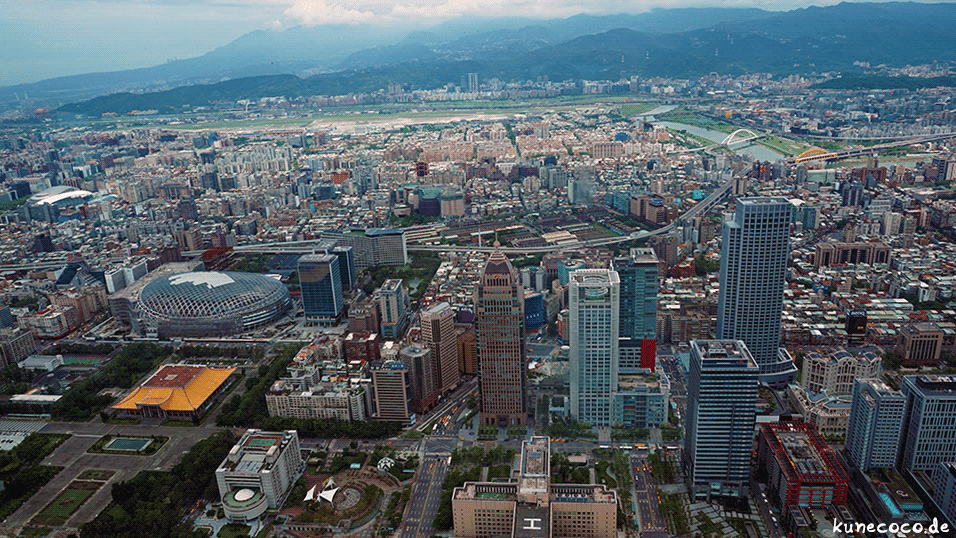
Walk through Taipei, Taiwan's bustling capital. You'll see a democratically elected president in office, a military defending its borders, a currency in everyday use, and a passport that opens doors to most countries around the world. By almost every practical measure, Taiwan is an independent country.
And yet, officially, most of the world looks the other way.
Taiwan's formal name is the Republic of China (ROC) — a government established in 1912 on the Chinese mainland, which fled to the island of Taiwan in 1949 after losing a civil war to Mao Zedong's Communist forces. The winners established the People's Republic of China (PRC) on the mainland and have claimed ever since that Taiwan is merely a renegade province waiting to be "reunified."
The result is one of the most unusual political situations on earth: a thriving democracy of 23 million people caught in a legal and diplomatic no-man's-land.
How Did Taiwan End Up in This Position?
Taiwan's history is layered and often overlooked. Indigenous peoples inhabited the island for thousands of years before Dutch and Spanish colonizers arrived in the 1600s. The Qing dynasty absorbed it into Chinese administration in 1684. After losing the first Sino-Japanese War, China ceded Taiwan to Japan in 1895.
Japan ruled the island for half a century. After Japan's defeat in World War Two in 1945, Taiwan was handed over to the Republic of China government. Then came 1949 — and everything changed.
Defeated by Communist forces on the mainland, the ROC government under Chiang Kai-shek retreated to Taiwan. The Communists declared the People's Republic of China the sole legitimate government of China — a claim they maintain to this day.
For decades, both governments insisted they were the true rulers of all China. That standoff shaped the entire geopolitical landscape of Asia.
The World Chose Beijing — But Kept Taiwan Close
In 1971, the United Nations transferred the "China seat" from Taipei to Beijing. It was a turning point. Most major countries gradually switched formal recognition from Taiwan to China, one by one.
Today, only around a dozen countries formally recognize Taiwan as a state — mostly small developing nations, while China uses its position to block any attempt by Taiwan to join the UN.
But formal recognition is only part of the story. The United States, the European Union, Japan, Australia, and most Western democracies maintain robust unofficial relationships with Taiwan — trade offices that function like embassies, arms sales, security cooperation, and political contacts. The U.S. effectively treats Taiwan like an independent state, even without formal recognition.
Washington's position is defined by deliberate ambiguity. Under the "One China" policy, the U.S. acknowledges Beijing as the government of China without taking a clear stance on Taiwan's legal status. At the same time, U.S. law obligates Washington to provide Taiwan with the means to defend itself.
Is Taiwan Already Independent?
In practical terms: yes. Taiwan satisfies many of the legal criteria of statehood — it has a population, a defined territory, and an independent, effective government. Its people freely elect their leaders. Its military is real and growing.
Taiwan's own government argues that the Republic of China is a sovereign state and that Beijing has no legitimate authority to speak for or represent it. President Lai Ching-te, who took office in 2024, has stated plainly that the ROC and the PRC are not subordinate to each other — which Beijing interprets as a push for formal independence.
China labels Lai a "separatist" and has threatened consequences. Under 2024 legal guidelines, the PRC regards advocating for Taiwan independence as a criminal offense that can be subject to capital punishment — a chilling escalation that legal experts say applies, in Beijing's view, even to individuals outside China's borders.
Could Taiwan Formally Declare Independence?
A formal declaration would be enormously difficult. Changing Taiwan's official name from "Republic of China" to something like "Republic of Taiwan" would require a constitutional amendment approved by at least 75% of lawmakers, followed by a public referendum.
The ruling Democratic Progressive Party (DPP), which has governed since 2016, has not pursued this. The main opposition party, the Kuomintang (KMT), strongly opposes any name change. The political arithmetic simply doesn't add up — and the military risks of provoking Beijing make the question even more fraught.
In 2005, Beijing passed the Anti-Secession Law, giving itself a legal framework to authorize military action if Taiwan were to declare independence or if the prospects for "peaceful reunification" were deemed exhausted. The law is deliberately vague — a blank check rather than a clear red line.
The UN Resolution Beijing Keeps Misquoting
Beijing frequently cites United Nations Resolution 2758, passed in 1971, as proof that the world legally recognizes Taiwan as part of China. That resolution transferred China's UN seat from Taipei to Beijing — but it said nothing about Taiwan's status.
Taiwan's government flatly rejects Beijing's interpretation. The PRC's interpretation holds that the Cairo Declaration, the Potsdam Declaration, and UN Resolution 2758 establish that Taiwan is part of the PRC under international law — but this reading is contested by legal scholars, Taiwan itself, and several Western governments. The U.S. State Department has previously said China was deliberately mischaracterizing the resolution to isolate Taiwan internationally.
The Trump-Xi Summit: Taiwan's Moment of Anxiety
All of this is coming to a head as U.S. President Donald Trump prepares to travel to Beijing. Trump is set to arrive in Beijing on May 14, becoming the first U.S. president to visit China in nearly a decade.
For Taiwan, the stakes could hardly be higher. A senior Taiwanese official warned that the island's greatest fear is being put "on the menu" of the Trump-Xi talks. Taiwanese Deputy Foreign Minister Francois Wu said bluntly: "We worry, and we need to avoid that it happens."
Beijing is not seeking a single dramatic breakthrough on Taiwan at the summit, but rather incremental gains that could gradually weaken Taiwan-U.S. ties. One of Xi's known goals is to pressure Washington into officially stating that it "opposes Taiwan independence" — a subtle but significant shift from the current U.S. policy of simply remaining ambiguous on the matter.
Taiwan sits at the heart of the military balance in the western Pacific, and even a nuanced change in U.S. wording could affect Beijing's assessment of American resolve to continue its support of the island.
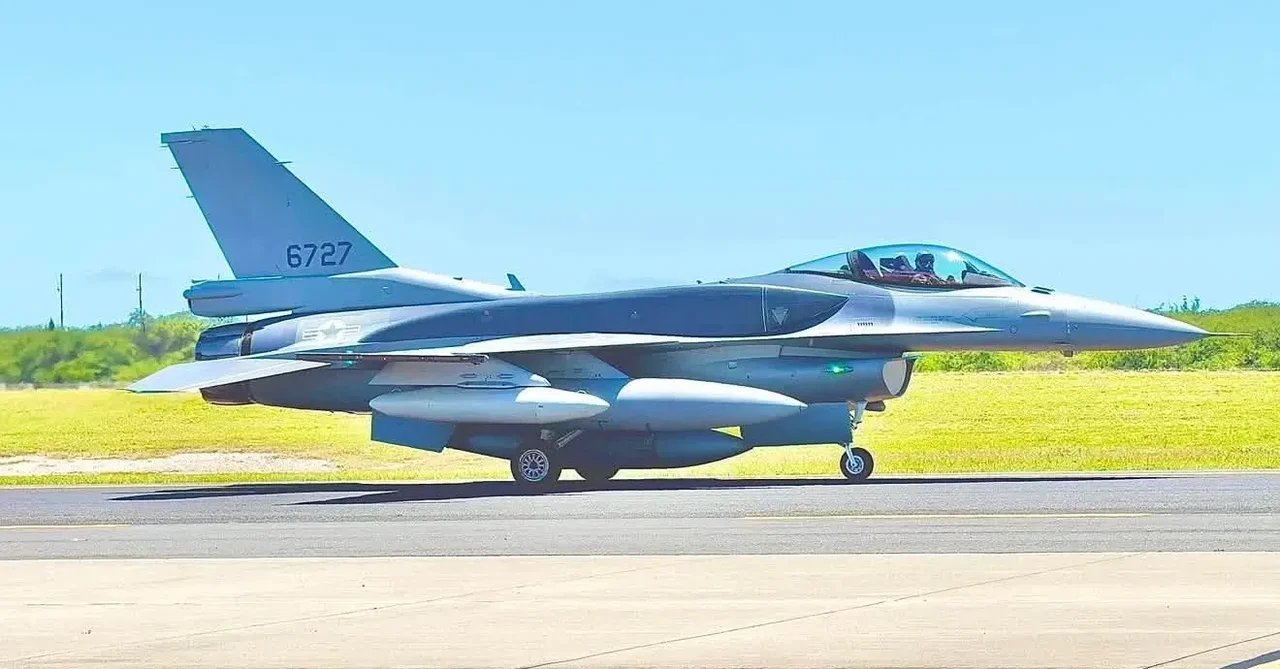
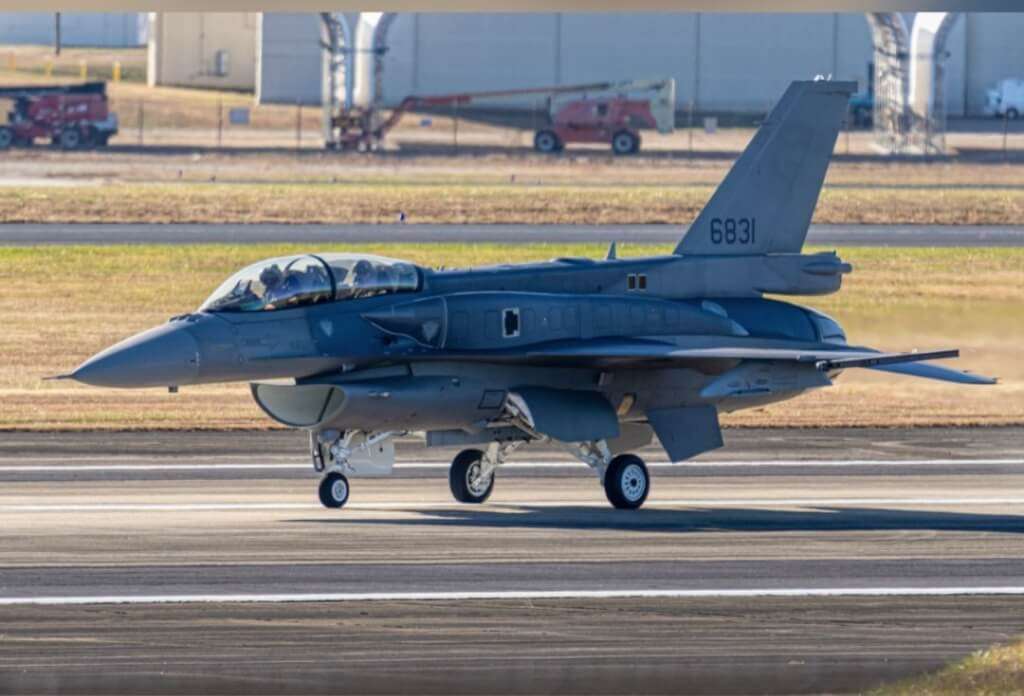
Trump administration officials have publicly maintained there is no change in U.S. Taiwan policy and have approved substantial arms sales to Taipei. But as with many things surrounding Trump diplomacy, there are no guarantees — and Taipei knows it.
What the People of Taiwan Want
Through all the geopolitical maneuvering, the 23 million people living on the island have expressed consistent preferences in opinion polling: most want to maintain the current status quo. They are not eager for the chaos of a formal independence declaration, but they are even less interested in Beijing's offer of "one country, two systems" — the model applied to Hong Kong, where promised freedoms have been systematically dismantled since 2020.
Taiwan's democracy is real. Its economy — built in part on semiconductor manufacturing that the entire world depends on — is globally significant. Its people have built a distinct identity over decades, separate from and increasingly unlike the mainland.
The legal status may be unresolved. The diplomatic isolation may be frustrating. But in every meaningful sense, Taiwan already exists as what it is: a free, self-governing society — one that the rest of the world has not yet found the courage to fully acknowledge.
.
Sources:
- Reuters – "What is Taiwan independence and is Taiwan already independent?" https://www.reuters.com/world/china/what-is-taiwan-independence-is-taiwan-already-independent-2026-04-29/
- The Diplomat – "China's Taiwan Calculus Ahead of the Trump-Xi Summit" https://thediplomat.com/2026/04/chinas-taiwan-calculus-ahead-of-the-trump-xi-summit/
- The Japan Times / Bloomberg – "Taiwan fears it will be 'on the menu' at Xi's summit with Trump" https://www.japantimes.co.jp/news/2026/04/25/asia-pacific/politics/taiwan-fears-xi-trump/
- Foreign Policy – "Lessons for the Trump-Xi Meeting From 5 Decades of U.S.-China Summits" https://foreignpolicy.com/2026/04/27/trump-xi-summit-us-china-trade-deal-taiwan-geopolitics/
- Global Taiwan Institute – "International Legal Frameworks for Statehood and Their Relevance to Taiwan's Defense" https://globaltaiwan.org/2023/02/international-legal-frameworks-for-statehood-and-their-relevance-to-taiwans-defense/
- The Conversation – "Explainer: the complex question of Taiwanese independence" https://theconversation.com/explainer-the-complex-question-of-taiwanese-independence-188584
- Brookings Institution – "Beyond trade: Issues in a Trump-Xi summit" https://www.brookings.edu/articles/beyond-trade-issues-in-a-trump-xi-summit/
- NPR – "China's Xi meets Taiwan opposition leader ahead of key summit with Trump" https://www.npr.org/2026/04/10/nx-s1-5780605/china-xi-taiwan-opposition
.
What's Your Reaction?
 Like
0
Like
0
 Dislike
0
Dislike
0
 Love
0
Love
0
 Funny
0
Funny
0
 Wow
0
Wow
0
 Sad
0
Sad
0
 Angry
0
Angry
0












Comments (0)