

Japan's Chip Giant Tokyo Electron Fires Top China Executive Over Secret Ties to Rival Firms
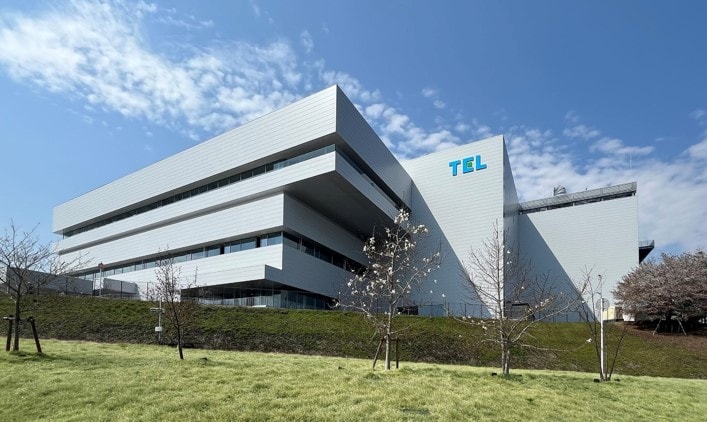
Japan's leading semiconductor equipment maker Tokyo Electron has severed ties with its veteran China chief Jay Chen after discovering he maintained hidden financial connections to investment vehicles funding a new generation of Chinese chip competitors. The case highlights the deepening espionage risk in the global semiconductor industry — and the difficult balancing act companies face between China's massive market and mounting security concerns.

.
A Veteran Insider — With Hidden Loyalties
Tokyo Electron (TEL), one of Asia's largest makers of chip manufacturing equipment, has parted ways with Jay Chen, a senior executive who ran the company's entire China business. According to a report by the Financial Times on Monday, TEL discovered that Chen had personal financial ties to investment funds actively backing emerging Chinese chip equipment companies — firms that are direct rivals to Tokyo Electron itself.
Chen had been a significant figure within TEL's China operations, having spent over two decades in the semiconductor industry with stints at Intel and other major players before rising to lead TEL's Shanghai operations. That insider knowledge — covering customers, roadmaps, and proprietary technology — makes the case particularly sensitive for the Japanese firm.
Reuters, which first picked up the FT report, stated it could not immediately verify the account independently. Tokyo Electron has not issued an official public comment as of publication.
Why This Is More Than a Personnel Decision
To understand why this matters, a closer look at Tokyo Electron's position in the global chip industry is necessary. TEL supplies the highly specialized machinery — etching tools, deposition systems, and cleaning equipment — that companies like TSMC, Samsung, and Intel rely on to manufacture semiconductors. Without TEL's tools, many of the world's most advanced chips could simply not be made.
China has long been one of TEL's most important markets. In recent fiscal years, the country accounted for roughly 38 to 43 percent of the company's total revenue — an extraordinary dependency. At the same time, Beijing has made developing a homegrown chip equipment industry a top strategic priority, pouring billions into domestic alternatives as U.S.-led export controls tighten the screws on what foreign firms can sell in China.
That combination — massive revenue on one side, aggressive state-backed competition on the other — creates exactly the kind of environment where insider conflicts of interest become a serious threat.
China's Push to Build Its Own Chip Supply Chain
Beijing's drive to achieve semiconductor self-sufficiency is not a secret ambition. Locked out of leading-edge chip technology by sweeping U.S. and allied export restrictions, China has redirected enormous resources toward building domestic alternatives at every level of the supply chain — including the manufacturing equipment that companies like Tokyo Electron have long dominated.
Investment vehicles backed by state-affiliated funds and private Chinese capital have been quietly funding a wave of new chip equipment startups. These firms aim to replicate — or ultimately replace — the tools that TEL and peers like ASML, Applied Materials, and Lam Research currently provide. Getting access to proprietary insights from a well-placed insider at a company like Tokyo Electron would represent a significant shortcut in that process.
A Pattern of Security Concerns at TEL
The Chen case does not emerge in a vacuum. Tokyo Electron has been under scrutiny for some time over security-related issues in Asia.
In a separate, unrelated matter, TEL's Taiwan subsidiary was indicted in late 2025 in connection with the alleged theft of trade secrets from TSMC, the world's leading chip manufacturer. That case involved a former TSMC engineer who had moved to Tokyo Electron and was accused of passing on sensitive process data related to TSMC's most advanced chip technologies. Tokyo Electron cooperated with prosecutors in that investigation, and the company has stated it found no evidence of organizational involvement in the theft.
Taken together, these incidents signal that TEL — precisely because of its central role in the semiconductor supply chain — has become a high-value target for those seeking to extract competitive intelligence.
The Broader Stakes: Tech War in Silicon
The Jay Chen case is a microcosm of the larger struggle playing out across the global technology industry. Washington has imposed sweeping restrictions on the export of advanced chip equipment to China, and has pressed allies including Japan and the Netherlands to follow suit. Japan formally expanded its own export controls on chip tools in 2023.
For companies like Tokyo Electron, the pressure is enormous: Beijing remains a giant customer, but regulatory and national security demands from Washington and Tokyo are increasingly incompatible with unrestricted business as usual in China. Meanwhile, Beijing is doing everything in its power to accelerate its own domestic industry — including, it appears, cultivating ties with well-positioned insiders at the very companies it seeks to overtake.
The firing of Jay Chen is unlikely to be the last such incident. As China's chip ambitions grow and the stakes of the technology race rise, the conflict of interest risk at the intersection of global business and geopolitics will only intensify.
.
Sources:
- Reuters – "Chip toolmaker Tokyo Electron cuts ties with executive linked to Chinese rivals, FT reports" (April 27, 2026): https://www.reuters.com/world/china/chip-toolmaker-tokyo-electron-cuts-ties-with-executive-linked-chinese-rivals-ft-2026-04-27/
- SEMI Industry Profile – Jay Chen, President, TEL Shanghai: https://www.semi.org/en/itpc2019-jay-chen-bio
- Taipei Times – "3 men, Tokyo Electron Taiwan indicted over new TSMC trade secret theft" (January 6, 2026): https://www.taipeitimes.com/News/biz/archives/2026/01/06/2003850100
- Fortune Asia – "TSMC secrets leak puts Japan's Tokyo Electron on hot seat" (August 8, 2025): https://fortune.com/asia/2025/08/08/tsmc-secrets-leak-japan-tokyo-electron/
- TrendForce – "Tokyo Electron Sees AI-Driven Sales Hitting 40% by FY2026, Offsetting China Slowdown" (December 8, 2025): https://www.trendforce.com/news/2025/12/08/news-tokyo-electron-sees-ai-driven-sales-hitting-40-by-2026-offsetting-china-slowdown/
.
What's Your Reaction?
 Like
0
Like
0
 Dislike
0
Dislike
0
 Love
0
Love
0
 Funny
0
Funny
0
 Wow
0
Wow
0
 Sad
0
Sad
0
 Angry
0
Angry
0














Comments (0)