

Fired for Doing His Job: Brazil Ousts Top Labor Official Who Refused to Shield BYD from Slavery Blacklist
Brazil's government has fired its most senior labor inspection official after he defied a direct order from the country's Labor Minister — and placed Chinese electric vehicle giant BYD on a federal blacklist for slavery-like working conditions. The case is raising uncomfortable questions about political interference, corporate immunity, and Beijing's growing influence over Latin America's largest economy.

.
Brazil's government has fired its most senior labor inspection official after he defied a direct order from the country's Labor Minister — and placed Chinese electric vehicle giant BYD on a federal blacklist for slavery-like working conditions. The case is raising uncomfortable questions about political interference, corporate immunity, and Beijing's growing influence over Latin America's largest economy.
-
A Watchdog Removed for Watching
Luiz Felipe Brandão de Mello, Brazil's secretary of labor inspection, was dismissed after he refused an order from Labor Minister Luiz Marinho to keep BYD off the country's so-called "dirty list" — the official federal registry of employers found to have subjected workers to conditions analogous to slavery. Marinho gave no technical justification for keeping BYD off the list, according to sources familiar with the matter.
The dismissal was made official in Monday's government gazette and represents the latest escalation in a deepening conflict between the Lula administration and the traditionally independent corps of labor inspectors.
Brazil's national association of labor inspectors, Anafitra, pulled no punches in its response. "The dismissal of the secretary signals an escalation of political interference in labor inspections," the group said in a public statement, warning that it weakens the country's ability to combat labor abuses.
-
What BYD's Workers Actually Faced
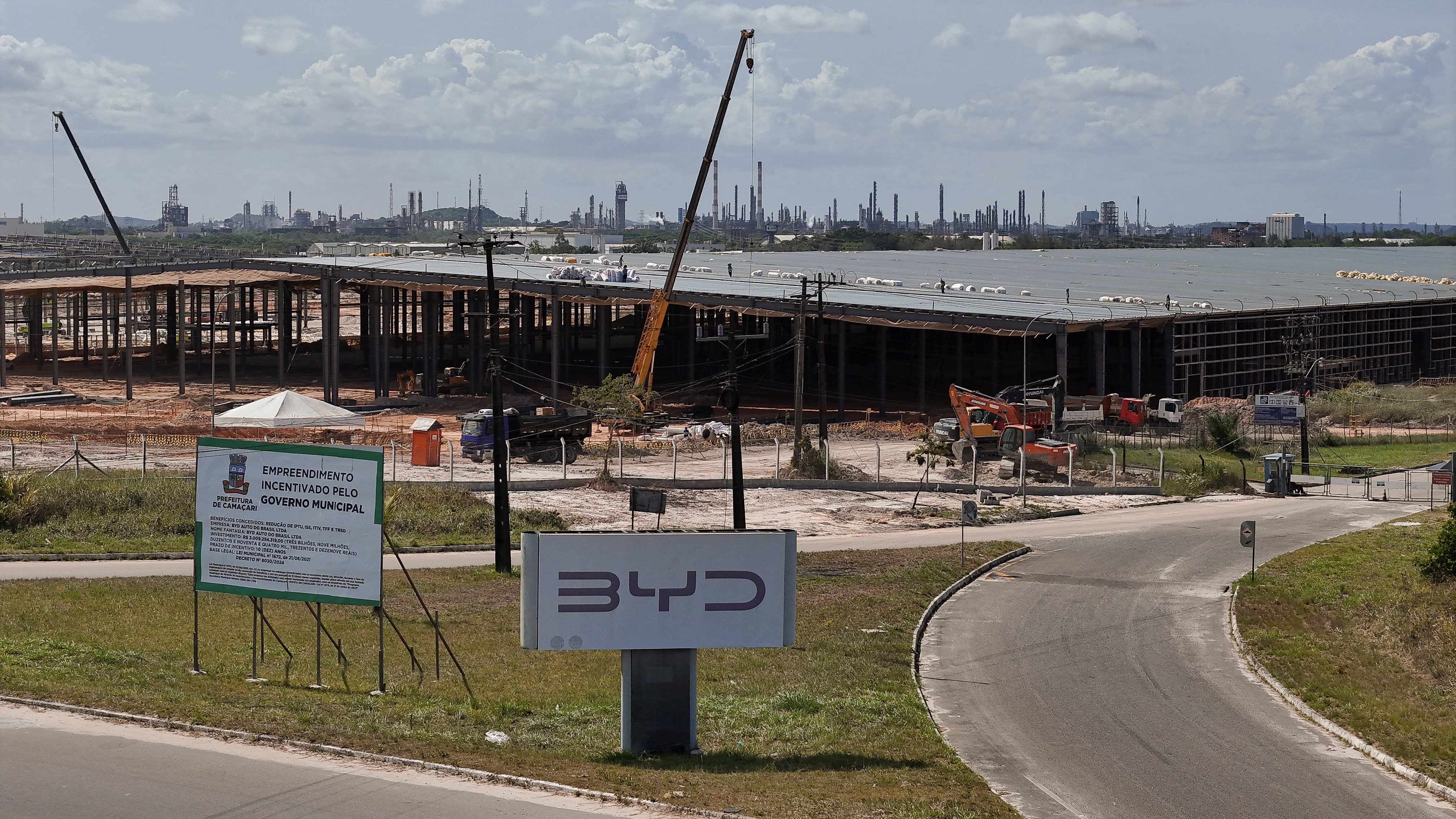
The blacklisting is rooted in a major scandal that erupted in December 2024. Brazilian labor inspectors identified 471 Chinese workers who had been brought into Brazil illegally to work on the construction of BYD's factory in Camaçari, in the northeastern state of Bahia. Of these, 163 were formally "rescued" from conditions inspectors described as forced labor.
The conditions documented were stark. Workers were required to surrender their passports and authorize the transfer of most of their wages to accounts in China. They also had to pay a deposit of around $900, refundable only after six months of continuous employment. Inspectors found workers sleeping on beds without mattresses, with no lockers, forced to keep personal belongings alongside food and construction tools. In one dormitory, a single bathroom served 31 people. Workers were required to be up by 4 a.m. to prepare for shifts lasting at least ten hours, with no regular days off — one injured worker reported going 25 consecutive days without rest.
Authorities also found that restrictions were placed on workers' freedom of movement — they needed authorization even to visit a market.
-
BYD's Defense — and Why It Didn't Hold
BYD has consistently attributed responsibility to its contractor, the Jinjiang Group, claiming the automaker was unaware of any violations until Brazilian media reports surfaced in late 2024. Jinjiang has denied the allegations.
But Brazilian investigators rejected that defense. Although service contracts with third parties were presented, labor auditors concluded that the workers were in practice subordinated directly to BYD — establishing a formal employment relationship under Article 3 of Brazil's Consolidated Labor Code. The contractor argument did not hold up.
In May 2025, Brazilian prosecutors filed a lawsuit against BYD, alleging human trafficking and slavery-like conditions. That same month, BYD and its contractor firms reached a settlement worth 40 million reais (roughly $7.1 million) with the labor prosecutor's office — half going to individual compensation for affected workers, the rest to collective moral damages distributed to anti-slavery foundations in Bahia.
However, BYD signed a deal with labor prosecutors but not with labor inspectors — and it is the inspectors who control inclusion on the dirty list. That gap is what ultimately led to the blacklisting.
-
Politics and the China Connection
The case has thrown an uncomfortable spotlight on the close relationship between Beijing's corporate champions and Brazil's left-wing government.
Despite the ongoing labor investigation, President Lula personally attended the inauguration of BYD's Camaçari factory in October 2025 — a clear signal of political support for the Chinese company. The plant has since produced over 25,000 vehicles and represents more than a billion dollars in announced investment.
This political proximity appears to have shaped the government's response to the scandal. Last year, Minister Marinho was already accused of making unusual interventions in labor investigations — blocking the inclusion of other major companies, including a division of Brazilian meatpacker JBS, from the dirty list. Mello, the now-fired inspector, had reportedly opposed those decisions as well — and his refusal to protect BYD was the breaking point.
-
A Court Steps In — Temporarily
Days after BYD was officially added to the dirty list on April 7, a Brazilian court intervened. A labor court judge issued a provisional injunction removing BYD's name from the registry, citing possible procedural concerns over how the listing was carried out. The decision is subject to appeal and a final ruling is still pending.
The timing of the injunction — arriving just days after a high-profile public listing, and following the minister's failed attempt to prevent that listing — has not gone unnoticed by legal observers.
-
What's at Stake
For BYD, the consequences extend beyond reputation. Placement on the dirty list blocks access to loans from Brazil's state development bank BNDES and triggers credit risk reviews at private banks with ESG (Environmental, Social, and Governance) obligations — a significant blow for a company with over a billion dollars invested in the country and ambitions to produce 300,000 vehicles annually.
The blacklisting comes at a difficult moment for BYD globally. The company has enjoyed strong sales growth in Brazil — 100,000 cars sold in 2025 — but is losing market share in China, with its last earnings report showing the slowest overall growth in six years.
For Brazil, the stakes are different — and arguably higher. The firing of an independent enforcement official for refusing to protect a foreign corporation from accountability for documented slavery-like conditions represents a deeply troubling precedent. Labor rights advocates warn it sends a clear message: in Brazil today, political connections may matter more than labor law.
.
Sources
- CNBC – Brazil puts China's BYD on list of shame for workers' past slavery-like conditions: https://www.cnbc.com/2026/04/07/brazil-puts-chinas-byd-on-list-of-shame-for-workers-past-slavery-like-conditions.html
- Agência Brasil (Official Brazilian Government News Agency) – Chinese carmaker BYD added to Brazil's forced labor list: https://agenciabrasil.ebc.com.br/en/direitos-humanos/noticia/2026-04/chinese-carmaker-byd-added-brazils-forced-labor-list
- South China Morning Post – Brazil blacklists BYD for slave labour conditions at its biggest plant outside China: https://www.scmp.com/news/china/diplomacy/article/3349311/brazil-blacklists-byd-slave-labour-conditions-its-biggest-plant-outside-china
- Reuters (via Yahoo Finance / Investing.com) – Brazil's top labor inspector fired for adding China's BYD to 'dirty list': https://ca.finance.yahoo.com/news/brazils-top-labor-inspector-fired-190110510.html
- Reuters – Brazilian court removes BYD from list of firms linked to forced labor: https://www.peoplenewstoday.com/news/en/2026/04/09/1137346.html
- Business & Human Rights Resource Centre – BYD added to government list of companies accused of labor conditions analogous to slavery: https://www.business-humanrights.org/en/latest-news/brazil-byd-added-to-government-list-of-companies-accused-of-labor-conditions-analogous-to-slavery/
- Wikipedia – BYD Brazil working conditions controversy: https://en.wikipedia.org/wiki/BYD_Brazil_working_conditions_controversy
.
What's Your Reaction?
 Like
2
Like
2
 Dislike
0
Dislike
0
 Love
2
Love
2
 Funny
0
Funny
0
 Wow
2
Wow
2
 Sad
0
Sad
0
 Angry
0
Angry
0













Comments (0)