

Caught in the Crossfire: Panama Navigates a Geopolitical Storm Over Its Canal Ports
Panama finds itself squeezed between the world's two largest powers over control of strategic port facilities at the Panama Canal. President José Raúl Mulino says his country is being "carried along like a tide" as Washington and Beijing fight a proxy battle over who controls the gateway to global trade. The dispute is escalating — with Chinese port authorities detaining dozens of Panama-registered ships in apparent retaliation.

.
A Small Nation Between Two Giants
Panama has become the unlikely battleground in a high-stakes confrontation between the United States and China. President José Raúl Mulino confirmed on April 30, 2026, that his government received a formal diplomatic message from Beijing — delivered through China's ambassador in Panama — acknowledging that the ongoing port dispute would be handled through international arbitration and did not represent a conflict between the two governments directly.
The message marked a noticeably softer tone from Beijing. But Mulino made clear that Panama itself has little control over the broader forces at play. "We are, in a way, being carried along like a tide by the outcome of a problem between two major powers," he told reporters at a regular press conference.
The Ports at the Center of the Storm
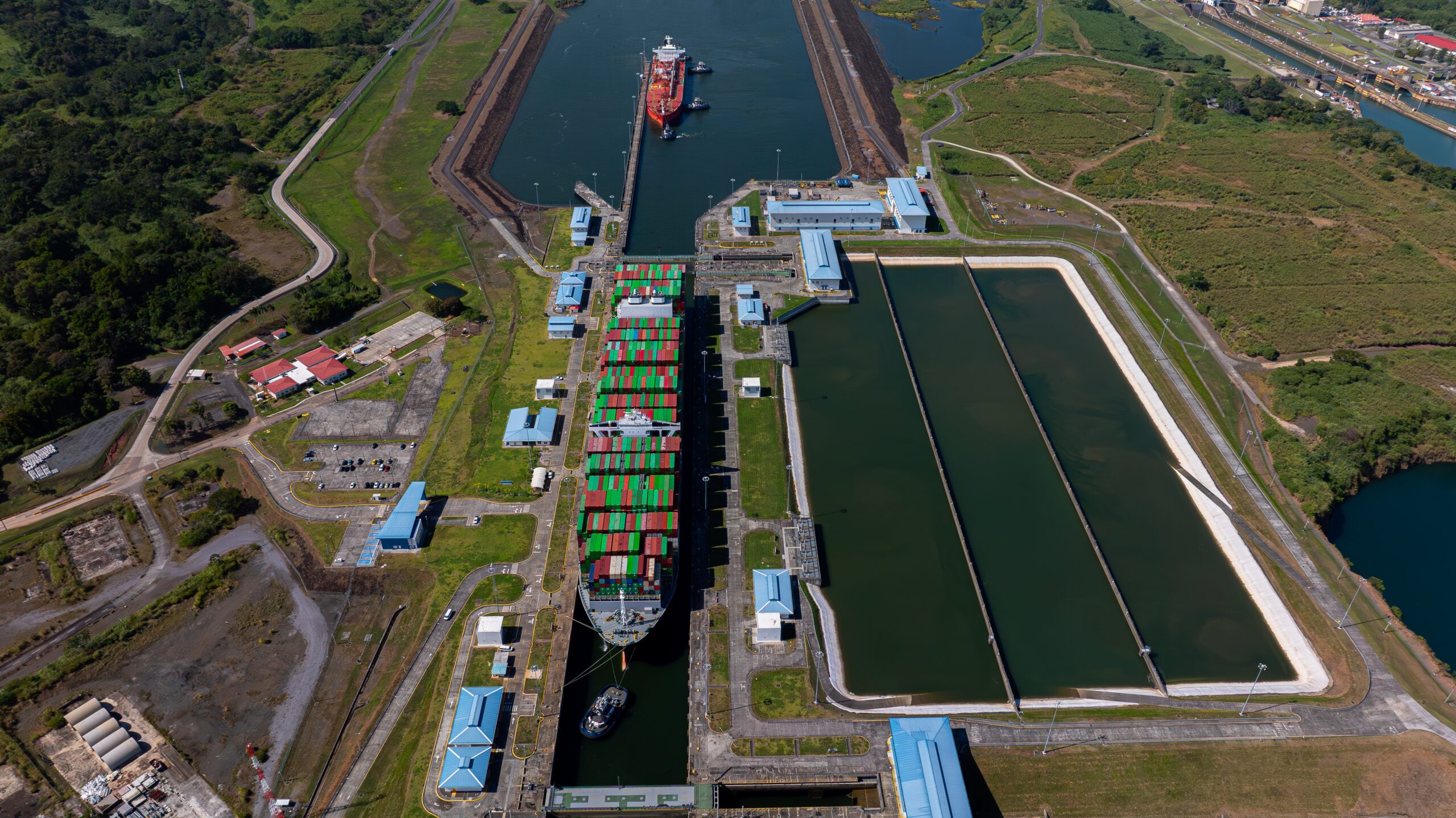
The Panama Canal is no ordinary waterway. It handles approximately 5 percent of all global maritime trade and serves as the main artery for nearly 40 percent of all container shipments bound for or from the United States. Control over the ports at either end of the canal is therefore not just a commercial matter — it is a question of geopolitical power.
For nearly three decades, those ports — the Balboa terminal on the Pacific side and the Cristobal terminal on the Atlantic — were operated by Panama Ports Company, a subsidiary of Hong Kong-based conglomerate CK Hutchison. That arrangement came to an abrupt end on January 29, 2026, when Panama's Supreme Court declared the original 1997 concession contract unconstitutional.
The ruling was widely seen as a direct response to sustained pressure from the Trump administration, which had publicly warned that Chinese influence over the strategic waterway posed a risk to U.S. national security. President Donald Trump had previously alleged that China was effectively "running the Panama Canal."
Panama Takes Control — and Beijing Hits Back
Following the court decision, Panama's government formally assumed control of the port facilities, including infrastructure, cranes, vehicles, and computer systems. In the interim, operations were handed to two European shipping giants: Maersk's APM Terminals took over Balboa, and MSC's Terminal Investment Limited assumed control of Cristobal.
CK Hutchison responded by launching international arbitration proceedings against Panama, arguing the move amounted to an unlawful seizure of its assets. The company had earlier tried to head off the crisis by negotiating a $23 billion sale of its non-Chinese port subsidiaries to a BlackRock-led consortium — a deal Beijing quickly moved to block, calling it capitulation to American pressure.
China's government, for its part, did not hold back. Beijing's Hong Kong and Macao Affairs Office called the Panamanian court ruling "logically flawed" and "utterly ridiculous," and threatened that Panama "will inevitably pay a heavy price both politically and economically" unless it reversed course.
Ships Under Pressure: Beijing's Maritime Squeeze
Rather than pursue purely diplomatic channels, Beijing appears to have turned to economic coercion. Chinese ports dramatically increased the detention and inspection of vessels sailing under the Panamanian flag. In March 2026 alone, Chinese authorities detained 91 Panama-flagged ships out of 123 total vessel detentions recorded under the Tokyo Memorandum of Understanding inspection regime — a figure that analysts and diplomats describe as far outside normal patterns.
President Mulino acknowledged the surge openly and expressed frustration. He said he does not want Panamanian-flagged ships to become instruments of geopolitical leverage. "I believe that is not fair," he stated plainly.
Washington and Allies Respond
The ship detentions drew a firm response from Washington and regional partners. On April 28, 2026, the United States, together with Bolivia, Costa Rica, Guyana, Paraguay, and Trinidad and Tobago, issued a joint statement backing Panama's sovereignty and condemning what they described as China's targeted economic pressure on maritime trade.
U.S. Secretary of State Marco Rubio was direct in his message: "The sovereignty of our hemisphere is non-negotiable." The six-nation statement warned that China's actions against Panama-flagged vessels represent an attempt to weaponize global shipping for political ends.
Beijing dismissed the declaration as a fabrication and accused Washington of hypocrisy, with a Chinese Foreign Ministry spokesperson calling the joint statement a "complete lie." China's government defended its inspection activities as legitimate and accused the U.S. of manufacturing a crisis to justify its own interference in the region.
Mulino's Balancing Act
Despite the diplomatic temperature rising, Mulino insisted Panama's relationship with China remains functional and that his government has no desire to escalate the conflict. He defended Panama's decision to take over the ports by emphasizing that CK Hutchison's contracts had been voided by the courts — and that the government simply stepped in to maintain operations. "We did not expropriate the ports," he said. "We took over because they were left without a contract."
For now, Mulino says he has not decided on any further steps. Whether Panama can maintain that cautious middle ground as Washington and Beijing continue to apply pressure from both sides remains an open question.
What's at Stake
The broader context is significant. Beijing has spent years expanding its footprint in Latin America through infrastructure investments and trade deals under its Belt and Road Initiative. The Trump administration's push to roll back that influence — starting with the Panama Canal — has put smaller nations in the region in an increasingly uncomfortable position.
The Panama port dispute is unlikely to be resolved quickly. CK Hutchison's arbitration case is expected to play out over years. Meanwhile, the canal itself continues to function, global shipping continues to flow, and Panama's government is left managing a crisis largely created by forces far beyond its borders.
.
Sources:
- Reuters – Panama president says port caught in US-China dispute (April 30, 2026): https://www.reuters.com/world/china/panama-president-says-port-caught-in-us-china-dispute-2026-04-30/
- Reuters / Yahoo News – U.S. and Allies Release Joint Statement Supporting Panama's Sovereignty (April 28, 2026): https://www.yahoo.com/news/articles/us-allies-release-joint-statement-225156778.html
- CNBC – Panama cancels China-linked port deal, hands canal terminals to Maersk, MSC (February 24, 2026): https://www.cnbc.com/2026/02/24/panama-officially-voids-annuls-ck-hutchison-contracts-interim-control-maersk-msc-canal-dispute.html
- Al Jazeera – China warns Panama as Hong Kong firm contests ruling on canal ports (February 4, 2026): https://www.aljazeera.com/news/2026/2/4/china-warns-panama-as-hong-kong-firm-contests-ruling-on-canal-ports
- UPI – U.S., allies back Panamanian ships amid alleged Chinese pressure (April 29, 2026): https://www.upi.com/Top_News/World-News/2026/04/29/latam-panama-chinese-maritime-pressure/9521777489535/
- The Rio Times – U.S. and Five Allies Warn China Over Panama Ship Detentions (April 29/30, 2026): https://www.riotimesonline.com/us-latam-allies-warn-china-panama-ships/
.
What's Your Reaction?
 Like
0
Like
0
 Dislike
0
Dislike
0
 Love
0
Love
0
 Funny
0
Funny
0
 Wow
0
Wow
0
 Sad
0
Sad
0
 Angry
0
Angry
0













Comments (0)