

Mao's Car Brand Is Coming to Europe — Through the Back Door
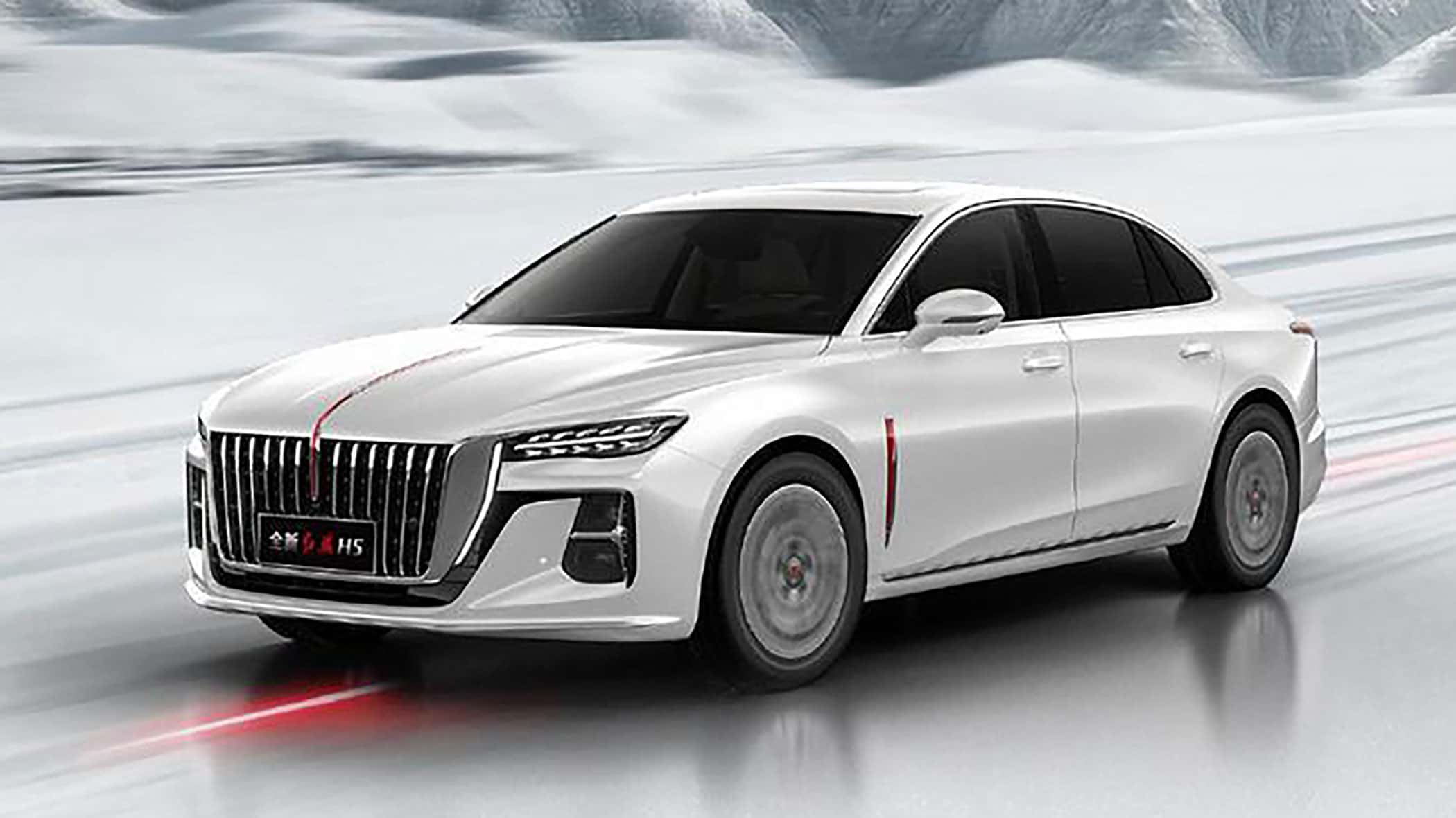
Hongqi — the car brand once reserved for Chinese Communist Party leaders and Mao Zedong himself — is now eyeing an assembly line in Zaragoza, Spain. According to five sources familiar with the matter cited by Reuters, the Chinese state automaker FAW is in active talks with Stellantis to produce Hongqi vehicles at a Spanish plant. It is a story that goes well beyond the auto industry: it is a textbook case of how China is quietly building its industrial footprint inside the European Union.

.
China's state-owned luxury automaker Hongqi is in talks to produce vehicles at a Stellantis factory in Spain. If the deal goes through, it would mark a new chapter in Beijing's methodical push to manufacture inside Europe — and sidestep the EU's own trade defenses in the process.
Breaking news analysis update, April 29, 2026 — Udumbara.net
From Mao's Motorcade to the European Market
Hongqi, which translates as "Red Flag," has a history as politically charged as its name. Founded in 1958, the brand was created to serve China's communist leadership — a domestic symbol of ideological prestige and state power. For decades, Hongqi vehicles appeared almost exclusively in state motorcades and official ceremonies.
Today, the brand is something else entirely. It is one of a growing number of Chinese automakers chasing global sales targets, with plans to launch more than fifteen electric and hybrid models across twenty-five European markets by 2028. Its owner, FAW (First Automobile Works), is a fully state-controlled company. And its ambitions are backed by the full weight of the Chinese government's industrial strategy.
According to the Reuters report, Hongqi is targeting one million vehicle sales per year by 2030, with at least ten percent of those outside China. Production in Spain — if the talks succeed — would be its first manufacturing presence in Western Europe.
The Leapmotor Connection: How the Deal Is Structured
The mechanism behind this deal is as clever as it is telling. Rather than approaching Stellantis directly, FAW is working through Leapmotor — a Chinese electric vehicle startup in which both FAW and Stellantis are already investors. Stellantis holds a significant stake in Leapmotor and has agreed to produce Leapmotor vehicles at its Zaragoza plant later this year. Reuters reported separately that Stellantis and Leapmotor are also in advanced discussions to jointly develop an Opel-branded electric SUV using Chinese technology — also at Zaragoza.
Two of the sources told Reuters that Hongqi vehicles would be built at the same facility.
This is not a coincidence. It is an architecture — a carefully layered structure that uses existing partnerships and investment ties to give a Chinese state brand access to European manufacturing capacity, without having to build a new factory or navigate the full political scrutiny that a greenfield investment might attract.
"This was the way that Hongqi can start European production quickly," one source with direct knowledge of the talks told Reuters. "Hongqi is using that network to gain a manufacturing base through Leapmotor and Stellantis."
Why Spain? And Why Now?
The timing is not accidental. The European Union imposed tariffs of up to 35 percent on Chinese-made electric vehicles in late 2024, dramatically raising the cost of simply exporting finished cars from China. For Chinese automakers, local production in Europe is no longer just a commercial preference — it is the logical response to a trade barrier.
By manufacturing inside the EU, a Chinese brand avoids the tariff entirely. It qualifies as a European-made product. It may even qualify for European green-energy subsidies, depending on the model. And it gets to establish a local presence that is politically far harder to dislodge than an import.
Spain under Prime Minister Pedro Sánchez has been one of the more openly accommodating EU member states toward Chinese investment, which makes Zaragoza an attractive choice. The Stellantis plant there already has production capacity, an experienced workforce, and established supply chains — everything Hongqi needs to begin quickly.
It is also worth noting that FAW has been exploring Hong Kong as an alternative production base, according to one of the Reuters sources, partly because goods manufactured there currently face lower export tariffs than those produced on the Chinese mainland. That option remains open.
The Bigger Pattern: A Strategy, Not Just a Deal
This is where the Hongqi story connects to something much larger. As we have analyzed in detail in our earlier piece The Silent Industrial War: Why Europe Is Losing to China — and Doesn't Know How to Fight Back, China's approach to Europe is not reactive. It is systematic.
Beijing is not simply trying to sell more cars. It is pursuing manufacturing dominance across the industries that will define economic power for the next fifty years — electric vehicles, batteries, solar, wind, critical minerals. When Europe raises trade barriers, China does not retreat. It adapts, finds new entry points, and continues advancing.
The EU's tariffs were designed to slow Chinese EV imports. But they did not slow Chinese investment in European production capacity. They may, in fact, have accelerated it.
Hongqi is not alone. Other major state-controlled Chinese automakers — including Changan and Dongfeng — are pursuing similar overseas expansion strategies. The difference with Hongqi is the symbolic weight it carries: a brand born from the Communist Party's own mythology, now quietly embedding itself in the European industrial landscape through a layered web of partnerships.
What Stellantis Gets Out of It — And What Europe Risks
From Stellantis's perspective, the deal makes a degree of short-term sense. The European carmaker has faced severe financial difficulties, including significant losses and repeated rounds of layoffs. Using idle or underutilized factory capacity to produce vehicles for a Chinese partner generates income, keeps workers employed, and leverages existing investment.
Stellantis declined to comment on specific findings but confirmed it routinely discusses various topics with industry players worldwide.
But the strategic risk for Europe is real. If Chinese state brands can use European factories — via minority stakes, supply agreements, or technology partnerships — to manufacture their way around trade barriers, then the EU's entire tariff policy becomes structurally porous. The protection on paper does not match the reality on the ground.
European policymakers have begun to recognize this. The debate in Brussels is increasingly not just about import tariffs, but about investment screening — what conditions Chinese brands must meet to manufacture in Europe, including technology transfer rules, local content requirements, and data sovereignty provisions. Those discussions are ongoing. The Zaragoza talks are apparently not waiting for them to conclude.
Outlook: The Factory as a Geopolitical Move
If the Hongqi-Stellantis-Leapmotor deal goes through, it will represent a significant milestone — not just for one car brand, but for the broader question of how China is penetrating European industry. A brand built to serve the Chinese Communist Party's leadership would be rolling off assembly lines in one of Europe's largest democracies, assembled by European workers, sold under European consumer protection rules, and very likely eligible for European clean-vehicle incentives.
None of that is illegal. Some of it may even be economically beneficial in the short term. But it raises a question that European policymakers have not yet answered satisfactorily: When does industrial openness become strategic vulnerability?
The answer to that question will shape the next decade of EU-China relations — and the future of European manufacturing.
.
Sources:
- Reuters — Exclusive: China's Hongqi, once favoured by Mao, eyes Stellantis Spain plant for European expansion (April 28, 2026): https://www.reuters.com/business/autos-transportation/chinas-hongqi-once-favoured-by-mao-eyes-stellantis-spain-plant-european-2026-04-28/
- Reuters — Stellantis in advanced talks to develop Opel EV with China's Leapmotor (April 8, 2026): https://www.reuters.com/sustainability/climate-energy/stellantis-advanced-talks-develop-opel-ev-with-chinas-leapmotor-sources-say-2026-04-08/
- Reuters — Hongqi to launch 15 models in Europe by 2028 (September 9, 2025): https://www.reuters.com/business/autos-transportation/chinas-luxury-automaker-hongqi-launch-15-models-europe-by-2028-2025-09-09/
- Reuters — Changan aims to be among world's top 10 carmakers by 2030 (April 21, 2026): https://www.reuters.com/business/autos-transportation/chinas-changan-aims-be-among-worlds-top-10-carmakers-by-2030-2026-04-21/
- Merics — One Year on from EU's EV Tariffs: Results and Strategic Choices Ahead (October 2025): https://merics.org/en/merics-briefs/ev-tariffs-eu-china-policy-inflection-point-exports-china
.
What's Your Reaction?
 Like
0
Like
0
 Dislike
0
Dislike
0
 Love
0
Love
0
 Funny
0
Funny
0
 Wow
0
Wow
0
 Sad
0
Sad
0
 Angry
0
Angry
0













Comments (0)