

China Moves Warships Close to Taiwan's Most Strategic Island Group
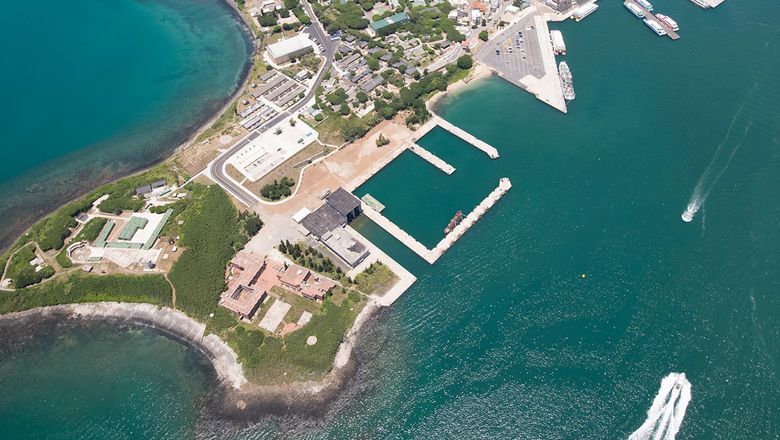
Two Chinese warships have been detected operating near Taiwan's Penghu Islands — a heavily fortified archipelago in the heart of the Taiwan Strait. Taiwan's military responded immediately with naval and air surveillance. The incident is the latest in a relentless pattern of Chinese military pressure that shows no signs of letting up.

.
Warships Spotted Near Critical Taiwanese Territory
Taiwan's defense ministry confirmed on Monday night that a Chinese destroyer and a frigate had entered waters to the southwest of the Penghu Islands — an archipelago that sits roughly in the center of the Taiwan Strait, approximately 50 kilometers off Taiwan's western coast.
The ministry released aerial photographs of both vessels. Taiwan's armed forces "closely monitored the formation and responded appropriately using naval and air forces," according to the official statement. No further operational details were disclosed.
Beijing's defense ministry did not respond to requests for comment.
Why Penghu Matters
The Penghu Islands are not just a scenic tourist destination — they are among the most militarily significant pieces of territory Taiwan controls. The archipelago's airfields, harbors, and proximity to China and Taiwan's western coast mean that, if seized, Penghu could serve as a forward base for PLA helicopters, drones and amphibious forces, enabling rapid and sustained attacks on Taiwan's heartland.
Penghu, which lies approximately 140 kilometers from China's coast, is the most heavily fortified of Taiwan's outlying island groups, with troops stationed on 16 of its 90 islets. The islands host major Taiwanese navy and air bases and are home to advanced missile defense systems.
Because of this strategic weight, Chinese warship movements in this specific area draw significantly more attention than routine patrols elsewhere around the island.
Part of an Escalating Pattern
China sends military vessels and aircraft into the waters and skies around Taiwan on an almost daily basis. Taiwan's defense ministry publishes regular updates on these activities — but there is an important distinction in how it handles different threats.
While aircraft movements are tracked and published daily on a map, the locations of Chinese warships are disclosed only rarely — typically when something unusual occurs, such as the detection of an aircraft carrier. China's aircraft carrier Liaoning sailed through the Taiwan Strait just last week, marking its first such transit in months.
By Tuesday morning, Taiwan's daily update showed a total of nine Chinese warships operating in waters around the island, accompanied by 22 military aircraft — a level of activity that has become disturbingly routine.
Beijing's Justification — and Taipei's Rejection
Earlier this month, China's defense ministry stated that its military activities around Taiwan are "entirely justified and reasonable" and blamed any tensions on the government in Taipei. It is a position Beijing repeats consistently, regardless of the scale or nature of its operations.
Taiwan's government flatly rejects that framing. Taipei maintains that China's efforts to turn the Taiwan Strait into its own internal waters have not stopped — and it insists that the island's democratic future can only be decided by its own people, not by military intimidation from across the strait.
Regional Pressure Is Widening
The incident does not stand alone. The Chinese military recently dispatched naval vessels led by one of its most advanced warships — the Type 052D destroyer Baotou — through waters near Japan's Amami Oshima island for training in the western Pacific. That move was widely seen as a deliberate response to a Japanese warship's transit through the Taiwan Strait — a passage Beijing condemned as deliberate provocation.
Japan has also stepped up its presence in the region, with the guided-missile destroyer JS Ikazuchi transiting the Taiwan Strait in April — the fourth such passage by Japan's navy since June.
The broader picture is one of intensifying competition across the entire Western Pacific, with China pressing outward and regional democracies pushing back.
What Comes Next
Analysts have noted that Chinese military pressure around Taiwan has been building steadily for years, and there is little indication of any near-term de-escalation. The PLA is rapidly modernizing and rehearsing joint island-seizure operations, while Taiwan continues to invest in its own defensive capabilities — including missile systems, drone technology, and deepened military cooperation with the United States.
Under the 2023 National Defense Authorization Act, U.S. Army Special Forces have been stationed at Taiwanese army amphibious command centers in Penghu and other locations, marking the first enduring American military presence on the island in more than four decades.
For now, Taiwan's military continues its daily watch — responding, adapting, and keeping a careful eye on waters that have become one of the world's most closely monitored flashpoints.
.
Sources:
- Reuters — Taiwan on alert after spotting two Chinese warships near its Penghu islands (April 28, 2026): https://www.reuters.com/world/china/taiwan-alert-after-spotting-two-chinese-warships-near-its-penghu-islands-2026-04-27/
- The Japan Times — Chinese military warships train in western Pacific after MSDF Taiwan Strait transit (April 2026): https://www.japantimes.co.jp/news/2026/04/20/japan/china-japan-pacific-naval-drills/
- Taipei Times — Penghu must be focus of defense (May 2025): https://www.taipeitimes.com/News/editorials/archives/2025/05/20/2003837173
- CNN — For nearly two weeks, Chinese fighter jets stopped buzzing Taiwan (March 2026): https://www.cnn.com/2026/03/12/asia/china-taiwan-buzzing-mystery-intl-hnk
- SOF Support Foundation — U.S. Special Forces Deepen Presence in Taiwan (2025): https://sofsupport.org/u-s-special-forces-deepen-presence-in-taiwan-amid-rising-regional-tensions/
.
What's Your Reaction?
 Like
0
Like
0
 Dislike
0
Dislike
0
 Love
0
Love
0
 Funny
0
Funny
0
 Wow
0
Wow
0
 Sad
0
Sad
0
 Angry
0
Angry
0













Comments (0)