

Convicted Harvard Scientist Now Leads China's Brain-Computer Interface Lab — And Washington Is Watching
Charles Lieber, the former Harvard chemist who was convicted of lying to U.S. federal authorities about secret payments from China, has resurfaced — not in retirement, but at the helm of a cutting-edge neurotechnology institute in Shenzhen. His case has reignited alarm among national security experts about America's ability to protect sensitive, dual-use research from foreign adversaries.

.
From Harvard to Shenzhen: A Scientist's Second Act
Charles Lieber, 67, once ranked as the world's leading chemist of the 2000s by scientific publishing metrics, is back in the laboratory. Not in Cambridge, Massachusetts — but in Shenzhen, China, where he now directs the i-BRAIN Institute, short for the Institute for Brain Research, Advanced Interfaces and Neurotechnologies.
The institute is a state-funded arm of the Shenzhen Medical Academy of Research and Translation (SMART), embedded in Guangming Science City — a government-built science hub that openly promotes itself under the slogan "Innovate with the Party."
Lieber moved to China in April 2025. At a Shenzhen government conference that December, he described his arrival as coming "with a dream and not much more." His stated personal goal: making Shenzhen a global leader in neurotechnology.
The Conviction He Left Behind
Lieber's story in the United States ended in a federal courthouse. In December 2021, a jury found him guilty of making false statements to federal investigators. The core of the case: he had concealed his involvement in China's Thousand Talents Program — a state-backed initiative designed to recruit overseas scientific expertise — while receiving payments from a Chinese university.
He also faced tax offenses tied to those undisclosed payments. His sentence was relatively lenient: two days in prison, six months of house arrest, a $50,000 fine, and restitution to the IRS. His defense had cited a serious lymphoma diagnosis during proceedings.
Lieber's conviction was one of the few successful prosecutions under the Justice Department's China Initiative, a program launched during President Trump's first term to combat Chinese economic espionage and technology theft. The initiative was later shut down under President Biden amid criticism — including concerns about racial profiling — and a track record of high-profile failures.
A Lab Better Equipped Than Harvard
What Lieber has built in Shenzhen appears to surpass, in several respects, what he had access to at Harvard.
In February 2026, i-BRAIN installed a deep ultraviolet lithography machine — a semiconductor-fabrication device from the Dutch company ASML — dedicated solely to the institute's use. At Harvard, Lieber had relied on shared lithography equipment serving over 1,600 users per year at the university's nanoscale research center. According to semiconductor analysts, even the model acquired by i-BRAIN likely cost around $2 million.
The institute also has direct access to the Brain Science Infrastructure (BSI) Shenzhen — a facility housing 2,000 primate research cages — on the same campus. Primate studies are widely considered an essential step before human trials of invasive brain-computer interface (BCI) technologies. There is no record of Lieber having conducted primate research during his Harvard tenure; the university had shut down its primate research center in 2015.
SMART's 2026 budget, drawn entirely from Shenzhen's municipal government, stands at approximately $153 million — an increase of nearly 18% over the prior year.
The Technology at Stake
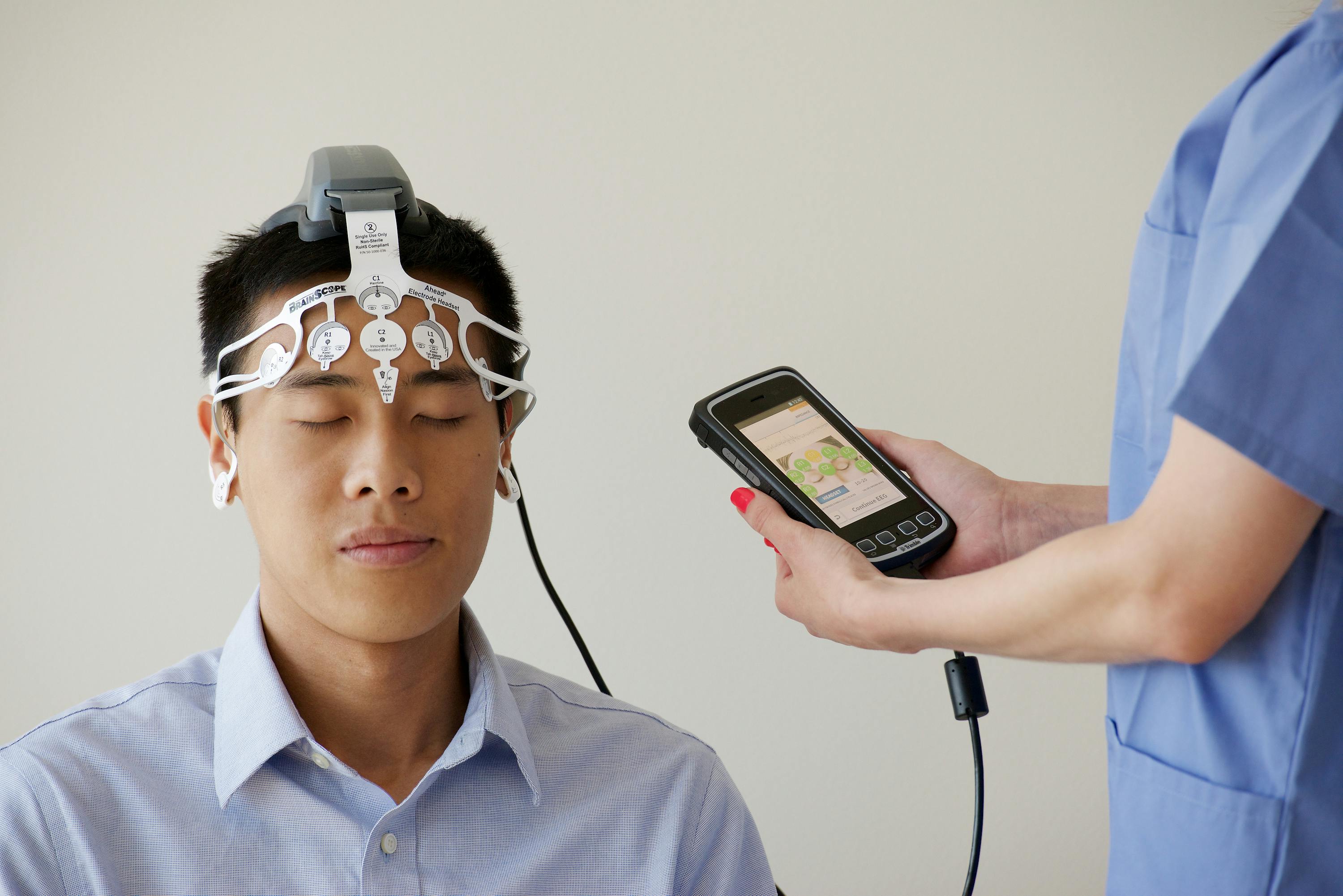
Brain-computer interfaces represent one of the most consequential — and contested — frontiers in modern science. On the medical side, BCI technology has already shown real results: helping patients with ALS communicate, and restoring limited movement to individuals with paralysis.
But the same technology carries significant military potential. Researchers within China's People's Liberation Army (PLA) have studied brain-computer interfaces as a means of enhancing soldiers' cognitive performance and situational awareness in combat — a fact documented by the U.S. Department of Defense. Washington's own Defense Advanced Research Projects Agency (DARPA) is also investing in BCI for applications in drone operations and cyber defense.
During his career at Harvard, Lieber's projects received more than $8 million in funding from the U.S. Department of Defense. That funding history makes his current role in China especially sensitive from a national security perspective.
China formalized BCI as a national strategic priority in its five-year plan adopted in March 2026. A senior official at the National Development and Reform Commission stated publicly that brain-computer interface technology could become "another Chinese high-tech sector" within a decade.
Traveling to China — With Court Approval
In a detail that has drawn sharp criticism, Lieber obtained judicial permission for at least three trips to China in 2024 while still serving his supervised release. One of those trips was approved by U.S. District Judge Denise Casper explicitly for "employment networking."
He was officially appointed as founding director of i-BRAIN in May 2025 — a fact that went largely unnoticed at the time. A Harvard colleague who co-authored nanofabrication research with Lieber, Jung Min Lee, has also joined the Shenzhen institute as a research associate professor. i-BRAIN is also actively recruiting international researchers for primate-based brain-computer interface studies.
"Exhibit A" for a Broken System
National security analysts are not mincing words about what Lieber's trajectory reveals.
Glenn Gerstell, a former general counsel of the National Security Agency and now a senior adviser at the Center for Strategic and International Studies (CSIS), called the situation a textbook example of systemic failure. "This is a guy who was convicted of precisely the thing that we want him to be convicted of in this context, and yet the minute he's released from house arrest, he's off in China," he said in remarks reported by Reuters.
Emily de La Bruyère, co-founder of the China-focused research firm Horizon Advisory and a senior fellow at the Foundation for Defense of Democracies, described Lieber as a symbol of a larger policy breakdown. Identifying, prosecuting, and punishing a single individual, she noted, had done nothing to slow the broader trend of Chinese strategic technology acquisition.
Both analysts pointed to Beijing's military-civil fusion doctrine — under which civilian research institutions and their outputs are legally required to be accessible to the Chinese military — as a key factor that makes Lieber's work in Shenzhen a matter of direct national security concern, regardless of his personal intentions.
A Broader Pattern
Lieber is not alone at SMART. At least six other researchers have made the move from U.S. institutions to the Shenzhen academy — though all others are Chinese-born scientists returning to their home country. SMART was founded in 2023 under Nieng Yan, a prominent structural biologist who left Princeton University to lead the institution — a move celebrated in Chinese state media.
The broader institution that houses SMART, the Shenzhen Bay Laboratory, launched in 2019 with a five-year government budget of around $2 billion. A dedicated 750,000-square-meter campus is currently under construction at a projected cost of $1.25 billion.
What Comes Next
The Lieber case has renewed calls in Washington for stronger legal frameworks governing the movement of researchers who work with dual-use technologies — particularly those with prior convictions or known ties to foreign state-recruitment programs.
For now, Charles Lieber is in Shenzhen, leading a well-funded, state-backed institute pursuing one of the most consequential technologies of the coming century. He once told FBI agents, at the time of his arrest, that he wanted to win a Nobel Prize. Whether that ambition leads to a scientific breakthrough — or deeper geopolitical consequences — remains to be seen.
.
Sources:
- Reuters – "Convicted former Harvard scientist rebuilds brain-computer lab in China" (April 30, 2026): https://www.reuters.com/world/china/convicted-former-harvard-scientist-rebuilds-brain-computer-lab-china-2026-04-30/
- U.S. Department of Justice – Case documentation, U.S. v. Charles Lieber: https://www.justice.gov/usao-ma/pr/harvard-university-professor-convicted-lying-about-china-ties
- Center for Strategic and International Studies (CSIS) – Glenn Gerstell profile and commentary: https://www.csis.org/people/glenn-gerstell
- Foundation for Defense of Democracies – Horizon Advisory / Emily de La Bruyère research: https://www.fdd.org/team/emily-de-la-bruyere/
- DARPA – Brain-Computer Interface Program overview: https://www.darpa.mil/program/neural-engineering-system-design
.
What's Your Reaction?
 Like
0
Like
0
 Dislike
0
Dislike
0
 Love
0
Love
0
 Funny
0
Funny
0
 Wow
0
Wow
0
 Sad
0
Sad
0
 Angry
0
Angry
0













Comments (0)