

US–Israel Strikes on Iran Weaken China’s Authoritarian Axis


.
Several justifications have been given for the U.S.–Israel strikes on Iran: to destroy Iran’s nuclear weapons program, to stop Iran’s conventional missile program, to prevent the regime from funding and supporting terrorist networks that are destabilizing the Middle East, such as Hamas, Hezbollah, and the Houthis, and to liberate the people of Iran who have been suffering under a totalitarian Islamic regime that they did not elect and do not want.
While all of those justifications are real and verifiable, one of the most significant impacts for the United States and its national security is the setback this conflict is dealing to the global power ambitions of the Chinese Communist Party (CCP), as well as the undermining of the China-led axis of authoritarians, which includes China, Russia, Iran, North Korea, and associate-member Venezuela.
The Trump administration’s National Security Strategy places significant emphasis on confronting the CCP’s efforts to replace the American-led world order. The reason the United States and Israel can work so closely together on Operation Epic Fury is that their interests align in neutralizing the security threat emanating from Iran. However, for the United States, there are broader implications for U.S.–China competition.
The CCP’s inability to support or defend Iran has shown China to be a paper tiger. Similarly, Moscow has steered clear of the conflict, demonstrating that Beijing’s rhetoric about “all-weather friendships,” “strategic partnerships,” and “iron brothers” is largely symbolic. There is little substance behind these alliances beyond trade and investment, arrangements that ultimately favor Beijing.
Some analysts describe China as backing a loose partnership with Russia, Iran, and North Korea intended to challenge U.S. influence and weaken the Western-led international order. The deaths or removal of leaders in countries such as Syria, Venezuela, and Iran have raised questions about whether this strategy has backfired for Beijing.
For years, Beijing invested heavily in Iran through energy purchases, infrastructure, and technology cooperation, turning the country into a strategic partner that strengthens China’s position in the Middle East. By striking Iran, the United States weakens a key component of this regional architecture.
Removing Venezuela’s Nicolás Maduro weakened another regime aligned with China and Iran. If the United States and Israel had attacked Iran while Venezuela remained under the same leadership, China could have quickly shifted to relying on Venezuelan oil.
Pressure on Panama also reduced CCP influence over the ports at both ends of the Panama Canal after the agreement with the Chinese company operating them was terminated, leaving Panama in full control and limiting China’s ability to interfere with cargo moving through the canal. With Venezuela no longer serving as a major partner, Iran was left more isolated as a supplier to China.
The CCP’s oil purchases kept Iran’s economy afloat while helping China build a strategic petroleum reserve allegedly exceeding 1 billion barrels, enough to sustain the Chinese economy for roughly 100 days during a naval blockade. In return, Beijing helped Iran develop its technological and military capabilities.
.
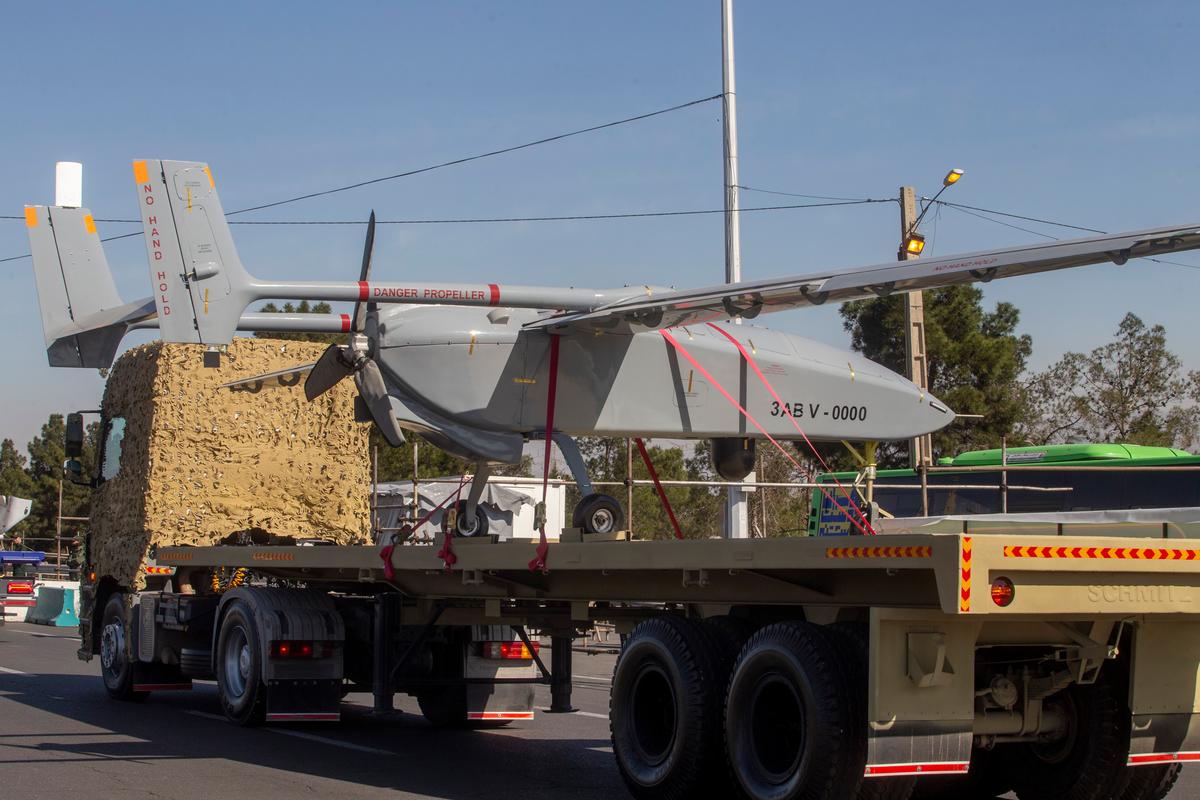
Iranian Army drone fleet parades on the occasion of National Army Dayin Tehran on April 18, 2025. Majid Saeedi/Getty Images
.
Chinese companies such as Huawei and ZTE helped construct Iran’s telecommunications networks and surveillance systems, including monitoring tools and facial-recognition technology that enabled the regime to suppress unrest during large protests and violent crackdowns in early 2026. Iran was allegedly close to acquiring Chinese CM-302 supersonic anti-ship cruise missiles capable of threatening U.S. carrier strike groups from nearly 200 miles away.
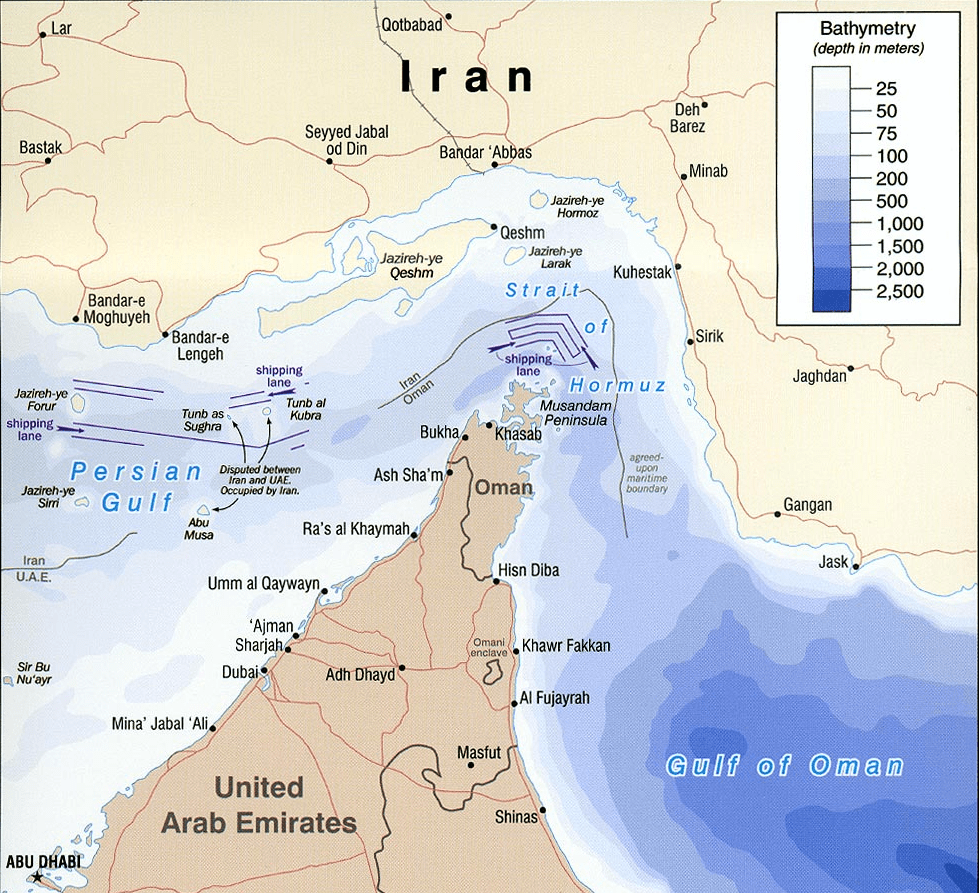
China supplied dual-use components used in Iranian missile production. Iran adopted China’s BeiDou navigation system, and joint naval exercises involving China, Russia, and Iran became routine. The Iranian port of Jask on the Indian Ocean was also being developed as part of China’s “string of pearls” network of strategic maritime locations.
These developments created an anti-access system positioned near major global energy routes that could restrict U.S. naval operations in a future conflict, particularly one involving Taiwan.
Iran also contributed to China’s strategic position through proxy conflicts. Houthi attacks on Red Sea shipping beginning in 2023 disrupted global trade and required a major American naval response, including carrier deployments and the use of costly missile interceptors. Such conflicts drain U.S. resources that might otherwise be used to deter China in the Indo-Pacific. At the same time, Iran arranged for the Houthis to allow Chinese ships safe passage through the sea.
So far, the U.S. military under President Donald Trump has removed China-ally Maduro and killed Ayatollah Khamenei. The administration has further isolated the CCP’s Caribbean ally, Cuba, pushing the island nation toward a possible breaking point, and pressured Panama into breaking China’s influence over the canal.
Chinese analysts acknowledge that recent U.S. actions challenge the popular belief inside China that the United States is declining as a global power. According to scholar Zheng Yongnian, the United States still has strong economic power and unmatched global military capabilities, and America’s ability to wage war depends primarily on its political will to deploy forces rather than on any lack of capacity.
From this perspective, weakening Iran reduces the need for constant U.S. crisis management in the Middle East and allows Washington to focus on strategic competition with China, particularly a potential conflict over Taiwan. At the same time, the current situation suggests that apart from trading with Russia, CCP leader Xi Jinping cannot rely on the axis of authoritarianism to support him in a war with the United States.
What's Your Reaction?
 Like
0
Like
0
 Dislike
0
Dislike
0
 Love
0
Love
0
 Funny
0
Funny
0
 Wow
0
Wow
0
 Sad
0
Sad
0
 Angry
0
Angry
0













Comments (0)