

Beijing Dreams Its Yuan Will Supplant the Dollar


.
As the People’s Bank of China (PBOC) maneuvers to raise the yuan’s foreign exchange value, it becomes abundantly clear that Beijing wants a wider international role for China’s currency.
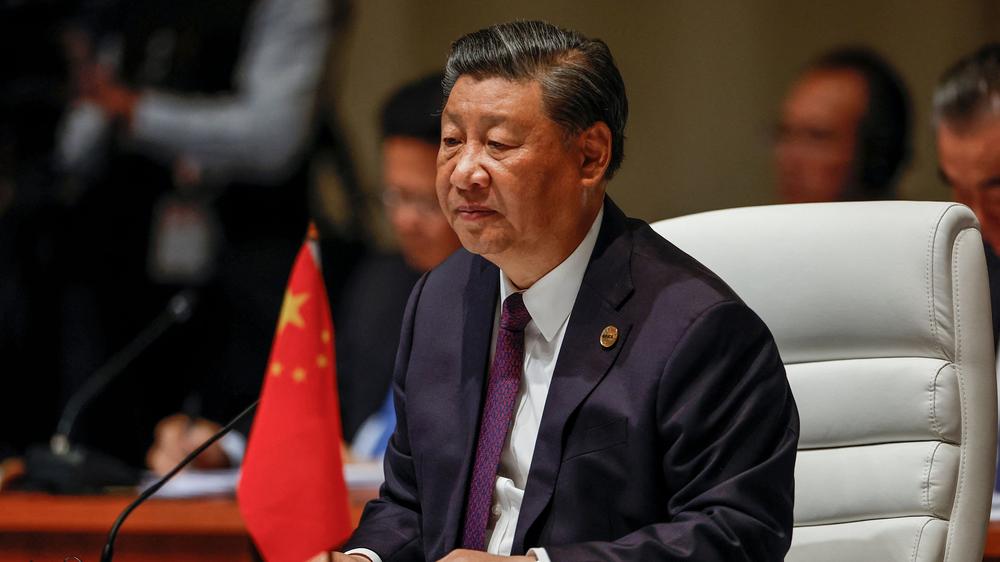
Chinese Communist Party leader Xi Jinping has more than hinted that he wants the yuan to gain sufficient stature to challenge the dollar’s presently undisputed role as the primary means of international exchange and store of wealth—what bankers and economists refer to as the “global reserve.” Perhaps one day the yuan will supplant the dollar, but the effort will surely take a long time, and in the interim, it will cost China.
Whatever benefits China will ultimately enjoy from the yuan’s internationalization, the effort will impose immediate costs. A stronger foreign exchange value will raise the cost of Chinese products to the rest of the world and, accordingly, tend to slow the growth of exports. Especially with American and European tariffs already raising the cost of Chinese products in two important export markets, a good export strategy would weaken the foreign exchange value of the yuan to offset some of the additional costs imposed by the tariffs.
That Beijing has decided to do the exact opposite suggests that it has decided to play the long game and accept the immediate disadvantages in order to claim whatever ultimate benefits accrue from displacing the dollar in its present international role.
Largely because of China’s impressive trading prowess, Beijing has made some progress toward its goal. In 2025, some 80 percent of all of China’s imports were denominated in yuan, and 30 percent of the combination of imports and exports was denominated in yuan. That constitutes an 11 percent increase in yuan-denominated product flows from 2024. The yuan’s share of all global payments remains low at some 3 percent, but that is a tremendous increase over the 0.3 percent recorded in 2011.
America’s large, diverse, and liquid financial markets give the dollar additional advantages. Because trading companies and their governments must hold balances in the reserve currency to conduct their business, any currency that aspires to that position must offer a wide variety of financial instruments for these holdings and markets active enough to enable governments and businesses to move into and out of those investments, as well as the reserve currency quickly and at minimal cost. The breadth and efficiency of dollar-based markets satisfy these needs. China’s financial markets cannot.
Perhaps one day the yuan will supplant the dollar as the world’s “reserve currency.” Perhaps the dollar will retain its status indefinitely, or some currency other than the yuan will rise to take the dollar’s place. Whatever happens, it will plainly take a long time to occur, and in the interim, Xi’s ambitions will cost the Chinese economy export growth.
What's Your Reaction?
 Like
0
Like
0
 Dislike
0
Dislike
0
 Love
0
Love
0
 Funny
0
Funny
0
 Wow
0
Wow
0
 Sad
0
Sad
0
 Angry
0
Angry
0














Comments (0)