

The World’s Biggest Loser: With Maduro Gone, China’s Dreams of Dominating South America Are Dying


.
The bombs that fell on Caracas destroyed a couple of billion dollars in Chinese-made military equipment, whose radars, missiles, and planes—which Beijing had billed as “capable of countering the West”—proved no match for American firepower.
But the American attack did more than vaporize the reputation of China’s pretty toys—and give some unwary purchasers like Iran a serious case of heartburn. It destroyed China’s principal outpost on the South American continent.
Make no mistake: Nicolás Maduro was China’s guy.
And over the past year and a half, the Chinese Communist Party (CCP) has continued to loudly support the corrupt, socialist regime that Maduro created—even though this makes it increasingly unlikely that China will ever recover the tens of billions of dollars it has loaned the country.
But payback, for Maduro’s Chinese communist backers, is not just a matter of dollars and cents. And neither was it just a matter of barrels of oil, although China’s thirst for energy was part of it.
Beijing is constantly on the hunt for new “strategic partners,” that is to say, countries run by socialist, communist, or authoritarian leaders who will support the CCP against the United States.
And if they are narco-terrorists running drugs into the United States that kill hundreds of thousands of Americans, well, that’s just an added bonus.
The CCP’s grand strategy in South America has been to attempt to replicate its “ironclad friendship” with communist Cuba and its “all-weather partnership” with Venezuela throughout the hemisphere. Socialist leaders hostile to the United States provided fertile ground for Beijing’s advances.
And it very nearly succeeded.
Just a few short years ago, it looked like all of Latin America would soon be collectively marching down China’s New Silk Road.

Leftist demagogues were in control of most Central and South American countries, from Honduras and Nicaragua in the north to Chile and Argentina in the south. All were China’s besties, even as ordinary people in those countries suffered from the usual ills of socialism: massive corruption, runaway inflation, and, of course, the loss of liberty.
But a funny thing happened on the way to the Chinese regime’s regional rise. In one country after another, the people rose up and voted the socialists out of power, replacing them with populists who refused to compromise on core issues like security, sovereignty, and prosperity—with China or anyone else.
The first to emerge was El Salvador’s Nayib Bukele. Elected to the presidency in 2019, he quickly removed thousands of MS-13 and other gang members from the streets, then set about rebuilding the country’s economy. The country’s streets are now the safest in the Western hemisphere, and the ravages of a decade of civil war have been repaired.
A slew of similar populist leaders have followed in the past two years.
Javier Milei was elected president of Argentina in 2023. A committed libertarian, Milei cut the bloated Argentinian bureaucracy in half with his fabled chainsaw. His party’s decisive victory in the recent midterm elections reflects the public’s approval of his slash-and-burn approach, which has stabilized the currency and jump-started economic growth.
- Chileans chose José Antonio Kast, a conservative Catholic and father of nine children, over his Communist Party opponent. Kast has promised to undertake the same economic reforms that have been so successful in neighboring Argentina, as well as control illegal immigration.
- Bolivians elected Rodrigo Paz, ending the country’s 10-year embrace of socialism, which had crushed its economy.
- Hondurans went with conservative National Party candidate Nasry Asfura, who benefited from a key endorsement from President Donald Trump late in the race.
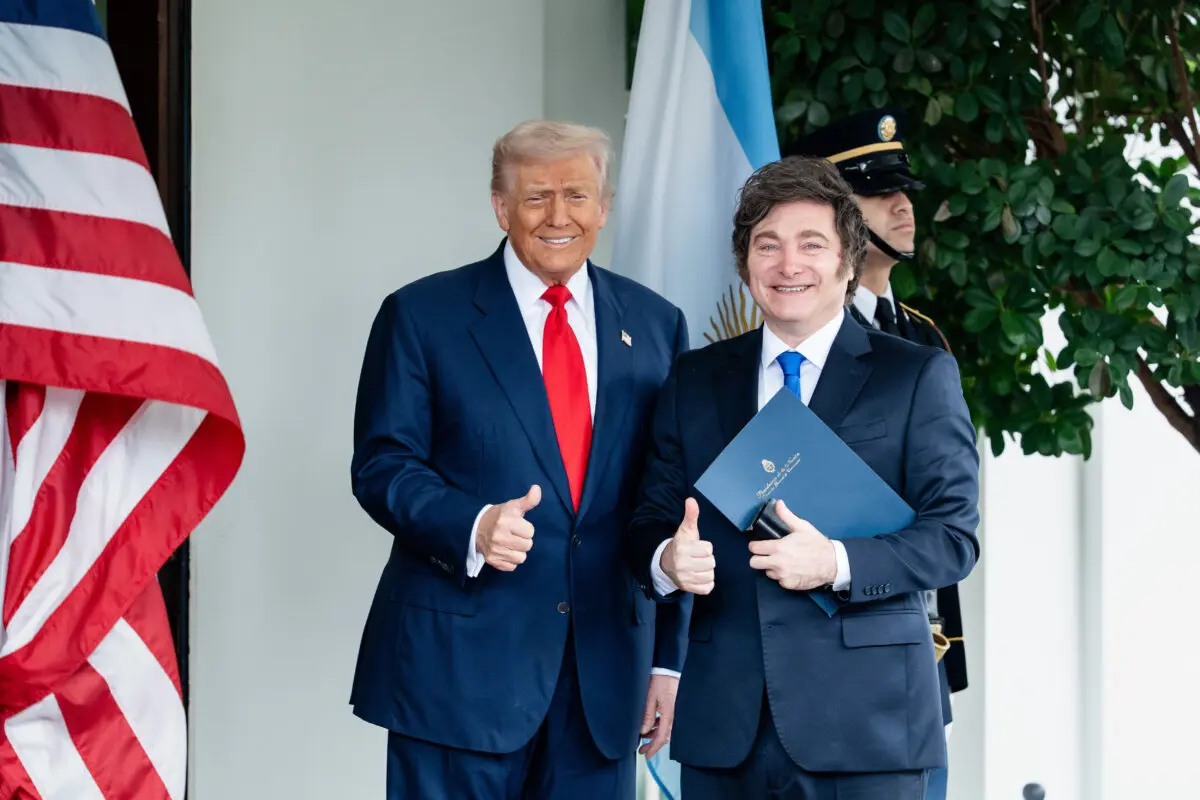
There is now a critical mass of strong, conservative leaders south of the border who, like Trump, are determined to crack down on the drug cartels, stabilize their democracies, and grow their economies.
And these leaders are looking north rather than east for solutions to their country’s problems. They seek closer ties with Washington to address regional threats, for example, because they understand that Beijing, with its support of leftist regimes, is exacerbating these threats.
The spark that lit this populist prairie fire was the 2016 election of Trump, which shattered the illusion that voters had to accept the same tired, recycled, establishment candidates election after election.
Trump’s reelection in 2024 further galvanized populist movements throughout the hemisphere, leading to renewed campaigns to elect leaders who were willing to decisively address the concerns of ordinary people for liberty and prosperity. Thus, we now have a bevy of decisive, anti-establishment leaders who are natural allies of the United States and, it must be said, natural enemies of the Chinese regime.
It is too early to say that the entire continent is going our way, which is to say the way of open economies and democratic rule. The socialists still have control of the continent’s largest country, Brazil. And the people of Cuba still languish on the prison island.
But the momentum is unmistakable. The best days of the Americas are ahead of it.
There is now a critical mass of like-minded conservative leaders across the Americas who, united by shared values and common concerns, have a historic opportunity to Make the Americas Great Again.
The best days of the Americas are ahead of it.
As for Beijing’s remaining socialists and communist besties in the region, they should not be peacefully sleeping in their beds tonight.
Not because they might be whisked away at midnight by U.S. Special Forces.
But because their own people, inspired by these winds of freedom, are surely organizing to oust them.
What's Your Reaction?
 Like
0
Like
0
 Dislike
0
Dislike
0
 Love
0
Love
0
 Funny
0
Funny
0
 Wow
0
Wow
0
 Sad
0
Sad
0
 Angry
0
Angry
0















Comments (0)