

Xi Jinping Versus Zhang Youxia: No Real Winner in China’s Latest Power Struggle


.
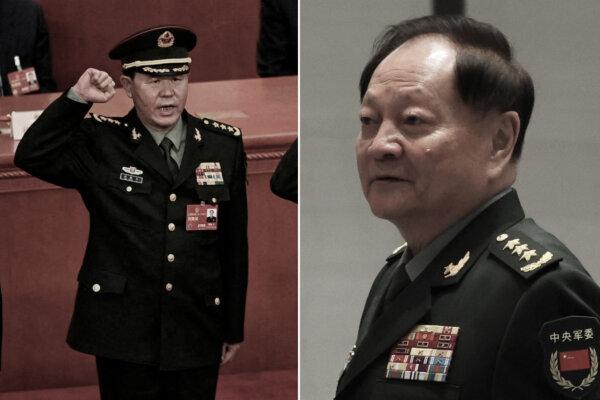
China’s Ministry of National Defense announced on Jan. 24 that Politburo member and Central Military Commission (CMC) Vice Chairman Zhang Youxia, along with CMC member and Joint Staff Department chief Liu Zhenli, were under investigation for “serious violations of discipline and law.”
This is the biggest political bombshell in the Chinese Communist Party (CCP) so far in 2026. It confirms rumors of a brutal power struggle between the CCP’s top leader, Xi Jinping, and his former close ally and second-highest-ranking military official, Zhang Youxia, in which Zhang appears to have been defeated.
The Fight Has Nothing to Do With Combatting Corruption
The official military newspaper PLA Daily called the probe a “major achievement in the anti-corruption struggle.” That claim doesn’t hold up. Xi Jinping has been in power for 14 years, but his so-called anti-corruption drive has never been genuine—it has always been a cover for political purges and power grabs, especially regarding control of the military.The CCP has long lived by former CCP leader Mao Zedong’s dictum: “Political power grows out of the barrel of a gun.” Whoever controls the military holds real power.
At the 20th Party Congress in 2022, Xi secured an unprecedented third term and established a seven-member CMC: himself as chairman, Vice Chairmen Zhang Youxia and He Weidong, and members Li Shangfu, Liu Zhenli, Miao Hua, and Zhang Shengmin.
Within months, Xi launched a sweeping purge within the military, starting with the Rocket Force, Equipment Development Department, and major state defense companies. Many senior generals who are believed to be Zhang Youxia’s supporters fell, including CMC member and former Defense Minister Li Shangfu.
In July 2024, during the CCP’s Third Plenum, rumors circulated that Xi had suffered a sudden illness and been hospitalized. Zhang allied with dissatisfied Party elders, princelings, and military figures to strike back.
At that point, Zhang effectively controlled the People’s Liberation Army (PLA), while Xi had lost real power. Still, to maintain the CCP’s authority, Zhang allowed Xi to retain his titles as general secretary, president, and CMC chairman for the time being. Removing a top leader requires a convincing rationale; otherwise, it will be seen as a coup and could trigger violent resistance, thereby shattering the Party’s rule.
Xi, unwilling to accept a hollowed-out military command and fearing Zhang would eventually move against him, waited for his chance to strike first. According to sources familiar with the situation, Xi used forces under his protégé Wang Xiaohong, minister of Public Security, to deliver a decisive blow against Zhang and Liu Zhenli and seize the two. To prevent backlash from Zhang’s allies, Xi rushed the public announcement of their downfall, creating a fait accompli.
The original seven-member CMC from 2022 has been reduced to just Xi and Zhang Shengmin. Given Xi’s deep paranoia, he can’t fully trust even Zhang Shengmin, although the latter is said to be a member of Xi’s political faction based in Shaanxi, Xi’s home province.
.
Ongoing Power Struggles
Since its establishment in 1921 under Soviet influence, the CCP has been marked by violent internal conflicts. From its first leader, Chen Duxiu—who was expelled from the Party in 1929—to Xi Jinping, these power struggles have consistently led to purges, torture, and sometimes death.Political purges began immediately after Mao’s death. His designated successor, Hua Guofeng, arrested the “Gang of Four”—the four most influential people at the time, including Mao’s widow, Jiang Qing—within weeks, with the CCP elders backing him. Jiang Qing committed suicide in her Beijing residence in May 1991.
Hua and his successors—Hu Yaobang and Zhao Ziyang—were all taken down by Deng Xiaoping.
.

Jiang Zemin purged the Yang brothers in the People’s Liberation Army (PLA)—Yang Shangkun, former vice chairman of the CMC, and Yang Baibing, secretary-general of the CMC—to secure control of the military, as well as Beijing party secretary Chen Xitong, whom he deemed a political rival.
Succeeding Jiang, Xi rose to become the paramount leader of the CCP in 2012. Xi’s rule has been marked by nonstop power struggles waged in the name of anti-graft campaigns—especially since his third term in 2022.
Xi has purged more than 160 generals in his first two terms and 133 more, including Zhang Youxia and Liu Zhenli, in his third term—far more than the number of generals lost in wars, civil conflicts, and the Cultural Revolution combined since the PLA’s founding in 1927. This is unprecedented in CCP and world military history.
Defending CCP Rule Leaves No One Safe
Xi Jinping’s relentless power struggles have now alienated almost every major faction in the CCP: the first-generation CCP elders, the second-generation princelings, the Communist Youth League faction, and the so-called reform-and-opening-up group. He’s even turned against nearly every active-duty general he personally promoted.Who does Xi still trust, and who still trusts him?
In the end, Xi risks being completely isolated—abandoned by allies, with no loyal supporters—and facing a grim fate.
Xi reached this point all in the name of “defending the Party.”
Zhang Youxia did the same.
Concluding Thoughts
China’s real path forward lies in embracing universal values: freedom, democracy, human rights, and the rule of law. It means putting people first, respecting every life, and building a system guided by traditional Chinese principles of harmony and unity.Only then can future Chinese leaders stop fearing for their families’ lives every day. Only then can supreme power transfer peacefully, legally, and predictably—no more constant dread of coups. Leaders in power won’t fear being purged after stepping down, and retired leaders can enjoy their later years in peace.
General Zhang Youxia, now in his mid-70s, spent his life serving the CCP—risking his life on battlefields—and yet his fate remains unknown.
This tragic lesson should prompt any future leader to reflect deeply.
What's Your Reaction?
 Like
0
Like
0
 Dislike
0
Dislike
0
 Love
0
Love
0
 Funny
0
Funny
0
 Wow
0
Wow
0
 Sad
0
Sad
0
 Angry
0
Angry
0











Comments (0)