

Trump Expands US–Taiwan Engagement as China Increases Pressure


.
President Donald Trump’s new Taiwan law strengthens U.S.–Taiwan ties, accelerates arms support, and signals that Washington has not abandoned Taipei despite rising pressure from China’s communist regime.
Trump signed the Taiwan Assurance Implementation Act on Dec. 2, requiring the State Department to regularly review and update guidelines on official U.S.–Taiwan interactions. The legislation amends the Taiwan Assurance Act of 2020 by replacing the previous one-time review with permanent, five-year reviews that must identify opportunities to lift self-imposed limitations on engagement between U.S. and Taiwanese officials, with reports due within 90 days of each review.
In plain terms, the law ensures that Washington continues to seek ways to expand and modernize official contact with Taiwan, rather than letting old rules from the 1970s determine how the two sides can work together.
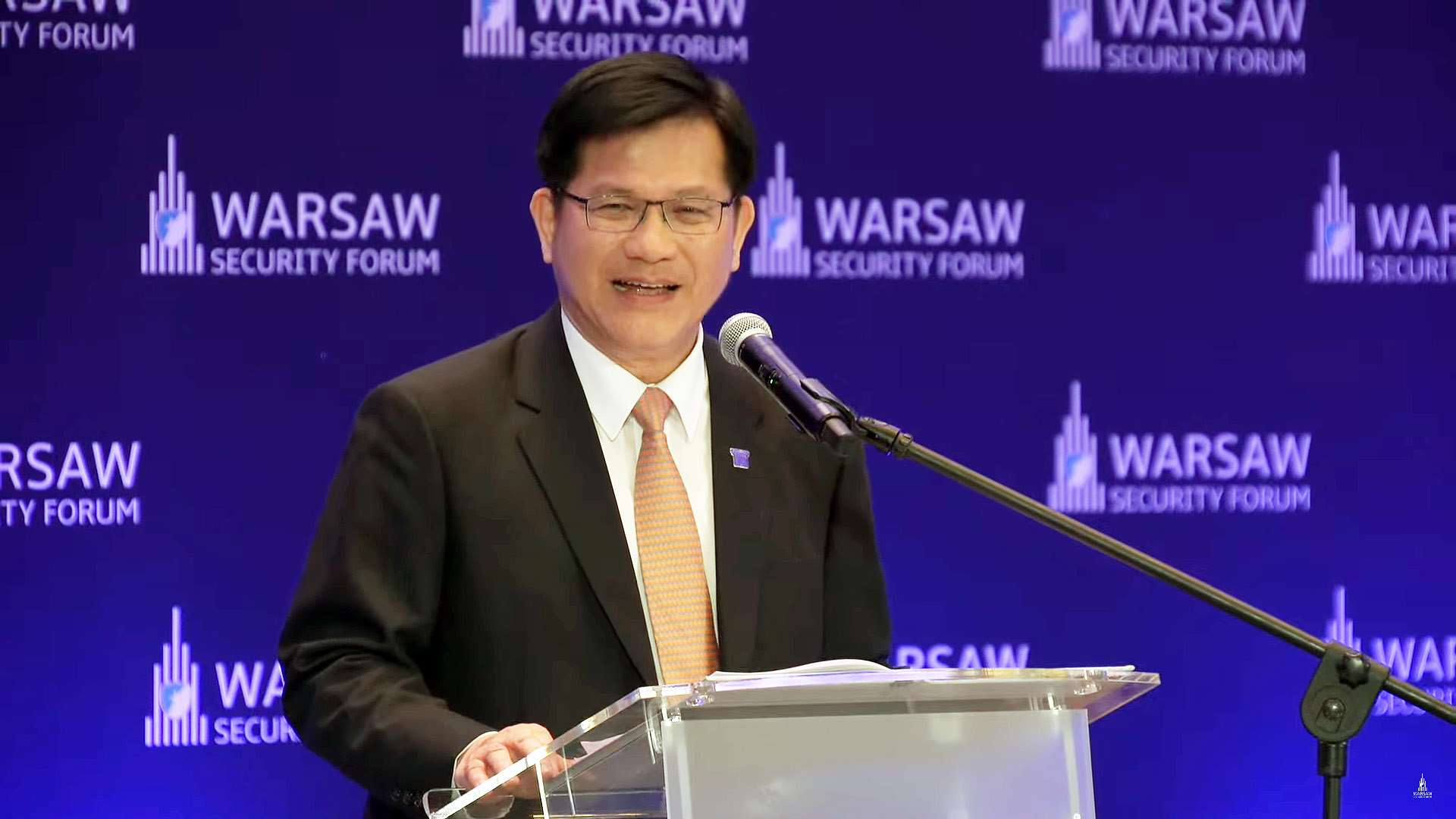
Taiwan welcomed the move as a reaffirmation of shared democratic values and a sign that cooperation will deepen. Taiwanese Foreign Minister Lin Chia-lung called it a major step forward and suggested the reviews could allow Taiwanese officials expanded access to federal agencies, even though the law does not explicitly mandate this.
The Chinese Communist Party (CCP) condemned the law, warning that Taiwan lies at the core of China’s national interests and urging Washington to halt official contact that could encourage independence.
Taipei rejected Beijing’s claims, asserting its right to engage freely with other countries. The United States remains Taiwan’s main supporter and arms supplier despite officially recognizing Beijing in 1979, and tensions have grown since Trump’s first term, when then-Secretary of State Mike Pompeo lifted long-standing restrictions on U.S.–Taiwan official contact in 2021.
The new law builds on that shift by formalizing regular policy reviews and ensuring continued engagement. The bipartisan bill passed the House unanimously in May and cleared the Senate in November. The signing followed Trump’s meeting with CCP leader Xi Jinping in South Korea and comes ahead of his planned visit to China, prompting U.S. Treasury Secretary Bessent to insist that America’s relationships with both sides remain unchanged.
Recent developments have added further strain. Last month, the Pentagon approved a $330 million package of fighter jet parts and maintenance support for Taiwan, the first arms sale since Trump returned to office. Taipei welcomed the decision, thanking the United States for sustaining regular arms sales and strengthening the island’s resilience, calling the deepening partnership a cornerstone of Indo-Pacific stability.
Beijing responded by accusing Washington of violating its “One China principle” and warning that it would take whatever measures it deemed necessary to defend its sovereignty.
.
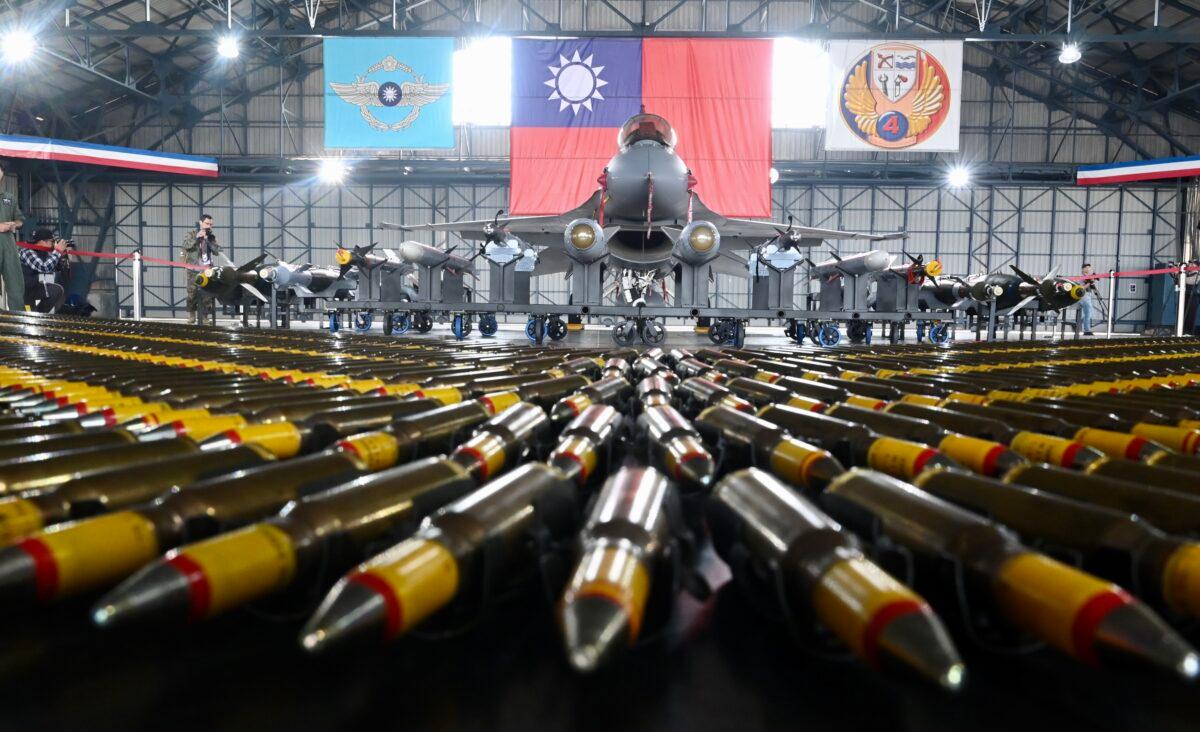
Irrespective of Beijing’s objections, the Trump administration is urging Congress to increase Taiwan’s military assistance from the $500 million in the House-passed 2026 defense appropriations bill to $1 billion, arguing that the full amount is necessary to strengthen Taiwan’s self-defense and safeguard U.S. personnel in any contingency with China.
The request comes amid concern that Beijing may be preparing for military action, as 2027, the centennial of the People’s Liberation Army (PLA), is seen by many analysts as the year the CCP may attempt to seize Taiwan.
Retired Gen. Charles Flynn, former head of U.S. Army Pacific, warned that the Chinese regime is rapidly building the forces necessary for an invasion. At the hearing, he stressed that the United States has overrelied on sea and air power while neglecting the land-based systems needed to block a Chinese landing.
Taiwanese President Lai Ching-te likewise cautioned that Beijing is accelerating both its military intimidation and its political influence campaigns against the island. Chinese military drills targeting Taiwan are becoming more frequent and intense, while united-front operations continue to expand.
Retired Rear Adm. Mark Montgomery said at the committee’s May hearing that China will pair any military action with cyberattacks and economic coercion.
Lawmakers and experts called for immediate action: strengthening allied land power, accelerating arms deliveries to Taiwan, reinforcing cyber defenses, and improving joint readiness across the region.
It appears that Trump has pursued friendlier ties with Xi while avoiding any public statement about how he would respond to a Taiwan crisis. At the same time, he has approved new arms sales to Taipei and signed the Taiwan Assurance Implementation Act. His approach reflects the long-standing U.S. doctrine of strategic ambiguity.
The House Select Committee on the CCP has stated that defending Taiwan is vital for the United States. Taiwan is a democratic partner, a major trading ally, and the world’s leading producer of advanced semiconductors. Its fall would cripple global supply chains, trigger massive economic losses, and destabilize the Indo-Pacific, endangering allies such as Japan and the Philippines. A Chinese takeover would also undermine U.S. credibility with partners worldwide and embolden Beijing toward further aggression.
Deterring conflict now is far cheaper, and this is where increased arms sales to Taiwan and careful diplomacy matter, simultaneously making a Chinese invasion prohibitively costly without pushing the CCP to the point of action.
What's Your Reaction?
 Like
0
Like
0
 Dislike
0
Dislike
0
 Love
0
Love
0
 Funny
0
Funny
0
 Wow
0
Wow
0
 Sad
0
Sad
0
 Angry
0
Angry
0














Comments (0)