

No Deal in Islamabad: U.S.-Iran Peace Talks Collapse After 21-Hour Marathon
The most significant direct diplomatic encounter between the United States and Iran in nearly half a century has ended without a breakthrough. After grueling negotiations stretching across 21 hours in Islamabad, Pakistan, Vice President JD Vance declared on Sunday that no agreement had been reached — leaving a fragile two-week ceasefire in serious doubt and global energy markets on edge.

.
A Historic Opportunity — Squandered or Just Delayed?
The most significant direct diplomatic encounter between the United States and Iran in nearly half a century has ended without a breakthrough. After grueling negotiations stretching across 21 hours in Islamabad, Pakistan, Vice President JD Vance declared on Sunday that no agreement had been reached — leaving a fragile two-week ceasefire in serious doubt and global energy markets on edge.
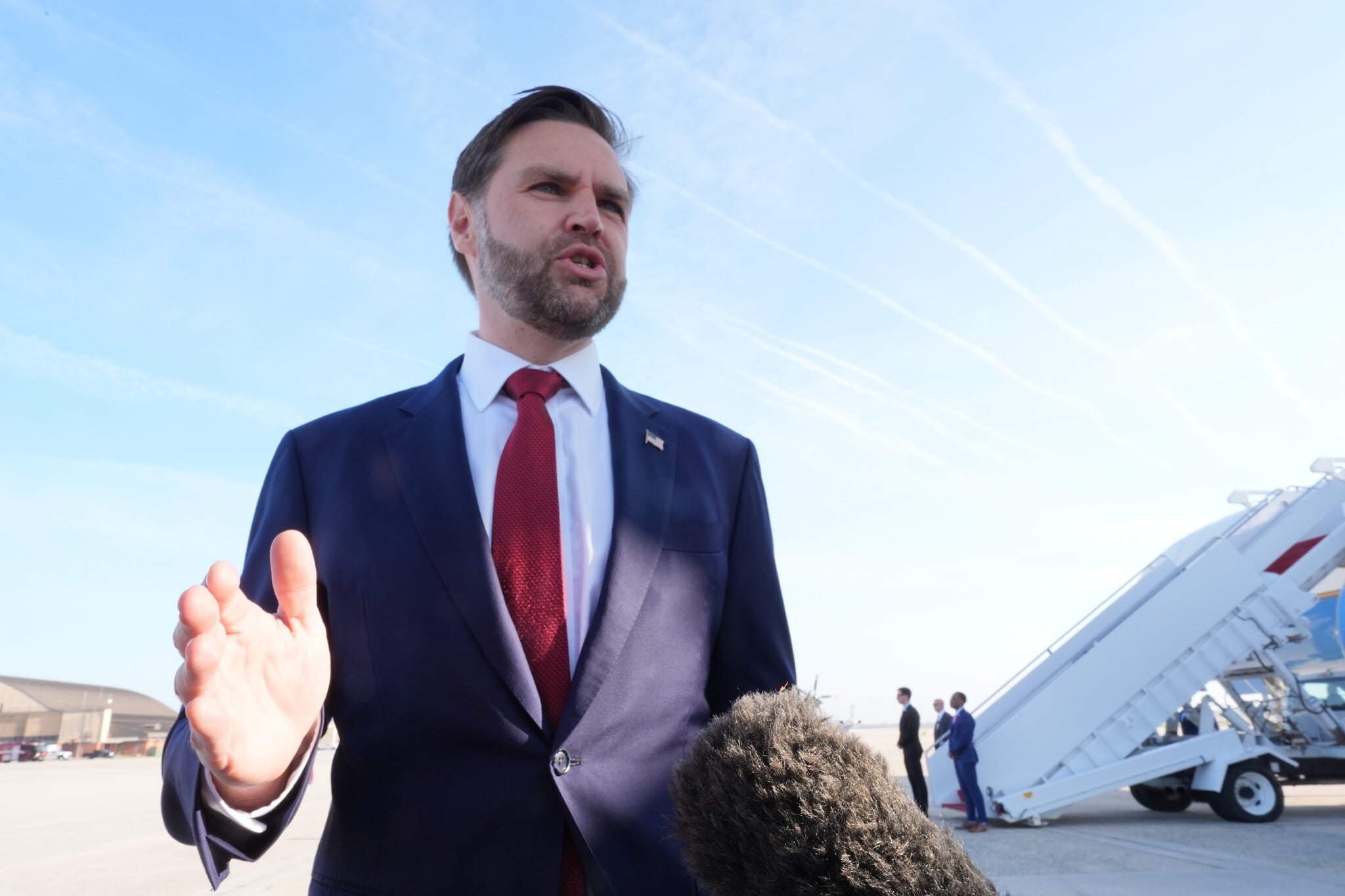
"We have not reached an agreement," Vance told reporters before boarding Air Force Two to return to Washington. He added that Iran had "chosen not to accept our terms."
The talks were the first face-to-face engagement between the two countries since 2015, when the Obama administration negotiated a nuclear deal with Tehran — a deal later scrapped by Trump during his first term.
The Core Dispute: Nukes and the Strait of Hormuz
Two issues proved impossible to bridge: Iran's nuclear ambitions and control of the Strait of Hormuz — the narrow waterway through which roughly one-fifth of the world's energy supplies pass.
Vance made clear that the U.S. required an unambiguous Iranian commitment to forgo nuclear weapons — not just now, but permanently. "The question is, do we see a fundamental commitment of will for the Iranians not to develop a nuclear weapon, not just now, not just two years from now, but for the long term? We haven't seen that yet," he said.
Iran, for its part, insisted that the American demands went far beyond what was reasonable. Iranian state broadcaster IRIB said the two sides "could not find common ground on a number of key matters" and that U.S. negotiators had placed excessive demands on the table.
Tehran's demands included the release of approximately $6 billion in frozen assets, guarantees around its nuclear program, the right to charge transit fees to ships passing through the Strait of Hormuz, and an end to Israeli strikes on Lebanese territory.
Who Was at the Table?
The U.S. delegation was led by Vice President Vance, accompanied by senior envoy Steve Witkoff and President Trump's son-in-law Jared Kushner. On the Iranian side, Parliament Speaker Mohammad Bagher Qalibaf headed the delegation, joined by Foreign Minister Abbas Araqchi.
Pakistan played a critical role as host and mediator. Analysts noted that Pakistan was uniquely trusted by both parties — a rare distinction in a conflict that has deeply fractured the region. Pakistani Foreign Minister Ishaq Dar urged both sides to preserve the ceasefire despite the failure to reach a deal.
A War That Has Already Claimed Thousands of Lives
The backdrop to these talks is a conflict that began on February 28, 2026, when the United States and Israel launched large-scale strikes on Iran. According to the U.S.-based Human Rights Activists News Agency, at least 1,701 civilians have been killed in Iran since the start of the war, including 254 children.
The war has also had immediate global economic consequences. Iran sealed the Strait of Hormuz at the outset of the conflict, trapping hundreds of oil tankers and sending crude prices sharply higher. Only as ceasefire talks were underway did the U.S. military begin a mine-clearing operation in the strait, with two guided-missile destroyers conducting operations in the waterway on Saturday.
Three supertankers — capable of carrying 2 million barrels of oil each — passed through the strait on Saturday, marking what appeared to be the first commercial vessels to exit the Gulf since the ceasefire was announced.
Iran Plays for Time — The U.S. Claims Victory
Analysts watching the talks noted a fundamental asymmetry in urgency. Former State Department negotiator Aaron David Miller observed that the Iranians appeared to be operating on a much slower timeline than Washington. "They are clearly in no hurry to make concessions," he told CNN.
That assessment was confirmed by Iranian state media. Iran's state-affiliated Fars agency reported that Tehran "is in no hurry, and until the US agrees to a reasonable deal, there will be no change in the status of the Strait of Hormuz."
President Trump, meanwhile, struck a characteristically confident tone. "We're negotiating. Whether we make a deal or not makes no difference to me, because we've won," he told reporters on Saturday. He has repeatedly claimed that Iran's military has been effectively destroyed — a claim met with skepticism by some U.S. intelligence assessments.
The Ceasefire Hangs by a Thread
Iran's Foreign Ministry spokesperson offered a measured signal that diplomacy was not entirely dead, saying "diplomacy never comes to an end" — while Iranian state media simultaneously reported that Tehran currently has no plans for a further round of negotiations.
Israel's Prime Minister Benjamin Netanyahu, notably absent from any reference to the Islamabad talks, insisted Saturday that "the battle is not yet over." Israeli strikes on Hezbollah positions in Lebanon continued even as talks were underway — a major sticking point for Iran, which has demanded that any permanent deal include an end to the Lebanon conflict.
Vance suggested a return to major violence was possible, saying Iran had rejected the U.S. "final and best offer." What comes next remains deeply uncertain — for the region, for global energy markets, and for the millions of civilians caught in between.
.
Sources
- Reuters – US-Iran peace talks end without agreement, delegations leave Pakistan (April 12, 2026)
- NPR – No Deal: U.S.-Iran peace talks in Islamabad fall through – https://www.npr.org/2026/04/11/nx-s1-5781760/pakistan-peace-talks-us-iran
- CNN – Iran war ceasefire talks live updates – https://edition.cnn.com/2026/04/12/world/live-news/iran-us-war-talks-trump
- NBC News – Live updates: No agreement between U.S. and Iran after 21 hours of talks – https://www.nbcnews.com/world/iran/live-blog/live-updates-trump-iran-hormuz-israel-ceasefire-talks-pakistan-rcna285140
- CBS News – Vance says no deal reached after marathon session – https://www.cbsnews.com/live-updates/iran-war-trump-strait-of-hormuz-israel-ceasefire-talks/
- CNBC – Vance heads back to the U.S. without striking a deal – https://www.cnbc.com/2026/04/11/us-iran-talks-set-to-begin-in-islamabad-after-delegations-arrive.html
- Stars and Stripes – US Central Command announces mine clearance mission in Strait of Hormuz – https://www.stripes.com/theaters/middle_east/2026-04-11/us-iran-talks-pakistan-hormuz-reports-21345059.html
- Time Magazine – What You Need To Know About the First Day of Peace Talks – https://time.com/article/2026/04/11/strait-of-hormuz-iran-peace-talks/
.
What's Your Reaction?
 Like
2
Like
2
 Dislike
0
Dislike
0
 Love
0
Love
0
 Funny
0
Funny
0
 Wow
2
Wow
2
 Sad
0
Sad
0
 Angry
0
Angry
0














Comments (0)