

3 New Laws in Communist China

.
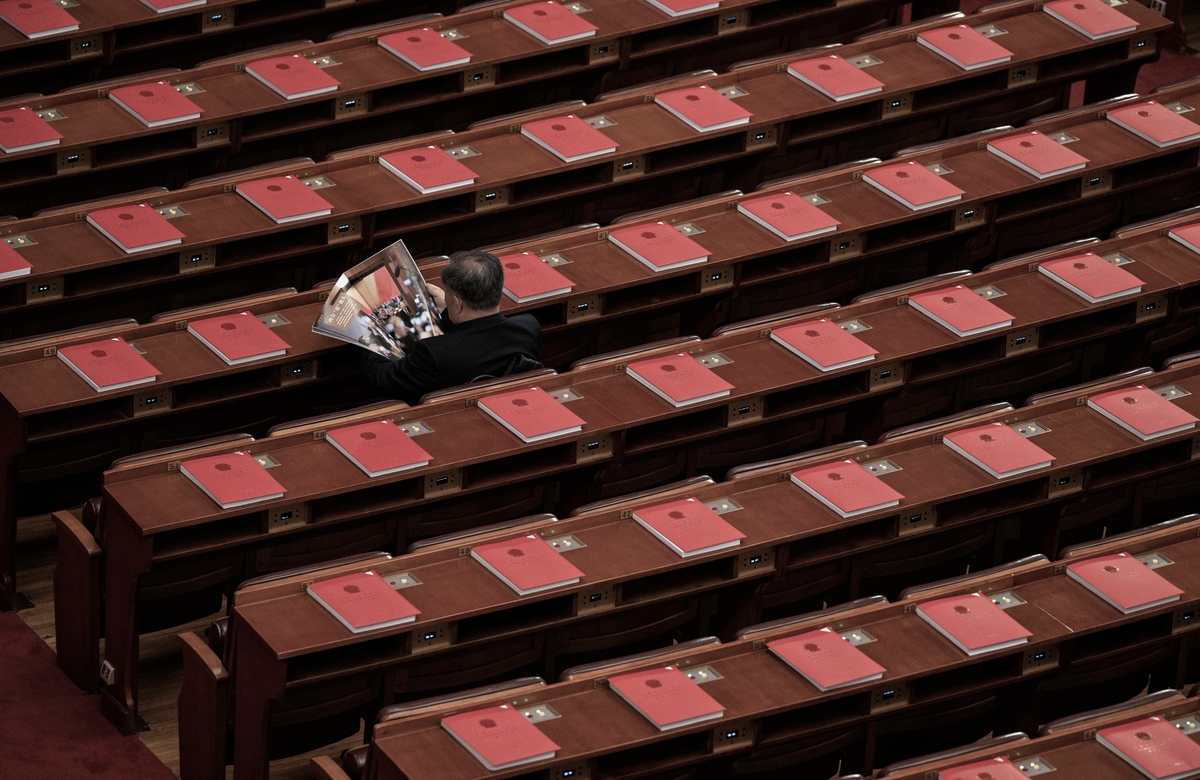
With minimal debate, the fourth session of the 14th National People’s Congress, China’s rubber-stamp legislature, passed three draft laws before the session’s closing on March 12. These included a draft environmental code, a draft bill on promoting ethnic unity and progress, and another on national development planning.
The Ecological and Environmental Code
The NPC Environmental and Resources Committee began drafting the code in 2023 to consolidate a relatively large body of pre-existing environmental law. The code’s 1,188 articles integrate 10 existing laws—including the foundational Environmental Protection Law—into a single document, ranking second only to the Chinese Constitution in legal effect. Its five chapters cover general provisions, pollution prevention and control, ecological protection, green and low-carbon development, and legal liability.Problems With Execution
Despite its genuine legal ambition, the environmental code faces serious structural constraints under CCP governance. First, the law does not create genuinely independent enforcement. Supervision and management of national environmental protection sits with the Ministry of Ecology and Environment under the State Council, and supervision of natural resources sits with the Ministry of Natural Resources—both ultimately subordinate to the Party’s political priorities. Environmental inspectors who have exposed violations at state-owned enterprises or local government pet projects have most likely faced career consequences rather than rewards.Second, the law’s climate provisions remain aspirational without binding mechanisms. The chapter on climate change establishes principles rather than enforceable obligations, reflecting the fact that China’s carbon peaking commitment (2030 target date) and neutrality commitment (2060 target date) remain heavily dependent on the Party’s continued political will rather than legal compulsion. Local officials who face GDP growth targets alongside environmental targets have historically prioritized growth.
The Law on Promoting Ethnic Unity and Progress
The law is designed to codify CCP leader Xi Jinping’s new orthodoxy for governing China’s ethnic minorities—a doctrine known as “Important Thinking on Improving and Strengthening Ethnic Work,” reflecting the so-called second-generation ethnic policies promoted by several prominent Chinese scholars.The law declares “a sense of community for the Chinese nation” to be “the foundation of ethnic unity.” It mobilizes the whole of government and society to achieve assimilationist goals, imposing general obligations on a wide range of public and private actors, including public employees, mass organizations, enterprises, public-service institutions, industry groups, religious institutions, neighborhood committees, and the military.
On language, Article 15 mandates Mandarin to be taught to all children before kindergarten and throughout compulsory education through high school, essentially stating that minority languages cannot be the primary language of instruction nationwide.
The law also asserts extraterritorial jurisdiction over foreign organizations or individuals who “commit acts targeting the PRC that undermine ethnic unity and progress or create ethnic division.”
It also broadly requires media, internet service providers, and families to promote the Party’s ethnic policy. Parents are reminded of their duty to provide “lawful family education” and are prohibited from “instilling in minors ideas detrimental to ethnic unity and progress.”
The emphasis on “sinicization of religion,” as highlighted by Xi during his visits to Xinjiang, underscores the broader goal of aligning all religious practices with state-sanctioned Chinese characteristics.
Chinese regime spokespeople framed the law as bringing development and prosperity to minority areas. Criticism from outside China was pointed. Ethnic Uyghurs, a Muslim minority, have been the target of a long-term campaign of detention and later incarceration by communist China. While the short-term internment camps were said to be closed in 2019, thousands ended up in prison, where experts said they were targeted for their identity rather than actual crimes.
.
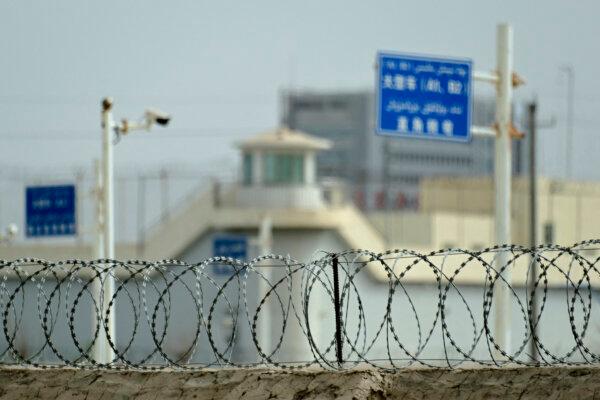
An alleged detention facility in the northwestern Xinjiang region of China on July 19, 2023. Pedro Pardo/AFP via Getty Images
.
Problems With Execution
The problems do not relate to weak enforcement—quite the contrary. The CCP has demonstrated for years that it can and does enforce assimilationist policies with considerable coercive force. The deeper tensions are:First, the law is likely to generate exactly the resistance it officially aims to prevent. In 2020, when Mongolian-language textbooks were replaced with Chinese ones in Inner Mongolia, the policy change led to massive protests, an immediate crackdown, and later reeducation campaigns. Legally mandating Mandarin-only instruction is likely to harden ethnic identities rather than dissolve them, particularly among communities with strong linguistic and religious traditions.
Second, the extraterritorial jurisdiction clause is essentially unenforceable against foreign nationals and organizations in democratic countries, but it creates a chilling effect on diaspora communities and foreign nongovernmental organizations, journalists, and academics who study minority issues in China—this is very likely its actual purpose.
The National Development Planning Law
China has not previously had formal statutory law governing the drafting, approval, and implementation of five-year plans. Developed over seven decades, the planning process has operated under a mix of written authorities and long-standing customs.Since 1953, China has developed and implemented 14 five-year plans. The new law draws on that long-standing experience and aims to reinforce the strategic guiding role of national development plans.
The law codifies the entire lifecycle of a five-year plan: from drafting, to legislative review and approval, to implementation and evaluation. For every plan, the National Development and Reform Commission (NDRC) must draw up an implementing plan, and all levels and components of the bureaucracy must arrange their work in accordance with those documents.
Problems With Execution
The law’s central tension is between its stated goal of bringing predictability and rule-of-law discipline to economic planning and its actual effect of further locking in Party primacy. Several problems stand out:First, by legally enshrining the CCP’s approval role at every stage of plan formulation, the law eliminates whatever residual technocratic space previously existed. The NDRC—which, despite being a powerful state organ, contains economists and planners capable of independent analysis—is now formally subordinated to Party approval on the front end. This makes it harder, not easier, to adjust plans in response to market realities.
Second, the law’s provisions for plan adjustment require both State Council initiative and Party Central Committee approval—a cumbersome process that may slow response to rapidly changing conditions, as the structural tension between market mechanisms and state-led coordination becomes increasingly salient as China seeks innovation-driven growth while foreign investors face growing uncertainty.
Concluding Thoughts
Taken together, the three new laws reflect a coherent political project that is of a piece with Xi’s efforts to mold Chinese law and cement CCP control of China in perpetuity.The environmental code attempts to discipline economic actors in the service of the “Beautiful China” brand and genuine pollution concerns, but within a state apparatus that still cannot fully impose its will on provincial governments and state-owned enterprises.
The ethnic unity law converts decades of administrative assimilation policy into enforceable statute, ensuring that Xi’s approach will outlast any single political moment—but at the cost of deepening resentment among the minorities it ostensibly serves.
The development planning law constitutionalizes the Party’s claim to steer the economy with legal force, which offers foreign investors a veneer of stability while actually narrowing the space for course correction.
All three laws are better understood as instruments of institutional consolidation under Xi and the CCP than as genuinely reform-minded legislation. And the CCP’s gain is the Chinese people’s loss.
What's Your Reaction?
 Like
0
Like
0
 Dislike
0
Dislike
0
 Love
0
Love
0
 Funny
0
Funny
0
 Wow
0
Wow
0
 Sad
0
Sad
0
 Angry
0
Angry
0

















Comments (0)