

Ottawa’s China MOUs Put Canada Under ‘Immense Pressure Not to Displease Beijing’: Former Diplomat


.
Ottawa’s agreements and “strategic partnership” with Beijing may not benefit Canada and could instead put pressure on Ottawa not to “displease” Beijing, China watchers told MPs.
Burton told MPs that Ottawa’s recent announcement of a recalibration in its relationship with Beijing amounts, “in practice,” to “bowing to Beijing’s pressure.” He added that Prime Minister Mark Carney had adopted the Chinese regime’s “own terminology” by describing the relationship as a “strategic partnership.”
“I am deeply concerned that this government’s recent memoranda and its so-called strategic relationship with China are not, and will never be, of net benefit to Canada,” Burton said.
Burton argued that Beijing “will never” allow Canadian imports to compete fairly against Chinese domestic products, and that when Beijing “demands a strategic partnership, they are demanding our collaboration in enabling their overall geostrategic purposes.”
Carney visited China in January and signed several agreements with Beijing, including on electric vehicles, energy, and public safety. He said during the visit that Canada-China relations had entered “a new era.”
Burton said one of the most concerning agreements Ottawa made with Beijing is the memorandum of understanding (MOU) between the RCMP and China’s ministry of public security on cooperation in combating crimes.
“Canada gains almost nothing from this agreement,” Burton said.
Burton said that sharing Canada’s “best practices” for law enforcement with China gives Beijing “the very information they need to understand the RCMP techniques and exploit our vulnerabilities in countering foreign subversion from China.”
Burton noted that in return for Ottawa’s compliance, it gets a temporary canola tariff reduction that expires at the end of the year and “vague MOUs” on energy and clean technology.
“These are not diplomatic victories. They are economic leverage,” Burton said.“The government is under immense pressure to not displease Beijing.”
“This means turning a blind eye to espionage agents, permitting Chinese regime investment in our critical infrastructure, [and] stalling effective measures like a robust foreign influence registry to expose Beijing’s proxies operating on Canadian soil.”
.
‘Commerce as Leverage’
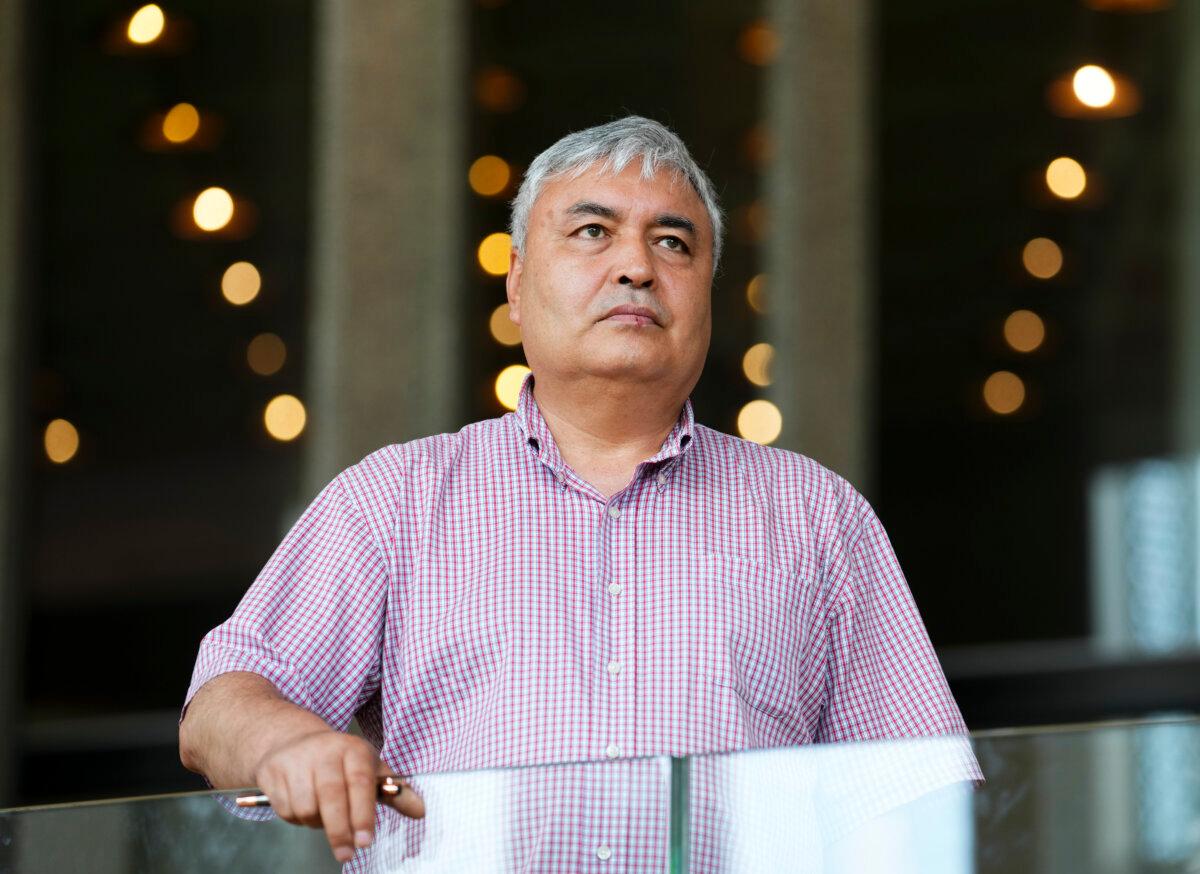
Mehmet Tohti, executive director of the Canada-based Uyghur Rights Advocacy Project, also testified before the committee on Feb. 26 and told MPs that expanding trade with China “carries substantial risk.”“Beijing continues to use commerce as a leverage to divide allies and weaken unified positions on human rights without strong safeguards,” Tohti said. “Deeper engagement could erode our alignment with the United States and other Western alliances, and compromise our security.”
Additionally, Tohti said Ottawa’s agreement to allow 49,000 Chinese electric vehicles into the Canadian market at a 6.1 percent tariff—down from 100 percent—raises national security concerns. He said the vehicles’ sensors and software, which connect to China-based infrastructure, pose potential surveillance and data integrity risks.
Tohti also raised concerns during the committee meeting about Chinese companies using forced labour to produce their products, such as in electronics, textiles, solar energy, and mining.
“Engagement with China must not come at the cost of integrity or human dignity,” Tohti told MPs. “Canada’s trade policy must be guided by principles, accountability, and security. To proceed otherwise would endanger our alliances, our values, and the Canadians who expect their government to stand on the side of justice.”
Tohti noted that while Ottawa needs to have some trade with Beijing, “we have to keep our eyes open” and develop measures to counter China’s “direct attacks” on Canada.
Industry Minister Mélanie Joly, who accompanied Carney on the trip to China, said Ottawa is engaging with Beijing “with eyes wide open.” She was responding to reporters’ questions about whether China is an appropriate partner for Canada, given concerns about foreign interference, espionage and human rights.
What's Your Reaction?
 Like
0
Like
0
 Dislike
0
Dislike
0
 Love
0
Love
0
 Funny
0
Funny
0
 Wow
0
Wow
0
 Sad
0
Sad
0
 Angry
0
Angry
0













Comments (0)