

27 Years of Defiance: U.S. Lawmakers Stand with Falun Gong on Historic Anniversary
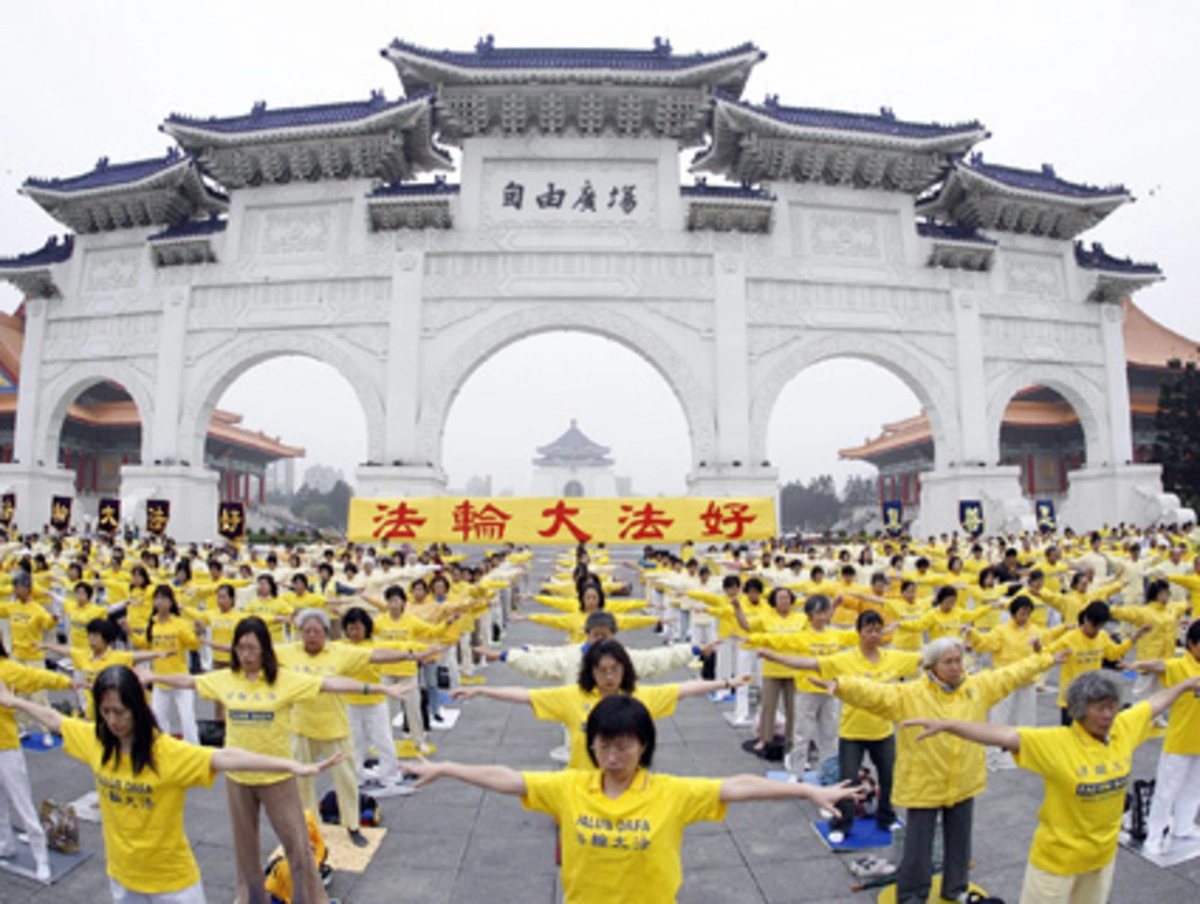
On April 25, 2026, members of the U.S. Congress marked the 27th anniversary of one of modern China's most remarkable acts of peaceful protest — a silent gathering of roughly 10,000 Falun Gong practitioners outside Beijing's government quarter. What followed that day in 1999 set in motion a persecution that continues to this day, drawing international condemnation and, now, binding U.S. legislation.

.
A Day That Changed Everything
On April 25, 1999, tens of thousands of people quietly lined the streets of Beijing near the Zhongnanhai government compound — the seat of China's leadership. They were Falun Gong practitioners, and they had come from across the country with a simple request: release wrongfully detained fellow believers and restore their right to practice freely.
The gathering was orderly, calm, and entirely peaceful. Practitioners assembled near the compound to request the release of Falun Gong adherents who had been arrested in the city of Tianjin, where a peaceful sit-in had been met with beatings and mass detentions days earlier. By evening, a resolution had been reached and the crowds dispersed. Not a single act of violence occurred.
It was, by any historical measure, an extraordinary event. It was the largest protest in Beijing since 1989 and the first mass demonstration ever held near the Zhongnanhai compound in the history of the People's Republic.
What Sparked the Protest
The chain of events began weeks earlier. On April 11, 1999, a professor with connections to top Communist Party officials published an article in a Tianjin college magazine attacking Falun Gong, using claims that had already been publicly debunked. Practitioners in Tianjin sought to address the misleading allegations through official channels.
The response was brutal. On April 23 and 24, Tianjin's Public Security Bureau dispatched riot police who beat and arrested 45 practitioners. When others asked for the detainees' release, local officials told them the matter had escalated to Beijing — and that only central government authorization could free those arrested.
Word spread. Practitioners across the country made their way to the capital.
The Crackdown That Followed
The peaceful resolution of April 25 did not hold. Just after midnight on July 20, 1999, security forces seized hundreds of Falun Gong practitioners from their homes in cities across China. A Hong Kong newspaper reported that 50,000 individuals had been detained in the first week of the crackdown alone.
The Public Security Bureau ordered churches, temples, newspapers, media, courts, and police to suppress Falun Gong. State-run newspapers ran daily editorials urging people to abandon the practice, and Party members were reminded that, as atheists, they must not "become superstitious."
The propaganda machine worked overtime to rewrite history — portraying the peaceful April 25 gathering as a threatening "siege" of the government. That narrative has since been thoroughly challenged by independent analysts and former officials alike.
U.S. Congress Marks the 27th Anniversary
This week, multiple members of the United States Congress issued formal statements in remembrance of the April 25 appeal and in solidarity with practitioners who continue to face persecution today.
Rep. Chris Smith (R-N.J.), co-chair of the Congressional-Executive Commission on China (CECC), stated that the CCP's campaign against Falun Gong would be remembered as one of the gravest human rights crimes of the 21st century. He pledged to continue holding hearings, introducing legislation, and pressing for human rights to remain central to U.S.-China policy.
Rep. Neal Dunn (R-Fla.), a member of the House Select Committee on the CCP, expressed firm support for those facing religious persecution in China. Sen. Rick Scott (R-Fla.), a member of the Senate Foreign Relations Committee, called the persecution "brutal and senseless" and demanded accountability not only for the religious suppression, but specifically for the practice of forced organ harvesting.
Rep. Zach Nunn (R-Iowa) described organ harvesting from Falun Gong practitioners as "abhorrent" and vowed to continue pressing Beijing. Rep. Michael McCaul (R-Texas), former chairman of the House Foreign Affairs and Homeland Security committees, issued a direct condemnation of the CCP's suppression of dissent in all its forms.
Congress Acts: The Falun Gong Protection Act
Words have now been followed by law — at least in the House of Representatives. On May 5, 2025, the U.S. House of Representatives passed the Falun Gong Protection Act (H.R. 1540) by unanimous voice vote, without a single objection.
The legislation authorizes sanctions on individuals involved in or facilitating the involuntary removal of organs from detained Falun Gong practitioners in China. Penalties include blocking entry into the United States, revoking visas, and imposing fines of up to $1 million and prison sentences of up to 20 years.
The bill also mandates a formal assessment by the U.S. government to determine whether the CCP's persecution of Falun Gong constitutes an "atrocity" under the Elie Wiesel Genocide and Atrocities Prevention Act of 2018. The legislation has now been forwarded to the Senate, where a companion bill was introduced by Sen. Ted Cruz (R-TX).
Rep. Tom Tiffany (R-Wis.), one of the bill's co-sponsors, pointed specifically to documented criminal sentencing of practitioners still occurring inside China. According to tracking data from Minghui.org, a U.S.-based monitoring organization, 751 new prison sentences against Falun Gong practitioners were recorded in China in 2025 alone — including an eight-year sentence handed to a 72-year-old retired schoolteacher in March of that year.
An Independent Tribunal's Verdict
The political pressure in Washington is reinforced by independent legal findings. In 2019, the China Tribunal — an independent people's tribunal based in London and chaired by international human rights lawyer Sir Geoffrey Nice — concluded after extensive review that China had for years been forcibly harvesting organs from prisoners of conscience on a significant scale, with Falun Gong practitioners identified as the primary victim group.
The tribunal's findings were unequivocal: the practice had been systematic, state-sanctioned, and ongoing. Its conclusions have since been cited in numerous legislative efforts across multiple countries.
Who Are Falun Gong Practitioners?
Falun Gong — also known as Falun Dafa — is a spiritual discipline introduced in northeastern China in 1992. It combines slow meditative exercises with moral teachings based on the principles of truthfulness, compassion, and forbearance. It spread rapidly through Chinese society in the 1990s.
By early 1999, based on Chinese government survey data, at least 70 million people of all walks of life were practicing Falun Gong across China. State media had initially praised the movement for its positive health effects. Within months of the crackdown, that same media would be running wall-to-wall propaganda calling it an "evil cult."
Today, Falun Gong is practiced in more than 100 countries. Its core text, Zhuan Falun, has been translated into over 50 languages.
The Persecution Continues
Twenty-seven years after the April 25 appeal, the Chinese Communist Party has not relented. According to human rights groups including the Falun Dafa Information Center, millions of practitioners have passed through prisons, forced labor camps, and detention facilities since 1999. Hundreds of thousands have been subjected to torture. An undetermined number have died as a result of mistreatment.
The transnational dimension of the persecution has also come into focus. Threats have targeted Falun Gong-related events in the United States, including the annual April 25 commemoration parade in New York City, where anonymous emails threatened violence against participants. Similar threats have been directed at Shen Yun Performing Arts, a company founded by Falun Gong practitioners, with venues across North America and Europe receiving bomb threats. National security experts have pointed to potential links between these threats and Chinese state-backed actors.
For the members of Congress who spoke out this week, the message was clear: the world must not look away, and the perpetrators must be held accountable.
.
Sources
- Wikipedia – Persecution of Falun Gong: https://en.wikipedia.org/wiki/Persecution_of_Falun_Gong
- FalunInfo.net – Behind the April 25 Incident: https://faluninfo.net/the-first-big-lie-igniting-the-persecution-of-falun-gong/
- FalunInfo.net – U.S. House Passes Falun Gong Protection Act: https://faluninfo.net/u-s-house-passes-falun-gong-protection-act-unanimously-to-counter-ccp-atrocities/
- Congress.gov – H.R. 1540, Falun Gong Protection Act (119th Congress): https://www.congress.gov/bill/119th-congress/house-bill/1540/text
- GovTrack.us – H.R. 1540 Legislative Status: https://www.govtrack.us/congress/bills/119/hr1540
- Vision Times – House Unanimously Passes Falun Gong Protection Act: https://www.visiontimes.com/2025/05/06/no-more-ignoring-it-house-unanimously-passes-falun-gong-protection-act-urges-senate-to-act.html
- FalunInfo.net – Marking 26th Anniversary of April 25 Appeal: https://faluninfo.net/falun-gong-practitioners-worldwide-mark-26th-anniversary-of-historic-peaceful-appeal-in-beijing/
.
What's Your Reaction?
 Like
1
Like
1
 Dislike
0
Dislike
0
 Love
1
Love
1
 Funny
0
Funny
0
 Wow
1
Wow
1
 Sad
0
Sad
0
 Angry
0
Angry
0












Comments (0)