

Burma’s Staged Election and Its Real War

.
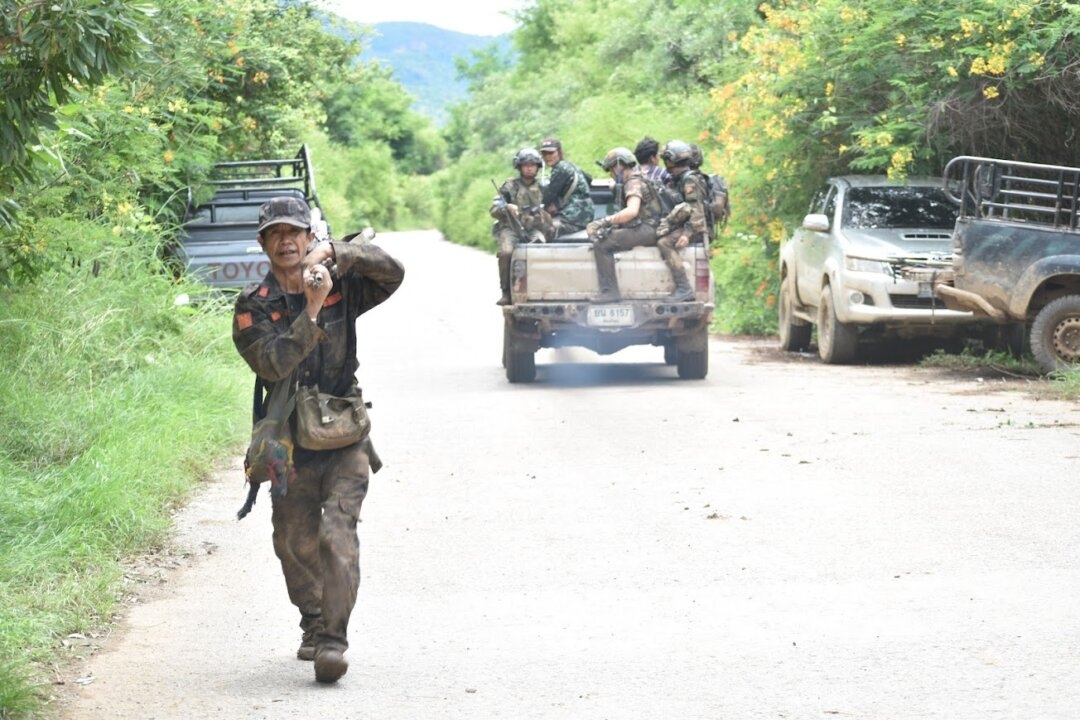
Normally, in Demoso, a key town in the resistance-controlled territory of Karenni State, Burma (Myanmar), one can hear artillery and mortar explosions, punctuated by the occasional air strike, essentially all day and into the night. However, for the past few weeks, the city has been marked by an eerie quiet.
Most soldiers and civilians I talked to said they believe the pause is because the military junta, which overturned a democratic election and seized control of the government five years ago, wants to legitimize the elections that concluded on Jan. 25 and the upcoming installation of a new president. The junta’s proxy, the Union Solidarity and Development Party (USDP), has allegedly claimed a landslide victory, winning the majority of the contested seats across all three phases of voting.
The junta is now preparing to convene parliament in March to formally seat the new government.
International observers, however, rejected the results, as pro-democracy parties, particularly Aung San Suu Kyi’s National League for Democracy, were barred from participating. Furthermore, the census and voting took place only in government-held territory, disenfranchising about 40 percent of the population.
The Chinese regime has supported the elections to ensure stability for its projects. It backs the junta with funding and supplies weapons, jet fighters, jet fuel, and ammunition. Most of the junta’s military hardware and financial support comes from China, with some assistance from Russia. China also facilitates the assembly of weapons inside Burma by providing parts and technical expertise.
At the same time, Beijing maintains ties with the Ethnic Armed Organizations fighting the junta. The Kachin Independence Army (KIA), for example, now controls the rare-earth minerals China needs. After the KIA seized these mines from pro-junta militias in late 2024, China initially tightened border controls to cut off the KIA’s revenue. By early 2025, a pragmatic deal was reached: The KIA allows the minerals to flow into China and, in exchange, collects a 20 percent tax and a fixed price per ton.
Other armed organizations that are financially dependent on China were reportedly ordered by Beijing to give up territory taken from the junta. By forcing rebels to return towns such as Lashio, China ensured the junta retained enough territory to survive and proceed with the vote. Most of these orders to retreat occur along the route of the China–Burma oil and gas pipelines.
Beijing also does not want the resistance to win for fear that Burma would become a real democracy with close ties to the West. For the time being, Beijing and the junta are walking a tightrope, seeking Western approval of the new government while keeping democracy to a minimum and ensuring that China’s investments are protected.
.
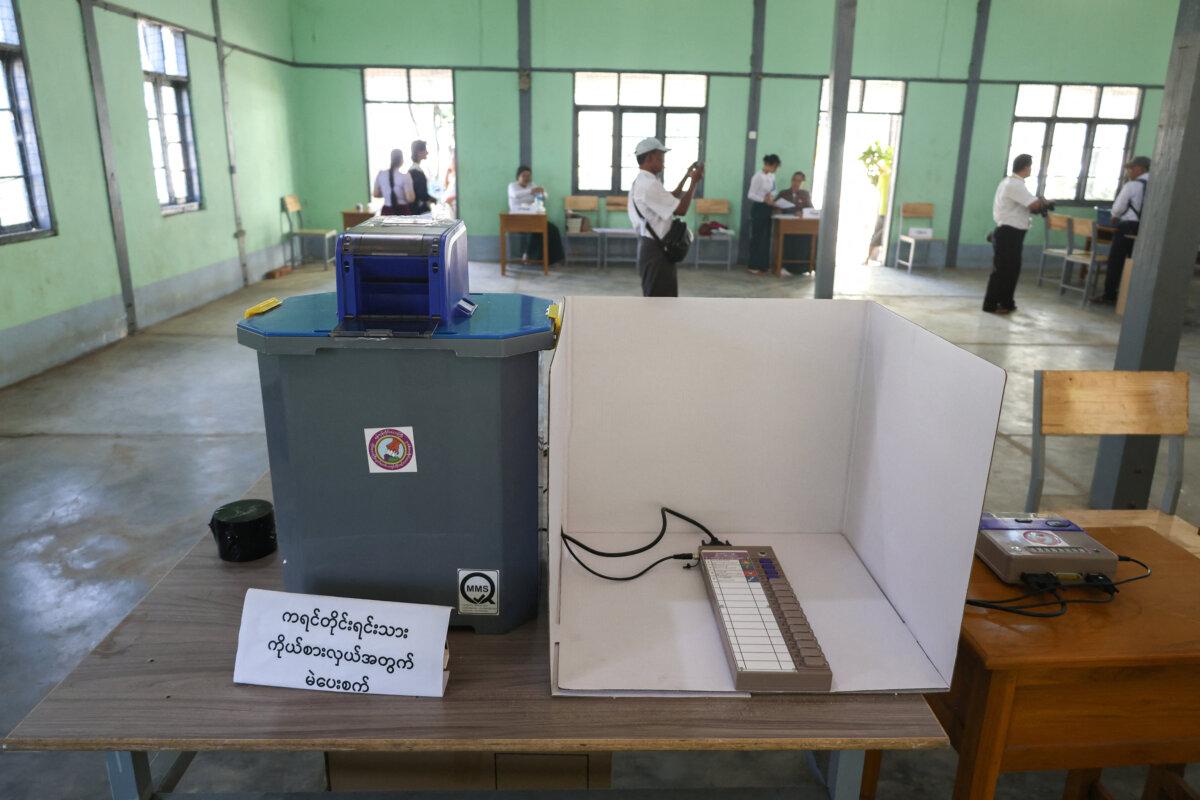
Election Commission officials prepare at a polling station inside a school ahead of a general election, in Thingangyun Township, Yangon, Burma, on Dec. 27, 2025. Stringer/Reuters
.
Still hoping for international recognition, the generals appear to have decided it would be better to keep reports of targeted bombing of civilians in schools, internally displaced people’s camps, churches, and hospitals to a minimum.
Burma is a deeply divided country. The Bamar majority has long dominated political and military power, while many of the nation’s 135 ethnic minorities have fought the central government since independence in 1948, making this one of the world’s longest ongoing wars.
After the National League for Democracy won the 2020 election in a landslide, the military nullified the results, jailed Aung San Suu Kyi and other pro-democracy leaders, and reimposed full military rule. Protests were met with gunfire, and thousands fled to the jungles to join ethnic armed organizations. The National Unity Government and the People’s Defense Forces formed, launching a nationwide revolution against Min Aung Hlaing’s army.
Today, resistance forces control or contest 70 percent to 80 percent of the country, while the junta holds most major cities and parts of central Burma.
In much of the country, the fighting has died down, but in neighboring Karen State, a major battle is raging as government forces push to capture territory and cut off a key supply line used by ethnic armed groups.
Trade between government-controlled areas and the revolution zone has all but stopped. There is no manufacturing, so almost everything, except the most basic foods such as rice, must be imported. The government holds most major roads and many bridges, and those it does not control are dangerous to navigate for fear of being targeted in an airstrike.
As a result, everything from long-life milk boxes to soda, soap, detergent, tea, coffee, salt, and snack cakes must be transported in four-wheel-drive trucks through the jungle, around the fighting. By the time goods reach Demoso, prices have often quadrupled.
Displacement as a Way of Life
With the near collapse of the economy, the vast majority of people do not have jobs. Fighting in contested areas has driven a mass exodus of civilians seeking refuge in resistance-controlled territory. At this point, the United Nations estimates that nationwide, 3.6 million people are displaced.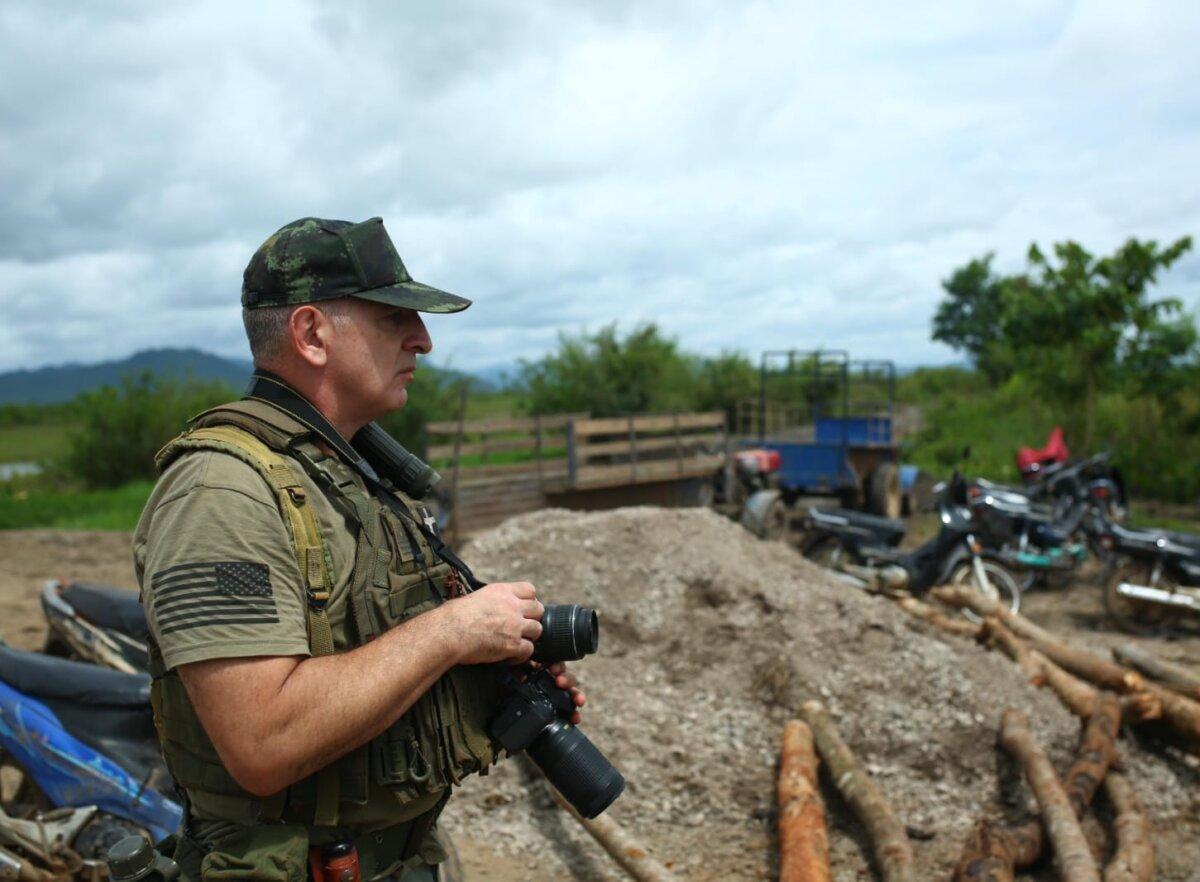
Karenni State has a sizeable Catholic community, and the church is the center of many of these camps. A priest told me that his church oversees seven IDP camps.
Another priest said his parish comprises five IDP camps. His church was made of bamboo and plastic tarps, and on Sundays, it was standing-room-only, with more people outside trying to participate in the Mass.
The camp had a school, but the priest explained that they had to keep the elementary and high schools far apart so they could not both be hit by a single government bomb. The kindergarten was even farther away, hidden under a mountain.
These safety measures kept the children safer during school hours, but they also meant the students had to walk along the road on a predictable schedule, which could invite attacks. These precautions are not mere paranoia. The priest told me about a single day when the government bombed a wedding and a graduation just a few miles from each other.
I had a similar experience last year when I was here. In one airstrike, the government hit a clinic and a school across the street. We arrived expecting a mass-casualty situation, but thankfully, it was after 3 p.m., the school had no children, and the clinic had not yet opened.
Receiving a few hundred dollars per month through various church channels and the Karenni civilian government, the priest did what he could to keep the school open and provide some food assistance to the poorest families in the camps. But everyone is poor. “There is no land for them to grow rice,” he lamented. “No jobs to do.” They just languish.
Karenni State has a severe water shortage, and water must be purchased, delivered in open trucks, and stored in bamboo enclosures lined with plastic tarps. None of the IDPs have money to buy water, so this is always one of the biggest requests when I visit a camp. “Can you help us get a new tarp?” the priest asked sheepishly. “Ours has holes in it, and the water is running out.”
One of the other priests I visited said he had a water enclosure on the church grounds, but leaves the gate open so all of the IDPs can come and take water as they need. In general, people use about one bucket of water per day per family. Even with that modest amount, a fraction of what the average American uses for a single shower, the water still runs out about halfway through the month.
Most boys leave to join the resistance, as the life of a soldier is better than waiting idle in an IDP camp with an empty belly. At the front, soldiers told me they spend weeks at a time watching for enemy movement. War, from my experience and theirs, is a long, boring wait punctuated by brief moments of intense violence.
The average soldier is about 19 years old and has been out of school since before the coup because of COVID-19 lockdowns. Most ended their formal education at age 13 or 14. Now, as resistance fighters, they receive two meals per day and no salary.
When asked why they joined, boys gave me answers like, “I hate the dictator,” “to protect my country,” and “to protect my family.” Many had long, horrific stories about government forces storming their villages, setting fire to homes, sometimes with families inside, violating women, torturing men and boys, and stealing everything, including crops and animals.
The junta uses social media and often posts videos of burning resistance soldiers alive or torturing them. The videos are meant to frighten the population into submission, but instead, they have the opposite effect, galvanizing their will to fight.
At the only rehabilitation clinic in the country, less-fortunate teenagers wait for prosthetic limbs, usually from landmine injuries, though many were also maimed by mortars and airstrikes. A nun, Sister Ma Ruan, runs a job-retraining and placement program for amputees. She radiated love and exuberance when she told me about her program and how many people they were helping, but when the subject of age came up, she became quiet and emotional. “They are so young, Mr. Antonio,” she said, trailing off.
She had seen it. I had seen it. The United Nations knows about it. But the world community is doing nothing to stop China and Russia from supplying the junta with aircraft, ammunition, landmines, and jet fuel.
At some point very soon, the junta will likely decide that the current quiet will not convince the world that the election was legitimate and that the world will not recognize the junta’s chosen president in March, and the bombing will restart.
All the resistance soldiers believe the fighting will resume soon. Some mortars and small-arms fire could be heard the other night, but it was only a small skirmish, not the full-scale return to war that everyone is predicting.
At present, a few thousand IDPs, some displaced as many as five times, are sitting in the last remaining camps near the Thai border. They believe the government attack will come, and when it does, they will have nowhere left to run.
What's Your Reaction?
 Like
0
Like
0
 Dislike
0
Dislike
0
 Love
0
Love
0
 Funny
0
Funny
0
 Wow
0
Wow
0
 Sad
0
Sad
0
 Angry
0
Angry
0













Comments (0)