

Why a Waning Iranian Regime Is a Major Setback for China


.
The Iranian regime appears more fragile than ever. What began as an economic protest by business owners in Tehran quickly escalated into a nationwide anti-regime movement by the end of last year.
“We have a massive fleet heading in that direction, and maybe we won’t have to use it,” he stated.
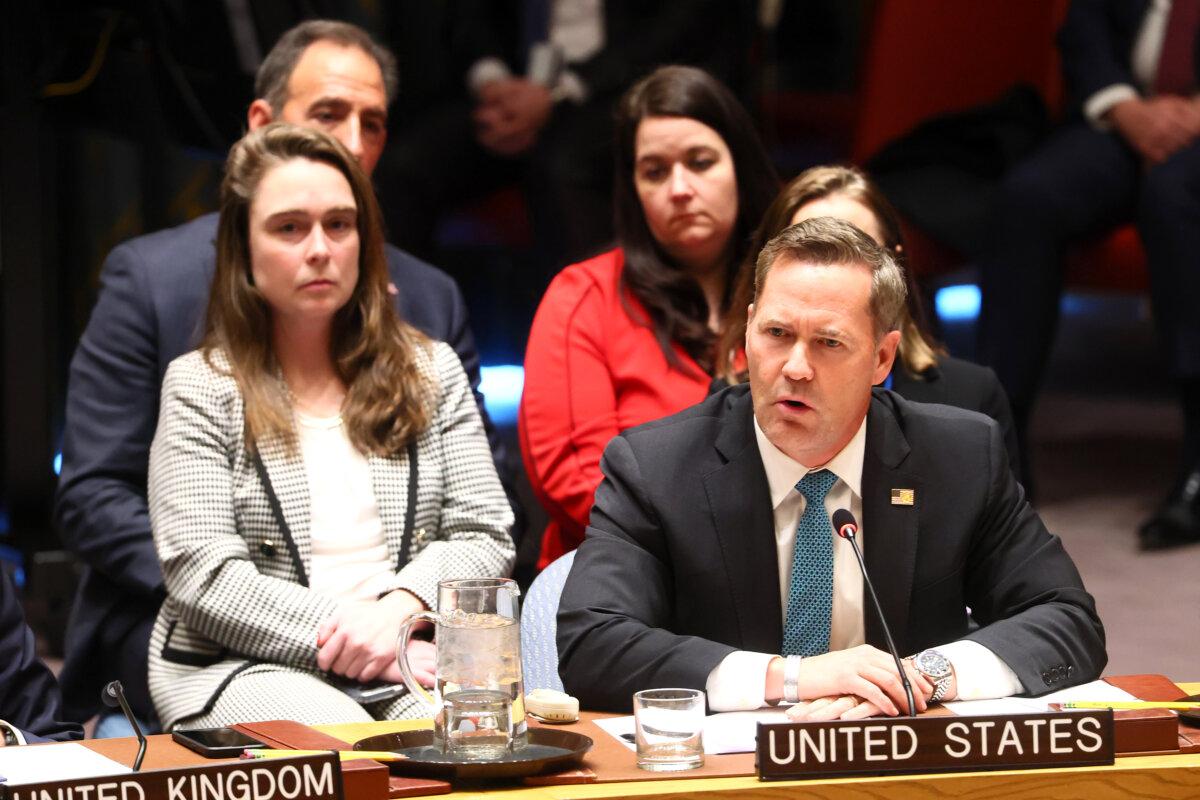
“It may very well be that we’re at the beginning of an actual social uprising revolution that could overthrow this regime,” Cook said.
The three outcomes for the Islamic regime include regime change, partial transformation, and muddling through, according to Michael Doran, senior fellow at the Hudson Institute, a Washington-based think tank.
The prospect of Tehran seeking accommodation with Washington threatens to expose China to new constraints on its global ambitions, experts say. And Iranian oil is not the central issue.
While the oil trade offers an entry point, the core value of the Sino–Iranian relations to Beijing lies elsewhere, analysts say. Iran allows Beijing to position itself as a balancing power in the Middle East, securing influence in a regional market crucial for the U.S.–China artificial intelligence (AI) race, and advancing its de-dollarization agenda.
Unprecedented Challenges
Although Iran has seen cyclic protests in the past 15 years, the current challenges to the regime are unprecedented in scale and intensity. Beginning with shopkeepers and bazaar merchants in Tehran on Dec. 28, 2025, the anti-regime demonstrations have spanned 187 cities, according to the U.S.-based Human Rights Activists News Agency.The protests stemmed from an economic collapse, marked by the plunge of the Iranian currency, the rial, and rising prices of food and essential goods. The currency lost more than 40 percent of its value last year, from about 817,000 rials per U.S. dollar to over 1.4 million. The official inflation number for 2025 is more than 42 percent.
During the Israel–Gaza war that began in October 2023, Israel dealt heavy blows to terrorist organizations—Hamas, Hezbollah, and the Houthis—that all received significant financial and security backing from Iran.
As a result, the threat Iran poses to the West—rooted primarily in its nuclear ambitions and its network of terrorist proxies—appears to have been significantly reduced.
US and China Reactions
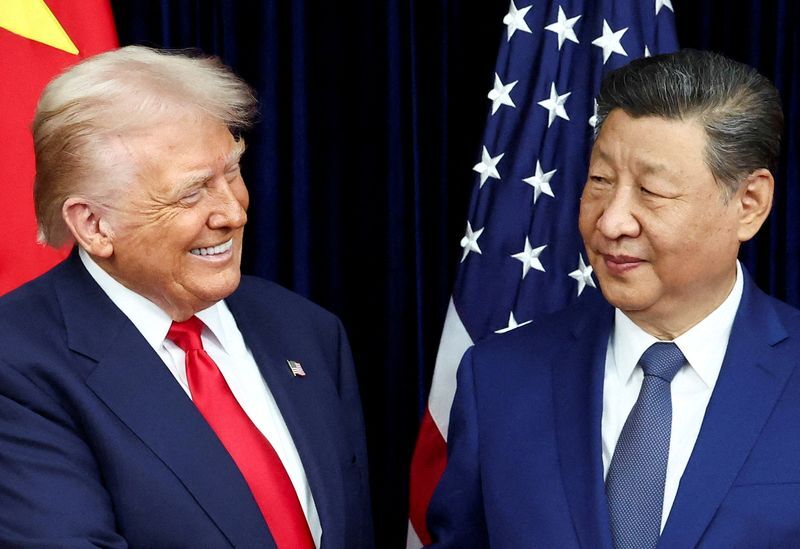
Trump warned on Jan. 2 that the Iranian regime would face military action if it killed peaceful protesters. The president followed up on Jan. 12 by imposing a 25 percent additional tariff on any country trading with Iran; the White House has yet to issue details.“They will pay a big price,” he said.
Balancing Power
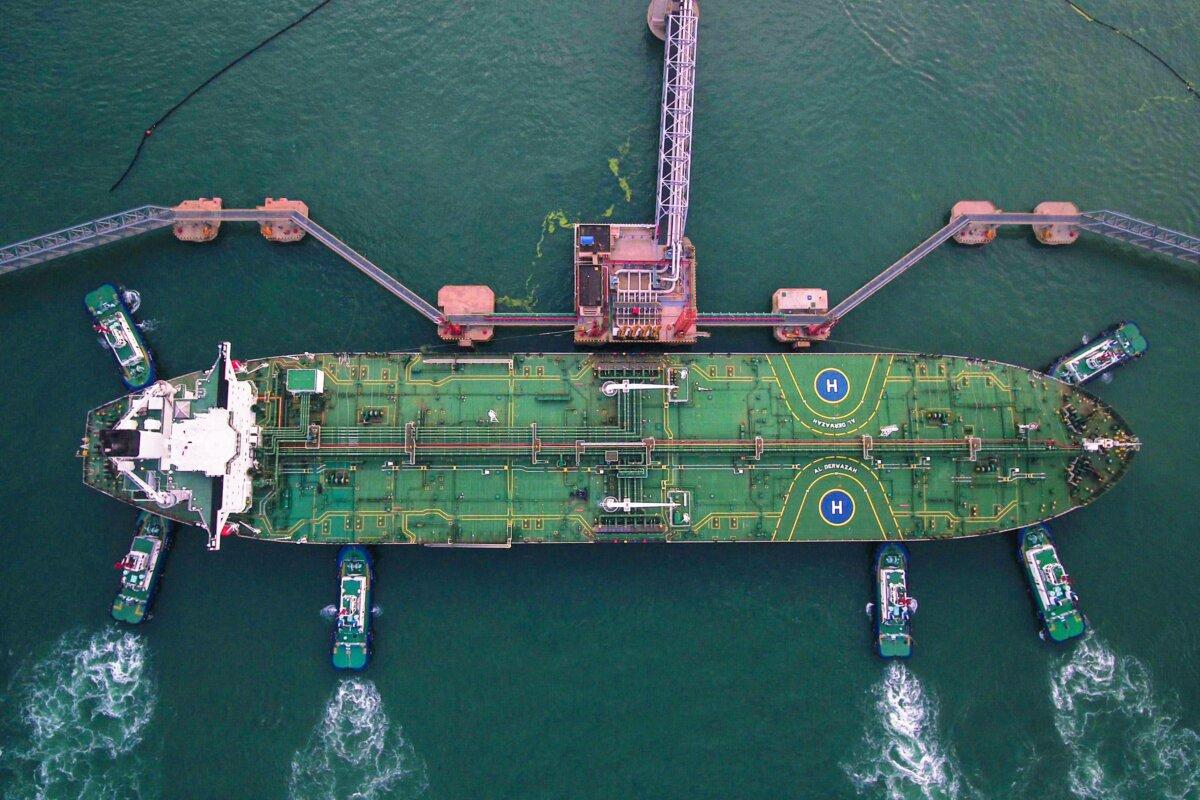
Although China buys the majority of Iranian oil, purchases from Iran make up about 13 percent of China’s total oil imports, according to Reuters. Without Iran, China can source oil elsewhere, albeit not at the current deep discount Iran offers to circumvent U.S. sanctions.However, if the Iranian regime emerges from the current crisis more aligned with the United States, its reliance on sanctions-driven economic arrangements may diminish. Should Tehran no longer need to sell the bulk of its oil to China, Beijing would lose a key lever of influence in the Middle East, according to China expert Alexander Liao.
In his view, the secularization of Iran changes a long-standing Middle Eastern structure underpinned by fear.
“Why do Gulf Arab states still anchor their security in the United States while hedging with China and Russia? One critical reason is their inability to rule out abrupt and destabilizing actions by Iran,” he told The Epoch Times, adding that when Iran is no longer a theocratic system, that uncertainty will decrease.
William Lee, chief economist at Global Economic Advisors, concurs.
“With friendly relations between Iran and the West, what used to be a lever of instability now is a lever of stability,” he told The Epoch Times. “It’ll make the place even more stable if the United States can start to provide Iran with aid.”
He added that when Iran “comes back as a strong economy,” it won’t need China anymore.
.
Yuan-Denominated Energy Deals
Iran holds high geopolitical value for China. Its location, linking East and West, has made it an important node in Beijing’s Belt and Road Initiative. This foreign policy platform presents itself as a global infrastructure development program.Liao described the pact as an “institutional channel for military and technological exchanges to circumvent U.S. sanctions and counter the dollar system.”
“If this channel is severed, that means a major setback to China on a strategic level,” he told The Epoch Times.
According to Liao, a central strategy of the Chinese regime has been to link energy, currency, and geopolitics to advance a yuan-based commodities trade system, with the Belt and Road serving as a primary vehicle for this effort.
He added that the Chinese Communist Party views such a platform as critical to advancing its de-dollarization agenda and challenging U.S. primacy.
Settling energy trade in Chinese yuan is also contingent on Iran’s anti-Western posture. If that changes, Liao said, “settlement in yuan would cease to be a benefit and instead become a burden,” given that the Chinese currency is not freely tradable.
.
AI Race
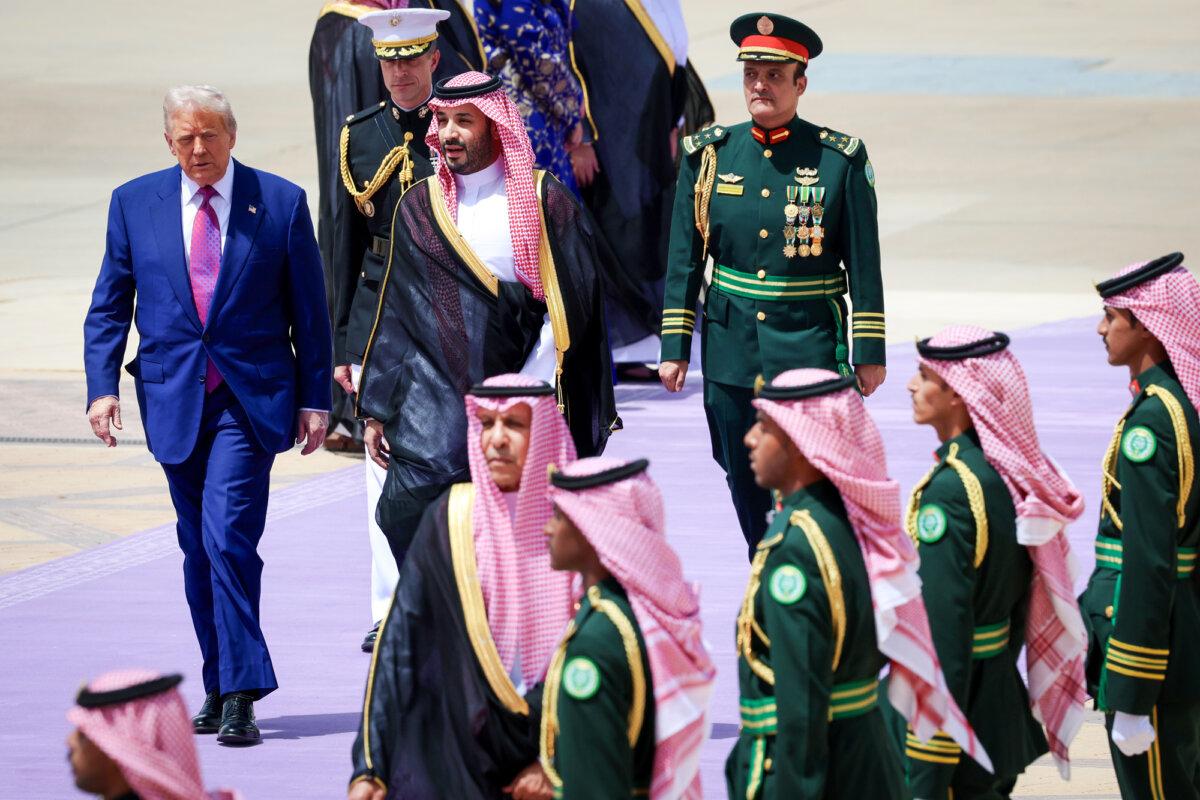
The Middle East region is also a crucial battleground for the U.S.–China AI race.Beyond promoting the American tech stack, Washington has also turned to the region to diversify the supply chain for rare earths.
Since April 2025, China has repeatedly threatened the United States and the rest of the world with its export controls on rare earths. Beijing holds a near-monopoly over the processing of the critical minerals essential to everything electronic, from cars to advanced weapon systems.
China’s ability to position itself as a balancing power in the Middle East rests heavily on its economic influence over Tehran, according to Yeh Yao-yuan, a professor of international studies at the University of St. Thomas in Houston.
“If Iran is no longer under the heavy influence of China, other Middle Eastern countries might not curry favor with China, including buying Huawei products or Chinese chips,” he told The Epoch Times.
In that scenario, he said, “China’s current efforts to use Iran to access markets in the Middle East will face setbacks.”
If the Iranian regime were to realign with the West, Lee said, China’s resulting loss of political and economic influence would be “much more serious than just the oil trade.”
.
What's Your Reaction?
 Like
0
Like
0
 Dislike
0
Dislike
0
 Love
0
Love
0
 Funny
0
Funny
0
 Wow
0
Wow
0
 Sad
0
Sad
0
 Angry
0
Angry
0













Comments (0)