

China Tightens Its Rail Grip on Vietnam — Loans, Tech, and a Bigger Strategic Play
China has formally offered Vietnam a sweeping railway cooperation package — covering loans, technology transfers, and workforce training. The deal, sealed during a high-profile summit in Beijing, fits into Beijing's long-running strategy to bind Southeast Asia's infrastructure to Chinese systems and financing. But critics warn of hidden costs.

.
A Summit With Tracks Attached
When Vietnam's newly elected President To Lam chose Beijing as his first foreign destination after taking office, the signal was unmistakable. His four-day state visit to China, wrapping up Friday, placed infrastructure — and railways in particular — at the center of a rapidly deepening bilateral relationship.
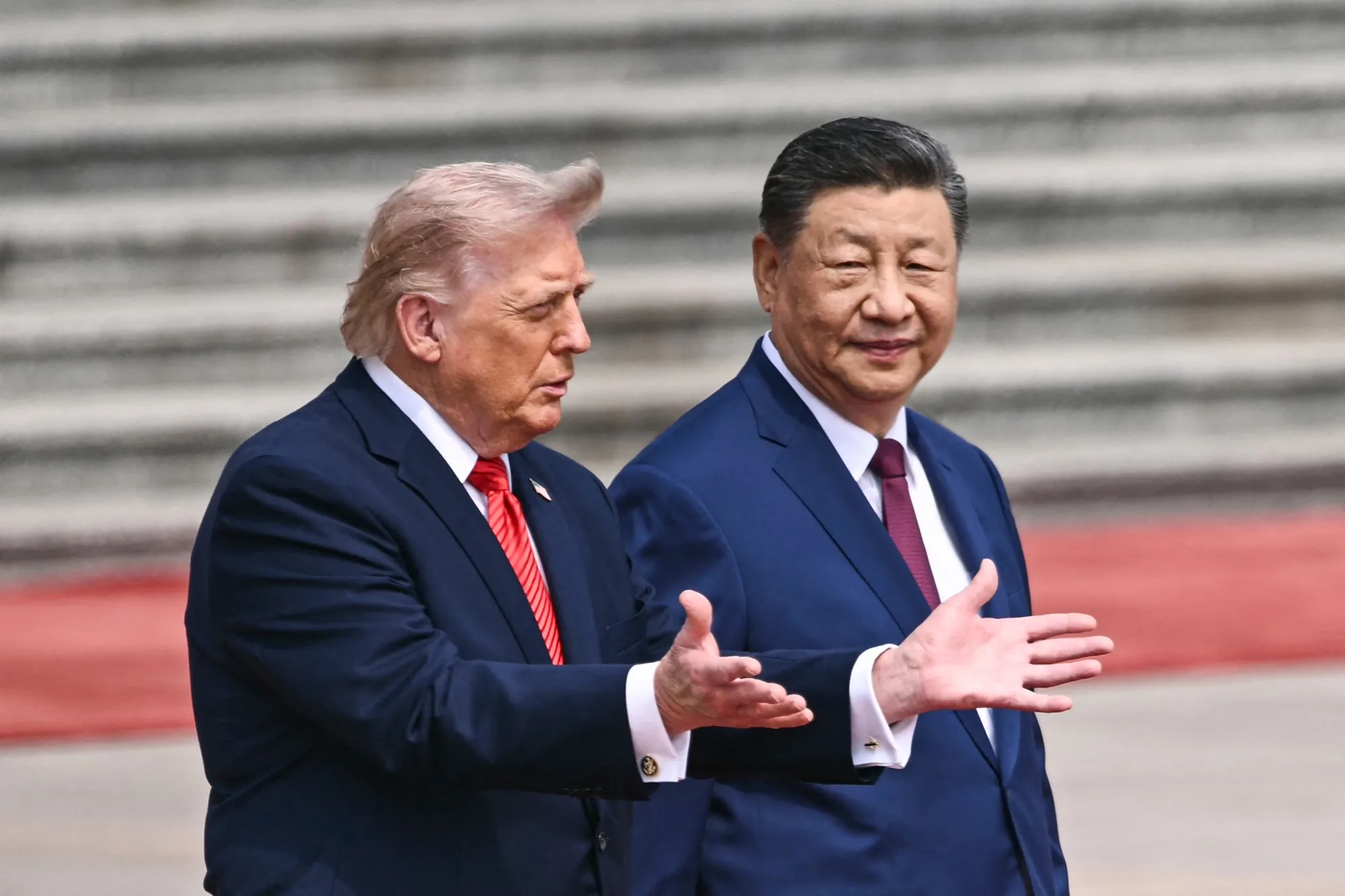
Following talks between President Xi Jinping and To Lam at the Great Hall of the People on April 15, China's foreign ministry published a joint statement outlining an extensive cooperation agenda. Among the 32 documents signed were agreements for railway feasibility studies and programs to build technical expertise in Vietnam's rail sector.
Both sides described the railway push as a "new bright spot" in their strategic partnership — a phrase that speaks to how central physical connectivity has become to the China-Vietnam relationship.
What China Is Offering
The package Beijing put on the table is broad. It includes preferential loans for railway construction, access to Chinese rail technology, workforce training programs, and an open invitation for Chinese state enterprises to join infrastructure projects inside Vietnam.
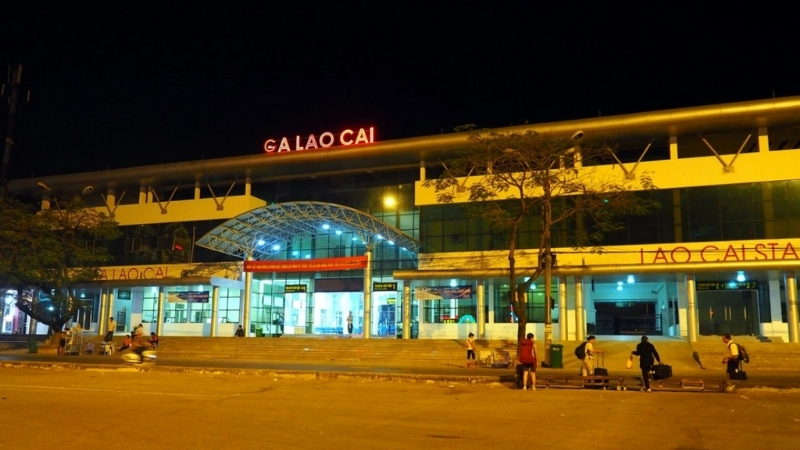
Three specific rail corridors are at the heart of the expansion: the Lao Cai–Hanoi–Hai Phong line, the Dong Dang–Hanoi connection, and a route linking Mong Cai with Ha Long and Hai Phong. Together, these routes are estimated to involve investments of around $8.4 billion.
There is also a practical engineering challenge driving the push. Vietnam's existing railway network uses a narrower track gauge (1,000 mm) than China's standard gauge (1,435 mm). Cargo must currently be transferred at the border — a bottleneck that costs time and money. Linking the two systems with compatible track would allow freight to move directly from China's Yunnan province to Vietnam's deep-sea port at Hai Phong, opening a major maritime gateway for China's landlocked southwest.
Belt and Road, Vietnamese Edition
Vietnam is a participant in China's Belt and Road Initiative (BRI), Beijing's flagship global infrastructure program that has financed roads, ports, and railways across Asia, Africa, and beyond. The initiative has been welcomed by many developing nations hungry for infrastructure investment, but it has also drawn sharp criticism.
The United States, Japan, and a number of European governments have argued that BRI loans often come with opaque terms, inflate project costs, and can leave recipient countries with debt levels that compromise their financial independence. Indonesia's Chinese-backed Jakarta-Bandung high-speed railway, for instance, accumulated significant cost overruns and became a debt burden on Jakarta's public finances.
Analysts have noted that Vietnam has been more cautious than some neighbors about structural dependency on Chinese financing. For its larger domestic North-South high-speed railway — a $67 billion project connecting Hanoi to Ho Chi Minh City — Hanoi has deliberately avoided relying on any single foreign partner, also engaging Japan, which is offering Shinkansen-based technology backed by official development assistance.
Vietnam's Balancing Act
Hanoi finds itself in a familiar dilemma: it needs infrastructure investment and China is both the cheapest and most willing provider, but the political and strategic implications of deep financial dependence on its large northern neighbor are a source of genuine concern.
Lingering tensions over competing claims in the South China Sea add another layer of complexity. To Lam acknowledged this directly during the summit, expressing hope that the two countries would "manage land borders and maintain peace at sea" — diplomatic language for one of the region's most sensitive territorial disputes.
Vietnam's strategy appears to be selective engagement: accepting Chinese financing for specific northern rail links while keeping the larger, flagship domestic projects more diversified. Whether that balance can be sustained as China's infrastructure footprint grows remains to be seen.
Planes Too: A Chinese Aircraft Deal Takes Off
On the sidelines of the summit, Vietnam's budget carrier Vietjet signed a finance lease agreement with China's SPDB Financial Leasing for ten C909 narrow-body aircraft. The planes are manufactured by COMAC, a Shanghai-based state aerospace company that is China's answer to Boeing and Airbus.
The deal marks a step toward internationalizing Chinese commercial aviation — a sector Beijing has invested heavily in as part of its broader industrial ambitions.
The Bigger Picture
Xi Jinping's remarks during the summit extended well beyond railways. He called on both countries to "oppose unilateralism and protectionism" — widely read as a joint response to the tariff pressures both nations face from Washington — and promoted cooperation in artificial intelligence, semiconductors, new energy, and critical minerals.
He also announced the launch of a China-Vietnam Tourism Cooperation Year for 2026-2027, and the two sides agreed to deepen ties in aviation, security, and education.
For Beijing, the railway push in Vietnam is part of a well-established playbook: use infrastructure deals to integrate Southeast Asian economies into Chinese supply chains, standardize regional transport systems around Chinese specifications, and deepen political alignment in the process. The trains, in this reading, are not just about moving goods — they are about moving relationships.
.
Sources
- Reuters — China offers loans, technology for Vietnam railways (April 17, 2026): https://www.reuters.com/sustainability/climate-energy/china-offers-loans-technology-vietnam-railways-2026-04-17/
- East Asia Forum — Vietnam and China lay the tracks for deeper trade connectivity (March 2026): https://eastasiaforum.org/2026/03/28/vietnam-and-china-lay-the-tracks-for-deeper-trade-connectivity/
- The Vietnamese Magazine — Vietnam and China push $8.4 billion standard-gauge railway expansion (April 16, 2026): https://thevietnamese.org/2026/04/viet-nam-and-china-push-8-4-billion-standard-gauge-railway-expansion/
- VOA News — China's sprawling rail projects around Asia: https://www.voanews.com/a/china-s-sprawling-rail-projects-around-asia/7981628.html
- Council on Foreign Relations — China's Massive Belt and Road Initiative: https://www.cfr.org/backgrounders/chinas-massive-belt-and-road-initiative
- Engineering News-Record — Vietnam moves $7.7B rail megaproject toward construction (January 2026): https://www.enr.com/articles/62285-vietnam-moves-77b-rail-megaproject-toward-construction
- The Diplomat — China's bet on railways in Southeast Asia is starting to pay off (April 2025): https://thediplomat.com/2025/04/chinas-bet-on-railways-in-southeast-asia-is-starting-to-pay-off/
.
What's Your Reaction?
 Like
0
Like
0
 Dislike
0
Dislike
0
 Love
0
Love
0
 Funny
0
Funny
0
 Wow
0
Wow
0
 Sad
0
Sad
0
 Angry
0
Angry
0












Comments (0)