

Trump’s Possible Visit to China in the Year of the Horse: Markets, Power, and a Fragile Order


.
Happy Chinese New Year of the Horse. The Horse symbolizes speed, strength, and decisive forward movement. Yet in today’s geopolitical landscape, speed without discipline can destabilize fragile balances.
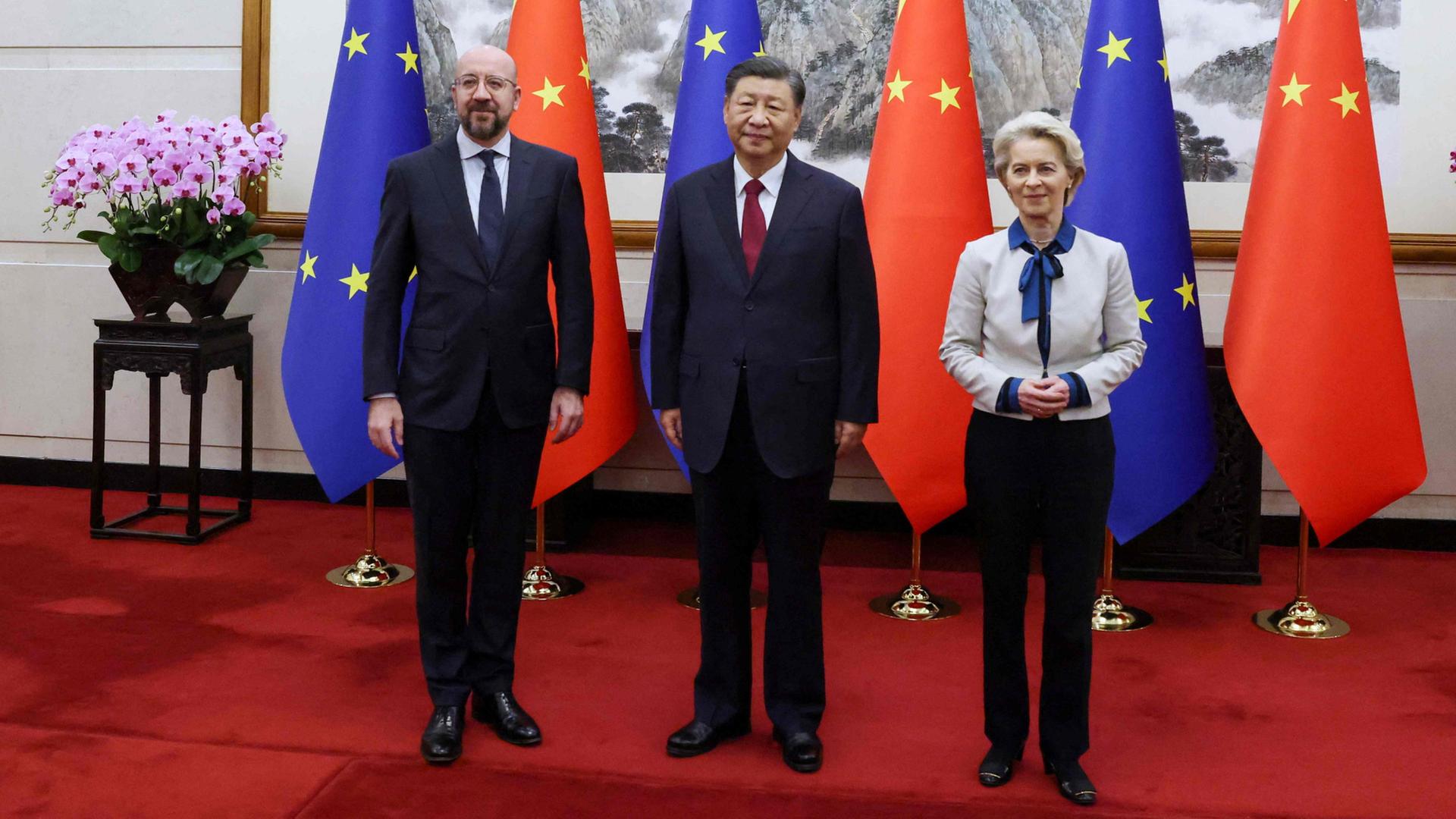
As U.S. President Donald Trump considers a possible April visit to Beijing to meet Chinese leader Xi Jinping, the world is entering a moment that demands clarity rather than ceremony.
I write this as a Hongkonger who cherishes freedom and democracy, now part of the diaspora, and as a long-standing participant in global financial markets. Markets price risk in real time. Political miscalculation translates into financial volatility almost instantly. A single misjudged speech, military maneuver, or ill-timed sanction can reverberate across currencies, commodities, and equity markets within seconds.
From 2017 Engagement to Structural Rivalry
Trump’s first major engagement with Xi in 2017 was carefully prepared. Rex Tillerson—the former Exxon Mobil CEO who briefly served as Secretary of State before being succeeded by Mike Pompeo—helped stabilize early tensions before Xi’s April 2017 visit to Mar-a-Lago and Trump’s later state visit to Beijing.At that time, the emphasis was on trade deficit management and diplomatic coordination. The atmosphere was measured. Markets were reassured. Xi himself had earlier experienced America firsthand during his 1985 agricultural visit to Iowa—a brief but symbolic exposure that gave him a glimpse of American society long before he became China’s top leader.
Trade Deficit: The Economic Core of the Tension
At the center of U.S.–China friction remains the persistent goods trade deficit. In 2024, the United States recorded a deficit of approximately $295 billion, importing roughly $438 billion in goods while exporting around $143 billion to China.This imbalance reflects decades of industrial integration and supply-chain interdependence. It also reflects domestic political pressure within the United States to restore manufacturing competitiveness and reduce strategic vulnerability.
Tariffs introduced since 2018 have altered trade patterns but have not eliminated the structural gap. China has diversified exports and strengthened economic ties with other regions. Meanwhile, American companies remain deeply embedded in global supply chains linked to Chinese production.
A Broader Strategic Alignment
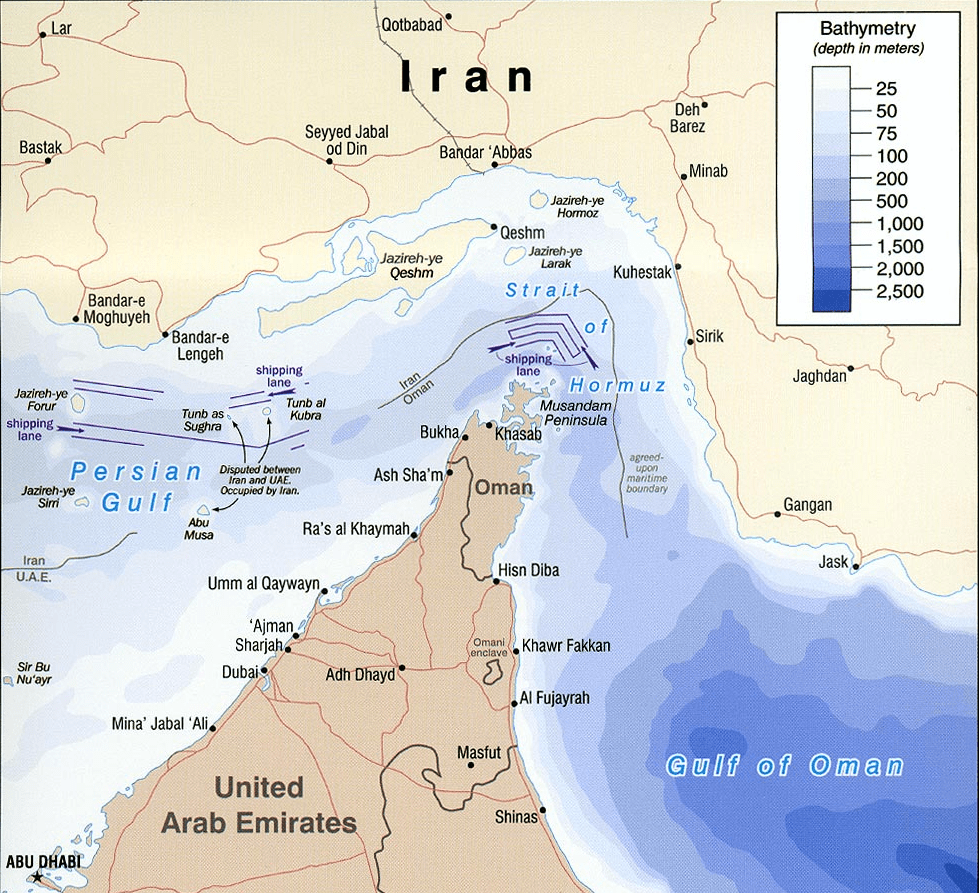
Since 2017, the Chinese regime has strengthened close ties—economically and militarily—with Russia, reinforced strategic coordination with Iran, and maintained engagement with North Korea. While not a formal treaty alliance, this convergence functions as a loose strategic axis that complicates Western leverage and broadens Beijing’s maneuvering space.
History offers caution, but not simplistic analogy. China today is not the Soviet Union of the late 1980s. The Soviet Union, before its 1991 collapse, was economically stagnant, technologically lagging, and relatively isolated from global trade. China, by contrast, is deeply integrated into global markets and technologically competitive in key sectors.
Internal Signals and Strategic Timing
Recent speculation involving senior military figures, such as Zhang Youxia, has revived comparisons with the 1971 Lin Biao episode during the era of Mao Zedong. Such analogies must be handled with discipline. Mao’s revolutionary authority over the military was deeply personal and ideological. Xi’s leadership, formalized since 2016 as the Chinese Communist Party’s “core,” operates within institutional command structures.Diaspora Anxiety: Fragile Alliances and Nervous Democracies
For Hongkongers who cherish democratic freedoms, another concern looms: the apparent fragility of Western unity. The expansion of a mega Chinese consulate project abroad, and ongoing economic overtures between Beijing and Western capitals, have raised eyebrows among diaspora communities.Canadian Prime Minister Mark Carney, through economic engagement initiatives and global financial positioning, has been perceived by some critics as signaling openness to deeper economic dealings with China. Whether such engagement is pragmatic or strategic accommodation, the optics matter.
When individual democracies appear eager to secure bilateral economic gains while strategic rivalry intensifies, the cohesion of the Five Eyes alliance—the United States, United Kingdom, Canada, Australia, and New Zealand—can appear fragile. Those who understand the Chinese Communist Party’s long-term strategic discipline grow nervous when democratic coordination weakens.
Jimmy Lai: Beyond Symbolism
The detention and 20-year prison sentence for Jimmy Lai remain deeply personal to Hongkongers worldwide. This is not merely a legal matter. It represents the dismantling of press freedom and judicial independence in the city that was once promised autonomy.There is hope that Trump might raise Lai’s case directly with Xi again, particularly the possibility of medical parole. The issue has been referenced in statements by U.S. Secretary of State Marco Rubio, underscoring its diplomatic importance.
Taiwan: The Balance That Holds the Region
Taiwan remains central to regional stability simply by existing as it is—a functioning democracy with strategic geography and global semiconductor dominance. Whether Xi would take calculated risks involving military action remains a subject of debate among strategists. Some argue deterrence remains robust. Others caution that long-term ambition combined with internal pressure could alter calculations.Conclusion: Discipline in a Fragile Order
The Year of the Horse calls for decisiveness. But in an era of structural rivalry, decisiveness must be anchored in discipline. As a Hongkonger in the diaspora and a veteran of global financial markets, I see this potential visit not as a ceremony but as a strategic inflection point that demands economic realism, strategic clarity, and moral coherence.Markets respond in seconds. History judges over decades. In a fragile global order, equilibrium is never automatic—it is sustained only by deliberate choices. If this visit proceeds, it must be guided not by optics but by balance.
What's Your Reaction?
 Like
0
Like
0
 Dislike
0
Dislike
0
 Love
0
Love
0
 Funny
0
Funny
0
 Wow
0
Wow
0
 Sad
0
Sad
0
 Angry
0
Angry
0














Comments (0)