

Tokyo’s Latest Missile Plan Could Thwart Chinese Invasion of Taiwan: Analysts


.
A Japanese planned missile deployment will deter Beijing’s activities in the region and buy the United States–Japan alliance crucial time to block a potential Chinese invasion of Taiwan, analysts say.
Japanese Defense Minister Shinjiro Koizumi announced on Feb. 24 that Japan plans to station the surface-to-air missiles at Yonaguni by March 2031.
The statement marked the first time Tokyo has set a concrete deadline for stationing the missiles at Yonaguni since the plan was initially unveiled in 2022.
“It depends on the progress of preparing facilities, but we are planning for fiscal 2030,” Koizumi said in a press conference.
Yonaguni, Japan’s westernmost island, sits a mere 68 miles east of Taiwan, making the neighboring coastline visible on a clear day.
‘Gray Zone’ Deterrence
Arthur Wang Zhin-sheng, secretary general of the Asia-Pacific Elite Interchange Association in Taiwan, said the missiles—known as the Type 03 Chu-SAM medium-range system—can, to some extent, deter Chinese expansionist behavior in the waters surrounding Japan.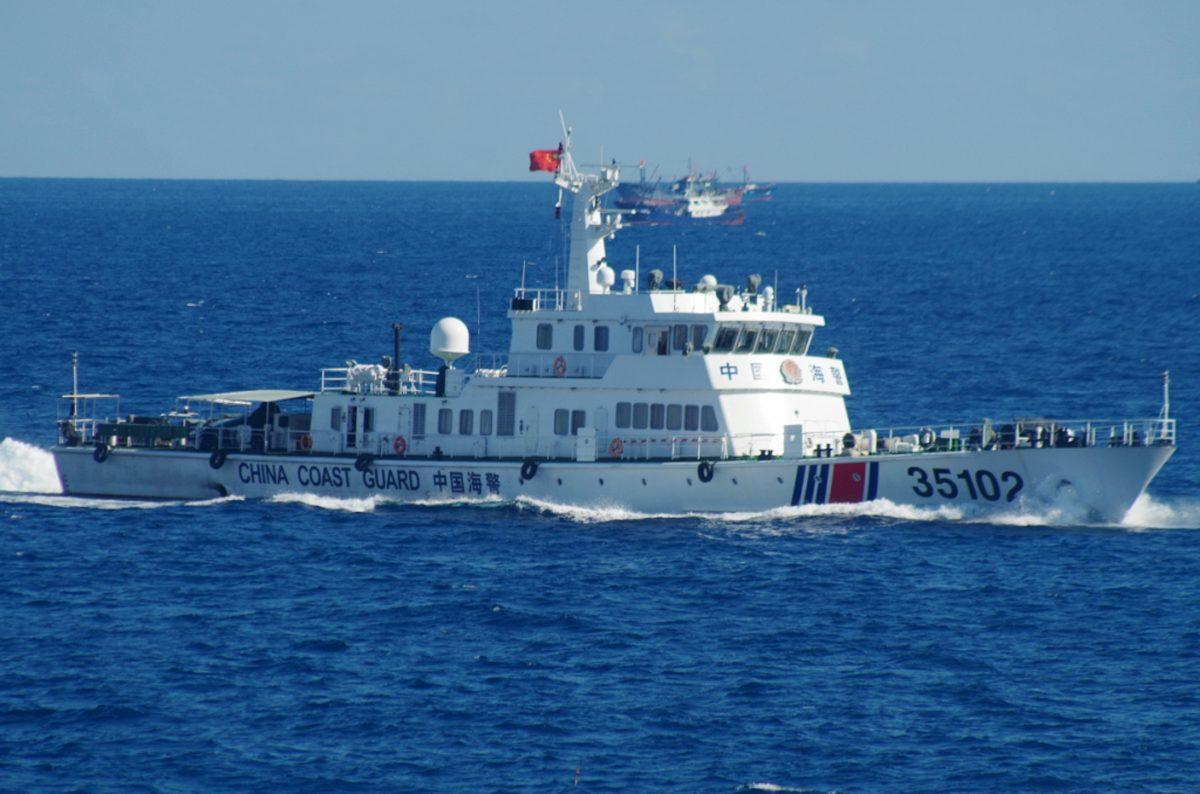
“They have a certain degree of deterrent effect against China’s gray zone operations, such as harassment by maritime militia or coast guard vessels at sea, as well as regular aircraft harassment in the air,” Wang told The Epoch Times.
Gray zone operations are coercive actions below the threshold of war.
Wang said the missiles primarily target low-to-medium-altitude aircraft and cruise missiles, equipped with surface-to-air and anti-ship capabilities for defensive purposes rather than offensive strikes.
“Their range is probably under 100 kilometers [62 miles] because they are medium-range missiles with a relatively shorter range, “ Wang said.
“So while they have striking capabilities, these are not the main objective of a general medium-range missile deployment pending future upgrades.”
Richard Chou Yu-ping, a member of the Evaluation Center Committee at Taiwan’s National Defense Industrial Development Foundation, agreed, saying the deployment’s contribution is likely confined to surveillance and monitoring rather than direct interception.
“It currently appears to add more sensors and radars capable of monitoring future Chinese operations to prevent Beijing from breaching the first island chain,” Chou told The Epoch Times.
The first island chain serves as a strategic buffer limiting China’s naval and air forces from freely projecting power into the Pacific Ocean, said analysts.
Wang said that Beijing will likely not cease its assertive territorial maneuvers toward Tokyo even after the deployment.
“China will not stop or reduce its harassment just because Japan deployed such missiles, but Beijing will have to give more consideration to the deterrence provided by the Type 03 systems during the transition from peacetime to wartime,” Wang said.
Japan–Taiwan ‘Shared Security Fate’
Wang said the deployment is a direct warning to Beijing, reflecting Tokyo’s established stance that “a Taiwan emergency is a Japanese emergency.”“Although its actual combat effectiveness is limited, this action somewhat enhances deterrence against a Chinese military assault on Taiwan,” Wang said.
“And it serves as a declaration to Beijing and the international community that Japan will possess more comprehensive countermeasure capabilities in response to a Taiwan contingency moving forward.”
Taiwan is a self-governed democracy that has never been ruled by the Chinese Communist Party (CCP), yet Beijing has vowed to annex the island, by force if necessary.
.
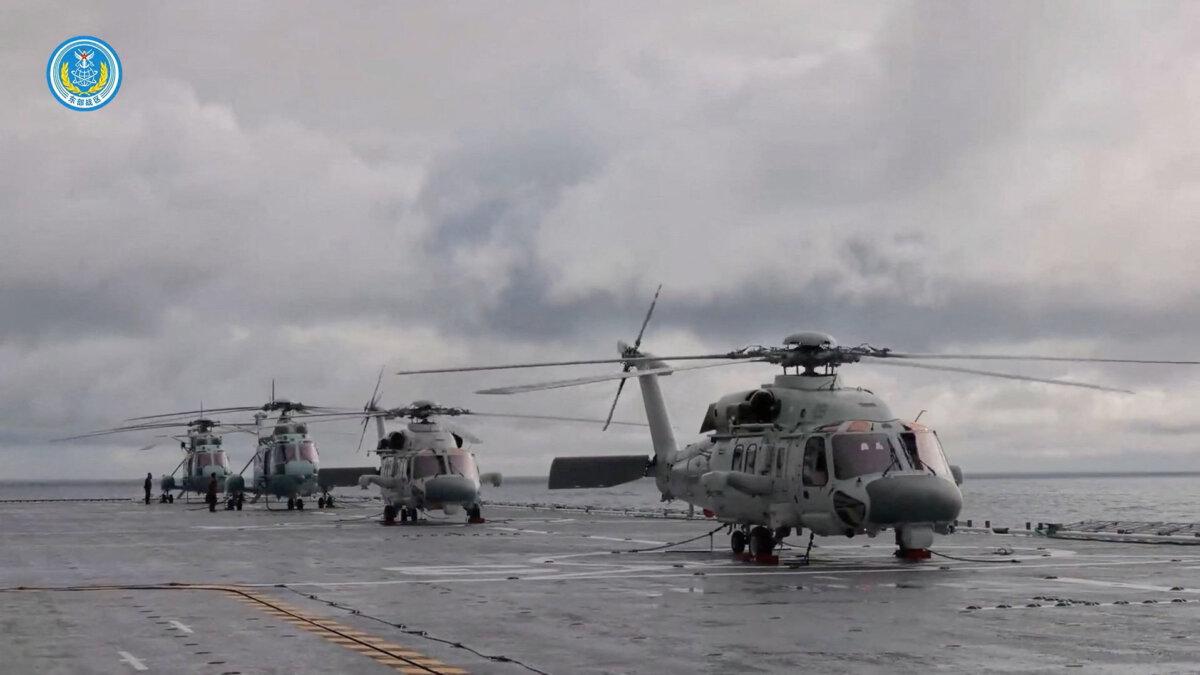
Helicopters on an amphibious assault ship take part in military drills in waters southeast of Taiwan, in this screenshot from a video released by the Eastern Theatre Command of China's People's Liberation Army, on Dec. 29, 2025. Eastern Theatre Command/Handout via Reuters
.
Wang said this comprehensive armed posture involves fortifying military assets across Japan’s southwestern islands to counter China’s anti-access and area denial strategy—which aims to keep U.S. forces away during a Taiwan conflict—in a move deeply tied to the Washington–Tokyo alliance.
“This fortification will not be limited to Japan because Okinawa hosts American military bases, indicating that the U.S. might be part of an overarching framework while sending a very strong message to Beijing,” Wang said.
Wang said it is conceivable that these weapons will eventually form part of an integrated Japanese air defense system that could significantly reduce the likelihood of a Chinese attack on Taiwan.
“When robust air defenses in southwestern islands like Yonaguni deter Chinese forces from the area, the risk of Taiwan facing a blockade in northeastern regions like Suao and Hualien decreases drastically,” Wang said.
Buying Crucial Time
Chou said Tokyo will intervene if a conflict over Taiwan is deemed a threat to Japan’s national survival, but he warned that the southwestern island defenses may be insufficient against a full-scale Chinese military offensive.“Because those Japanese islands are generally low in elevation and offer little natural protection, while the surface-to-air missiles cannot target tactical ballistic missiles, Tokyo would face severe difficulties if these territories suffer a large-scale armed attack by the People’s Liberation Army (PLA),” Chou said.
Wang said these weapons may offer only marginal deterrence against a massive regional assault, but noted that Beijing would be unlikely to risk triggering a wider conflict with such an indiscriminate strike.
“Deploying these missiles effectively restrains China if its goal is merely to block Japanese support for Taiwan,” Wang said.
“Because a broader strike would equate to declaring war on the U.S.–Japan alliance, though the specific outcome truly depends on the exact invasion model Beijing adopts.”
.
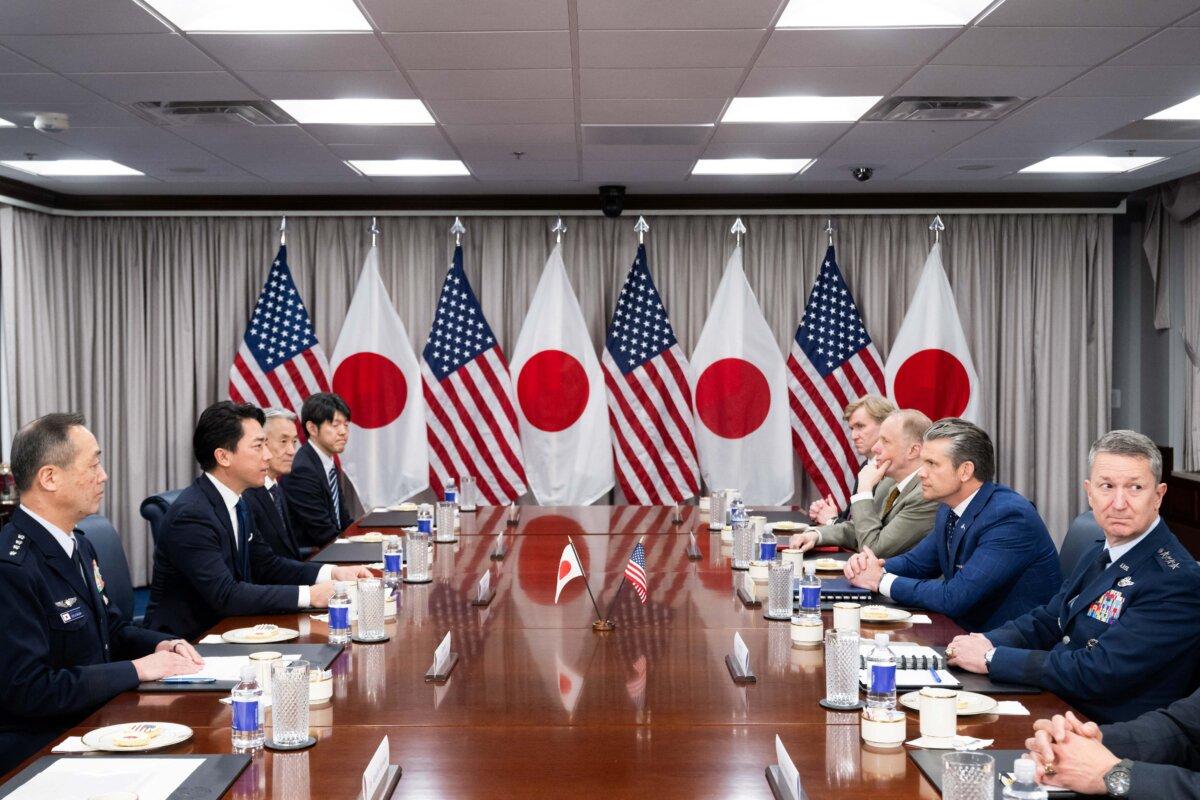
U.S. Defense Secretary Pete Hegseth (2nd R) and Japanese Defense Minister Shinjiro Koizumi (2nd L) hold a meeting at the Pentagon in Washington, on Jan. 15, 2026. Saul Loeb/AFP via Getty Images
.
Wang said this strategic buildup signals that Japan’s defensive upgrades will continue, ultimately enabling faster military responses and buying crucial time should Beijing move against Taiwan.
“Integrating Japan’s entire air defense network from Naha down to Miyako and Yonaguni allows for rapid counterattacks against various Chinese weapons, while granting Washington and Tokyo ample time to coordinate their response,” Wang said.
.
What's Your Reaction?
 Like
0
Like
0
 Dislike
0
Dislike
0
 Love
0
Love
0
 Funny
0
Funny
0
 Wow
0
Wow
0
 Sad
0
Sad
0
 Angry
0
Angry
0














Comments (0)