

The Chinese Supply Chain Conundrum


.
The realization of U.S. dependency on China for critical supply chains has been slow in coming.
For decades since China was “opened” by U.S. President Richard Nixon as part of Secretary of State Henry Kissinger’s grand China strategy or “opening China,” the Chinese regime has risen to global dominance in manufacturing, processing, and exporting essential raw materials, intermediate components, building blocks, and specialized chemicals and ingredients that are needed early in a supply chain to produce a wide range of end-use items critical to the United States (and global) economy.
Most important to the Chinese Communist Party (CCP), Washington and Beijing signed a bilateral trade agreement in 1979 that granted each other reciprocal “most-favored-nation” (MFN) status, giving China direct access to the U.S. market and providing preferential trade treatment, including lower tariffs and the removal of import quotas.
Still more important to Beijing was the granting of “permanent normal trade relations” with the United States with the passage of the U.S.–China Relations Act of 2000, concurrent with China’s official admittance to the World Trade Organization in December 2001.
As noted by The Heritage Foundation, “from 2001 to 2021, the value of goods imported from China quadrupled, to $500 billion. U.S. exports to China also reached a record high in 2021.” As a result, according to official and expert sources, Chinese imports grew from 15 percent to 21.5 percent of total U.S. imports from 2000 to 2018. Commensurately, the U.S. trade deficit with China grew from $83 billion in 2000 to $295 billion in 2024.
Furthermore, as a direct result of these U.S. policies, according to a 2018 Economic Policy Institute (EPI) report, the offshoring of U.S. manufacturing to China led to a loss of approximately 3.7 million American jobs between 2001 and 2018. Incredibly, the number of U.S. companies with business ties to China grew from approximately 3,000 in 2000 to more than 30,000 (!) by 2018 (estimates derived from EPI analysis of outsourcing and the Bureau of Economic Analysis’ estimates of U.S. investments in China over the period).
This offshoring was entirely predictable—and a shameful legacy of the so-called U.S. free traders, as U.S. companies took advantage of low Chinese labor costs to increase their profits. Specifically, average Chinese wages were $0.60/hour in 2000, rising to a still-paltry $6/hour in 2024, compared with average wages in the United States of $15/hour in 2000, rising to $28/hour in 2024.
While these gargantuan economic shifts were underway, the CCP also began a campaign to capture and control supply chains that are critical to the United States and the rest of the world. Beijing well understood that the potential disruption of critical supply chains could provide China with enormous leverage in future international disputes. Unimpeded supply chains are vital to sustaining U.S. military readiness, economic resilience, and technological superiority, especially during international crises or conflicts.
And U.S. free trade policies with China over the last 50-plus years have made the United States vulnerable to disruptions to supply chains with Chinese characteristics.
Supply Chains
The concept of supply chains has evolved throughout human history. Refer to the Roman army’s “logistics,” the Industrial Revolution’s concepts of “mass production,” Henry Ford’s revolutionizing the auto industry through “vertical integration,” and the U.S. Army’s development of “logistics” as a strategic discipline in World War II. The term “supply chain management” was introduced by British logistician and business consultant Keith Oliver in a 1982 Financial Times interview.A supply chain consists of the entire network of production processes, people, resources, logistics, transportation assets, and technologies involved in sourcing, manufacturing, and delivering a product or service from raw materials to the end consumer.
Key US Supply Chains Dependent on China
The following critical supply chains depend on sourcing from China, and their disruption would create serious problems for the United States.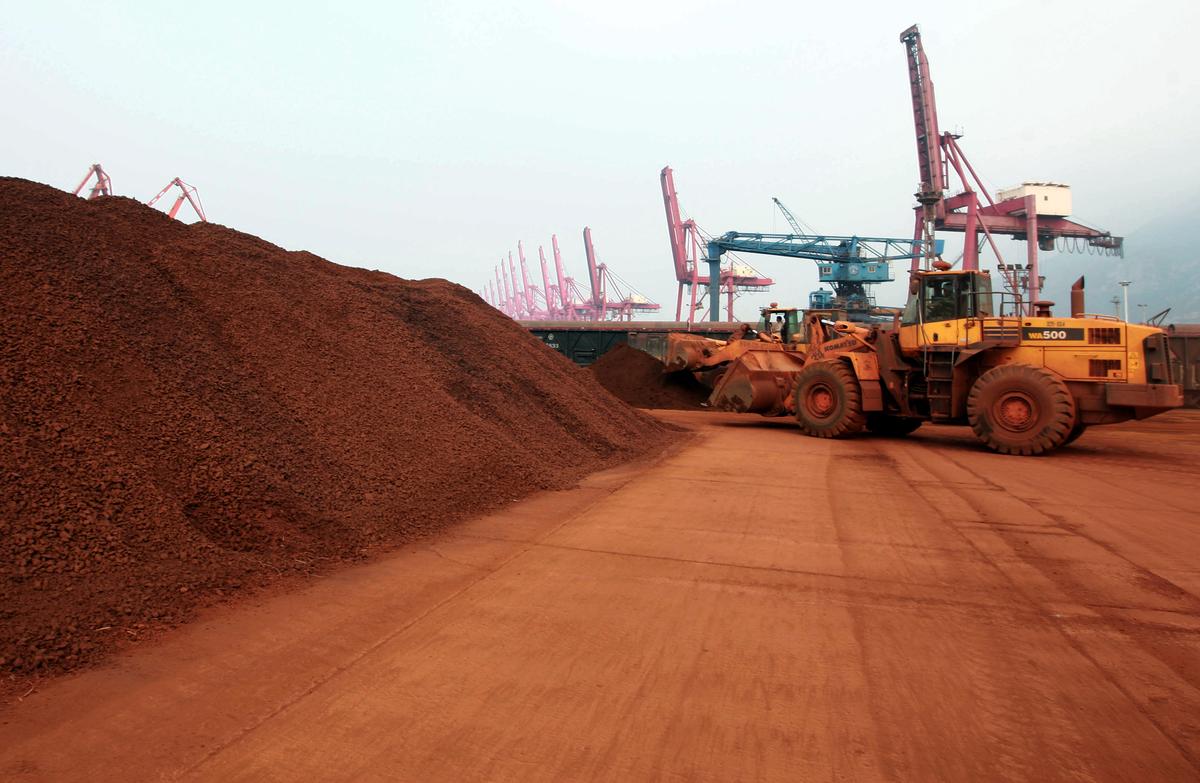
Rare-Earth Elements and Critical Minerals
These are a group of 17 chemically similar metallic elements in the periodic table that, although widely distributed worldwide, are seldom found at concentrations high enough to be easily mined and extracted. Rare-earth elements are critical for various technologies, including magnets, catalytic converters, camera lenses, car batteries, and television screens.China controls more than 70 percent of the production of the rare earths, as well as more than 60 percent of the production of these critical minerals that are also important for modern manufacturing processes: gallium, antimony, fluorspar, titanium, vanadium, indium, tellurium, graphite, bismuth, tungsten, and magnesium.
Lithium-Ion Batteries and EV Components
As a result of massive Chinese investments over the past 15 years, China now produces more than 80 percent of the world’s solar panels, more than 60 percent of the world’s electric vehicles (EVs), and more than 75 percent of the world’s lithium-ion batteries and battery cells.Semiconductors and Electronics Components
These components are used in manufacturing a wide range of information technology-based end-use devices, including satellites, drones, smartphones, laptops, industrial robots, military weapons systems, digital cameras, 5G, and other telecommunications infrastructure components.Pharmaceuticals and Active Pharmaceutical Ingredients
Pharmaceuticals are substances used to diagnose, treat, or prevent diseases, and to restore, correct, or modify organic functions. An active pharmaceutical ingredient, or API, is the biologically active component of a drug responsible for its therapeutic effect, for example, the chemical substance that produces the intended pharmacological action of the given drug.A key starting material, or KSM, is a critical component used to create APIs that directly influence a given drug’s structure, quality, and regulatory compliance. China currently controls 80 percent of KSM production and 33 percent of global API capacity.
Interruptions in this supply chain could result in shortages of essential generic drugs, drug price inflation, and potential quality and safety issues in drug manufacturing. Specific classes of drugs that could be adversely affected include penicillin and amoxicillin (antibiotics), atorvastatin (for lowering cholesterol), metformin (for managing type 2 diabetes), acetaminophen and ibuprofen (pain relievers), and chemotherapy agents such as cisplatin.
US Actions
The first serious U.S. policy action aimed at reducing Chinese control of critical supply chains was President Donald Trump’s Executive Order 13806, “Assessing and Strengthening the Manufacturing and Defense Industrial Base and Supply Chain Resiliency of the United States,” signed in July 2017. The order designated “resilient supply chains” as being “essential to the economic strength and national security of the United States.” The order also noted that the United States had lost more than 60,000 American factories to China since 2000.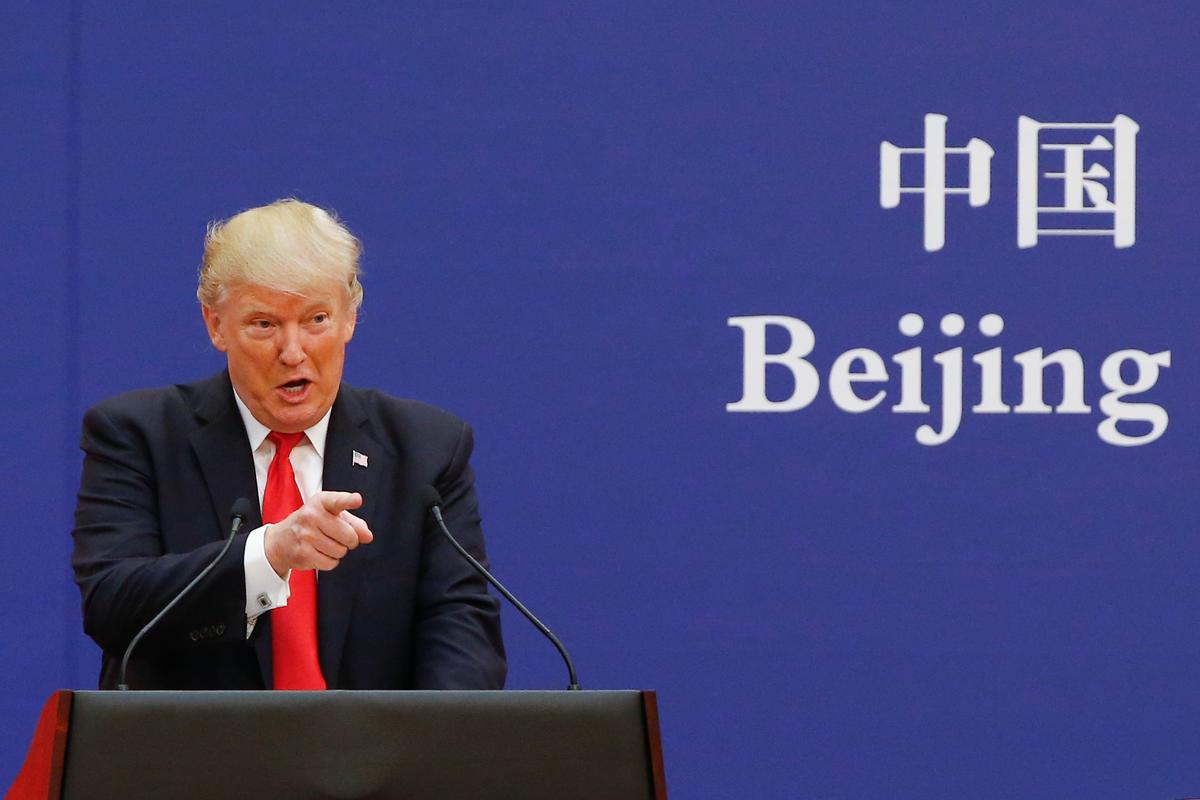
While that executive order was an “attention-getter” for U.S. policymakers, other, more concrete actions were to follow, including the building of bipartisan support for legislation to correct Chinese-dominated supply chain dependencies over time.
By 2012, the U.S. Intelligence Community had determined that Huawei Technologies and other Chinese companies posed a threat to U.S. national security. For example, Huawei equipment could contain undetectable backdoors that could enable Chinese spying on, or disabling of, U.S. networks. Furthermore, Article 7 of China’s 2017 National Intelligence Law mandates that any organization or individual is legally obligated to “support, assist, and cooperate” with state intelligence.
A bipartisan consensus enabled passage of the John S. McCain National Defense Authorization Act (NDAA) for Fiscal Year 2019 (Public Law 115-232), which prohibited the procurement or use of certain telecommunications and video surveillance equipment/services from five Chinese companies.
Stimulated by the growing trade deficit with China, Chinese intellectual property theft of U.S. technologies, forced tech transfer by U.S. companies operating in China, and unfair Chinese trade practices (such as state subsidies and restricted market access to U.S. companies in China), the Trump administration was the first to attempt to reset trade policy with the Chinese regime.
During the first Trump administration, a trade deal was negotiated, during which the U.S. public became aware of the U.S. dependence on Chinese pharmaceuticals, particularly precursor APIs. The key result was the imposition of tariffs on key Chinese exports, as Beijing failed to deliver on its promises to buy the agreed-upon quantities of U.S. agricultural and energy products under the “phase one” trade agreement.
That U.S. policy shift was carried over to the Biden administration, which passed the 2022 CHIPS Act. This bill was a massive bipartisan industrial policy push to rebuild U.S. chipmaking dominance through tax incentives and other measures aimed at reducing and eliminating U.S. dependencies on the Chinese semiconductor supply chain.
Concluding Thoughts
U.S. momentum persists in addressing Chinese dominance of critical supply chains.Reshoring
This is the practice of bringing manufacturing and services back to the United States from overseas. Stimulated by the 2022 CHIPS Act and the reciprocal tariffs of the second Trump administration, several companies are bringing manufacturing operations back to the United States, including Apple, Intel, Nvidia, GE, GM, Micron, and Lockheed Martin (among more than 200 projects, as noted by the Reshoring Initiative).Nearshoring
Stimulated by Trump’s reciprocal tariffs, this is a supply chain strategy where companies relocate business operations—such as manufacturing, assembly, sourcing, or services—from distant offshore locations (specifically, China) to geographically proximate countries.Friendshoring
This is a supply chain strategy in which companies relocate manufacturing, sourcing, and production from China to countries that are geopolitical allies and/or share similar political, economic, and democratic values to reduce dependencies on Chinese supply chains. The Trump administration has aggressively pursued reciprocal tariffs and trade negotiations with several countries, including Vietnam, India, South Korea, Japan, Taiwan, and Australia (the latter for the production of rare earth elements and minerals).What are the disadvantages for the CCP? Reduced exports to the United States, instability across Chinese supply chains, an overall slowdown of the Chinese economy, and the risk of civil disorder.
What advantages does the United States gain from these policies? Less dependence on China, more tariff revenues, stronger alliances, and a reduction in Chinese manufacturing dominance.
What's Your Reaction?
 Like
0
Like
0
 Dislike
0
Dislike
0
 Love
0
Love
0
 Funny
0
Funny
0
 Wow
0
Wow
0
 Sad
0
Sad
0
 Angry
0
Angry
0
















Comments (0)