

Is China Set to Expand Footprint in Canada’s Oil Sands?


.
Ottawa has set its sights on deepening ties with Beijing, including on energy cooperation, but to what extent will this occur and what implications will it have for Canada’s oil sector?
For now, the federal minister in charge of the file won’t say whether this could mean relaxing the rules governing Chinese state ownership of strategic sectors of Canada’s economy.
This could signal a departure from the Harper years, when the government approved a high-stakes takeover of a major oil sands company by a Chinese state-owned enterprise, then significantly changed security review rules to make similar acquisitions much more difficult in the future.
Ottawa’s willingness to let Beijing take over prime assets has ebbed and flowed under previous governments of different parties. The current government, led by Prime Minister Mark Carney, has so far taken a different approach than its predecessor on key international issues, including China.
Ottawa’s relationship with Beijing was strained during Prime Minister Justin Trudeau’s latter years and Carney has sought to deepen ties, culminating in mid-January with a visit to China. Several memorandums of understanding (MOU) between Ottawa and Beijing were signed at the time, including one on energy cooperation that addressed “conventional energy such as oil and gas resource development.”
After Carney called China the “biggest security threat” facing Canada during the 2025 election, and now speaks of a “new strategic partnership” with the country, Energy Minister Tim Hodgson was asked by reporters last week whether his government intends to facilitate Chinese investments in Canadian energy.
“There’s a difference between an investment and a majority investment,” Hodgson told CTV News. “We'll look at each particular situation and decide whether it’s a net benefit for Canada.”
Chinese Footprint
Several Chinese state-owned companies have assets in Canadian oil and gas. The companies spent more than $100 billion to acquire Canadian energy assets from the late 2000s to early 2010s.The China National Offshore Oil Corporation (CNOOC) also has a 7 percent stake in Syncrude, but the company is better known for its takeover of Nexen.
The decision was controversial, even within the Conservative caucus, as MPs voiced concerns about Chinese state ownership and Beijing’s human rights record.
He declared that foreign state control of the oil sands has “reached the point where any further such control would no longer be a net benefit to Canada.” Therefore, future attempts by foreign state-owned enterprises to acquire control of a Canadian oil sands business would only be considered a “net benefit” under an “exceptional circumstance,” Harper said.
Harper also said from that point on, his government would apply greater scrutiny under the Investment Canada Act to other proposed acquisitions by foreign state-owned companies.
PetroChina also bought a non-controlling 49.9 percent stake in Encana in late 2012 for $2.18 billion to develop the Duvernay gas project. PetroChina is involved in the nascent business of exporting Canadian liquified natural gas (LNG) as well.
LNG Canada in Kitimat, B.C., became the first operational LNG export facility in Canada last summer, and PetroChina owns a 15 percent stake in the project.
The Carney government has said it wants to further develop Canada’s potential for LNG exports, including by referring Phase 2 of LNG Canada to the Major Projects Office. The office was created by the Carney government last year in a bid to speed up or help finance projects deemed to be in the national interest.
.

China’s Thirst for Hydrocarbons
Canada and China’s intent to increase cooperation on oil and gas comes at a time when the two countries are being impacted by U.S. policies.Carney has expressed intentions to double Canada’s non-U.S. exports over the next decade amid rising protectionism from its southern neighbour. Meanwhile, Beijing’s hydrocarbon supply is being affected by geopolitical moves made by Washington.
A sizeable portion of China’s oil imports have been coming from Russia, Iran, and Venezuela, three countries facing oil sanctions from the United States and other Western countries.
The U.S. capture of Venezuelan Leader Nicolas Maduro in early January, and the U.S. attempted takeover of the country’s oil industry, dealt a blow to Chinese interests in Venezuela. Shipments of Venezuelan oil to China began falling sharply in mid-December after the Trump administration imposed a blockade on sanctioned ships.
As a potential impact, Chinese independent refiner Chambroad Petrochemical has bought a cargo of Canadian crude for a delivery in May, Reuters reported in early February. Chambroad was one of the main buyers of Venezuela crude.
China’s search for stability could mean looking closer at what Canada can offer. This was certainly discussed when Carney and a large Canadian delegation visited China in mid-January.
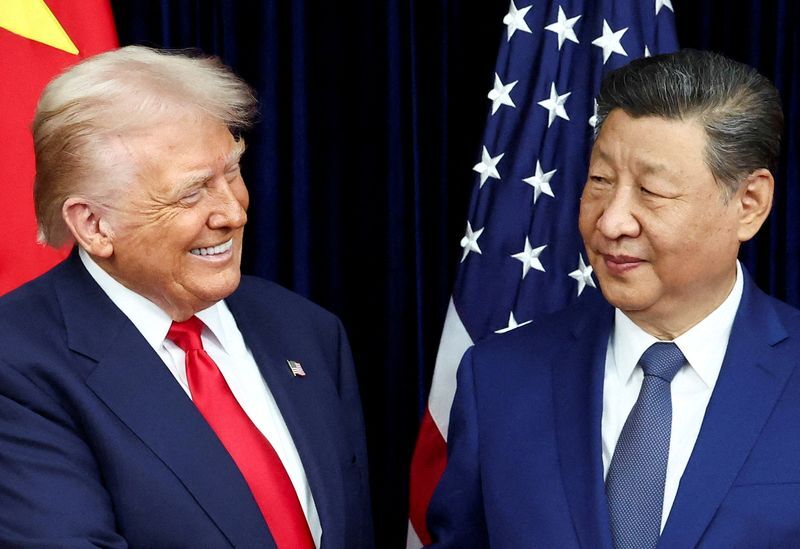
A joint statement from Carney and Chinese Leader Xi Jinping issued after their meeting said the two sides “concurred to support exchanges and cooperation in clean energy, and strengthen cooperation in conventional energy such as oil and gas resource development.”
In light of Trump’s moves in Venezuela, and his national security strategy aiming to remove China’s influence in the Western Hemisphere, it is likely that any further venture by Beijing in Canada’s oil patch would be scrutinized by the White House.
Security Concerns
The prospect of new investments by Chinese state-owned enterprises in Canadian energy may also trigger some alarm bells within domestic security agencies.The Canadian Security Intelligence Service (CSIS) has systematically warned in its annual public reports about the potential risks of foreign states making key investments in Canada.
The spy agency, while not singling out any country in its warning, said foreign companies tied to hostile governments acquiring control over strategic sectors of Canada’s economy “can represent a threat” to Canadian interests. CSIS added it expected this issue would remain a concern in the following years.
The most recent CSIS annual report for 2024 does not specifically mention the issue of foreign state-backed investments, but it warns about foreign interference undermining Canadian supply chains and international trading relations. It says that the natural resources sector has been particularly targeted due to its strategic relevance.
Ottawa has so far brushed aside concerns about increased engagement with Beijing amid security concerns.
“When it comes to our relationship with China, it’s always eyes wide open,” Industry Minister Mélanie Joly told reporters on Feb. 10. Joly had been asked about the 20-year prison sentence handed to pro-democracy advocate Jimmy Lai in Hong Kong and Ottawa’s recent deal with Beijing to bring in 49,000 Chinese electric vehicles (EVs) with a reduced tariff rate.
Foreign Investment Dilemmas
Along with allowing nearly 50,000 Chinese EVs in Canada, half the size of the Canadian market for battery vehicles, Ottawa is also seeking to attract Chinese investments for joint ventures in EV manufacturing. Given the political will, such potential investments would likely be cleared by cabinet.In that sense, Carney is likely not going to face his first major foreign investment dilemma on that issue. His predecessors faced the test multiple times and took varying approaches.
Trudeau later found himself confronted with a dilemma related to Chinese takeover attempts after he became prime minister.
Trudeau had worked on building closer ties with Beijing but those efforts came to a halt after Canada executed a U.S. extradition warrant for Huawei executive Meng Wanzhou in late 2018. Beijing in apparent retaliation detained Canadians Michael Kovrig and Michael Spavor for more than 1,000 days.
What's Your Reaction?
 Like
0
Like
0
 Dislike
0
Dislike
0
 Love
0
Love
0
 Funny
0
Funny
0
 Wow
0
Wow
0
 Sad
0
Sad
0
 Angry
0
Angry
0














Comments (0)