

China’s Services PMI Growth Hits 6-Month Low in December: S&P Global Survey


.
China’s service sector growth slowed to its weakest pace, reaching a six-month low in December, according to a recent survey compiled by S&P Global.
Meanwhile, the Chinese communist regime’s official data showed that China’s service sector purchasing managers’ index (PMI) remained in contraction in December. Combined with a weak manufacturing PMI, the data indicate that China’s economic growth remains fragile and uneven as the new year begins, analysts told The Epoch Times.
The rate of new order growth was the slowest in six months, mainly due to a decline in new export business, which returned to contraction after a slight expansion the previous month. The survey attributed this phenomenon primarily to a decrease in tourist numbers, especially from Japan.
Relations between Japan and China have become increasingly strained and have been at an impasse for several weeks following remarks made by Japanese Prime Minister Sanae Takaichi regarding her country potentially using self-defense measures if China attacked Taiwan.The survey also showed that employment contracted for the fifth consecutive month in December, with the pace of job cuts being the fastest since September amid cost pressures and business restructuring.
Driven by rising raw material and labor costs, input costs increased for the 10th consecutive month. However, companies lowered their selling prices, and the survey indicated that increased competition limited their pricing power.
“The services sector ended 2025 with a ‘modest growth, high expectations’ profile,” said Yao Yu, founder at RatingDog, adding that “the contraction in employment and external demand volatility remain key constraints facing the sector.”
In an environment characterized by low employment confidence and pressure on balance sheets, households generally delay discretionary spending—this slowdown affects services despite the holiday calendar, according to U.S.-based independent economist Davy J. Wong, citing private-sector data.
Meanwhile, the official service sector PMI for December, released by the Chinese regime’s National Bureau of Statistics, shows that China’s services sector activity index rose slightly to 49.7 from 49.5 in November, but it still remains in contraction.
Regarding the difference between the official and unofficial PMI figures, analysts said that the two indicators measure different segments of the economy, using different methodologies and samples.
“The official PMI differs fundamentally in coverage and composition. It typically includes a larger share of state-owned enterprises, quasi-public institutions, and policy-linked entities. Private surveys tend to capture pricing power, profitability, and order volatility more directly,” Wong told The Epoch Times.
The official and non-official service PMIs can diverge “because they are produced by different institutions and built on different samples,” Sun Kuo-hsiang, a professor of international affairs and business at Nanhua University in Taiwan, told The Epoch Times.
The two surveys use different sets of companies, focus on different industries, and cover different parts of the country, he stated, so “it is entirely possible for one index to indicate contraction—below 50—while the other shows expansion—above 50—at the same time.”
Sun further explained why the private-sector services PMI came in higher than the official one: the two surveys measure activity in different parts of the services industry.
If activity at state-owned or large enterprises stays relatively weak while private companies show only slight growth—or if shocks such as reduced tourism or softer export demand hit one survey’s sample harder than the other—then the private PMI is likely to read stronger than the official figure, he noted.
.
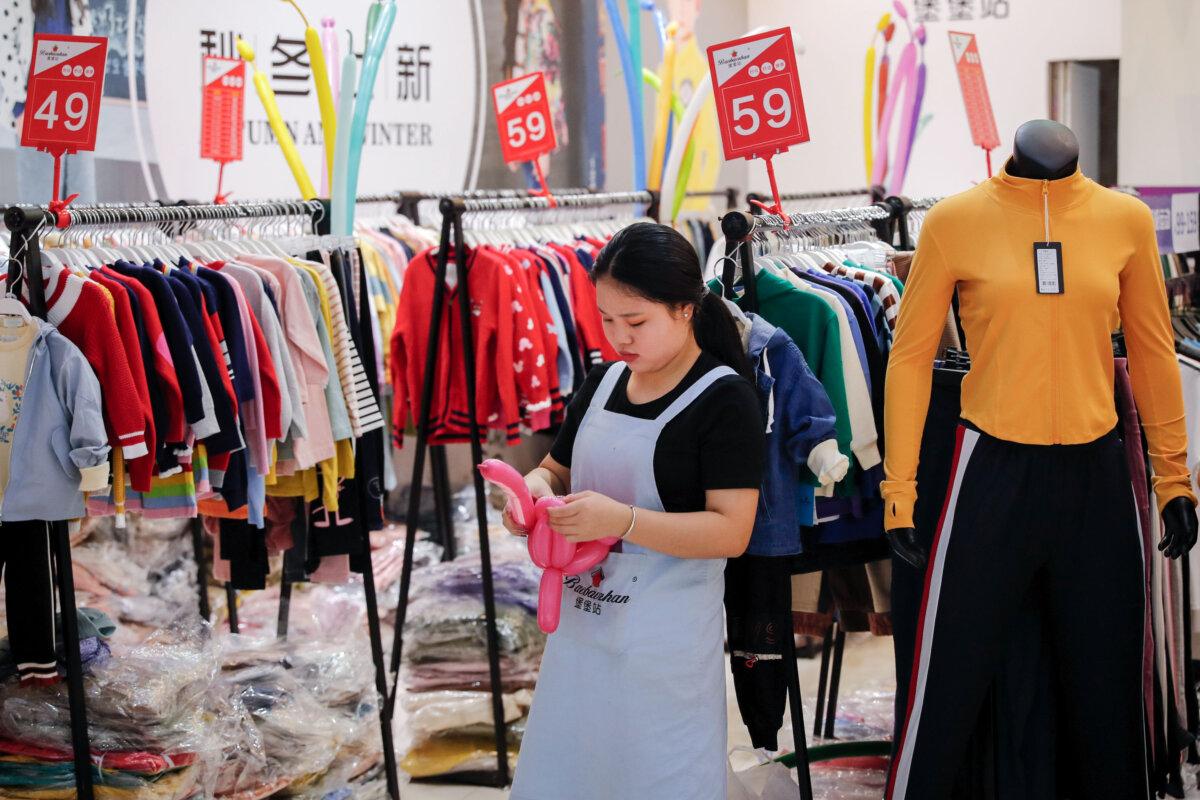
Weak Manufacturing PMI
China’s manufacturing PMI has remained weak. In December, the official manufacturing PMI rose to 50.1 after eight consecutive months of contraction. The slight growth was driven by holiday orders.“The persistent weakness in manufacturing and a slowdown in services growth suggest that China’s economic challenge has broadened from sector-specific stress to economy-wide demand constraints,“ Wong said. ”Growth has not collapsed, but it remains fragile and uneven.”
For China’s 2026 outlook, Wong said that state-owned enterprises will increasingly rely on policy support, while market-oriented companies will face weak pricing power, cautious consumers, and limited incentives to expand.
Sun stated that the near-term outlook is likely “modest growth but fragile"; however, the main challenges remain, including weak hiring, uncertain confidence, volatile external demand, and ongoing headwinds from the property crisis and deflation.
What's Your Reaction?
 Like
0
Like
0
 Dislike
0
Dislike
0
 Love
0
Love
0
 Funny
0
Funny
0
 Wow
0
Wow
0
 Sad
0
Sad
0
 Angry
0
Angry
0















Comments (0)