

China's "Heavenly Dragon" Falls: Space Pioneer's Flagship Rocket Fails on First Launch
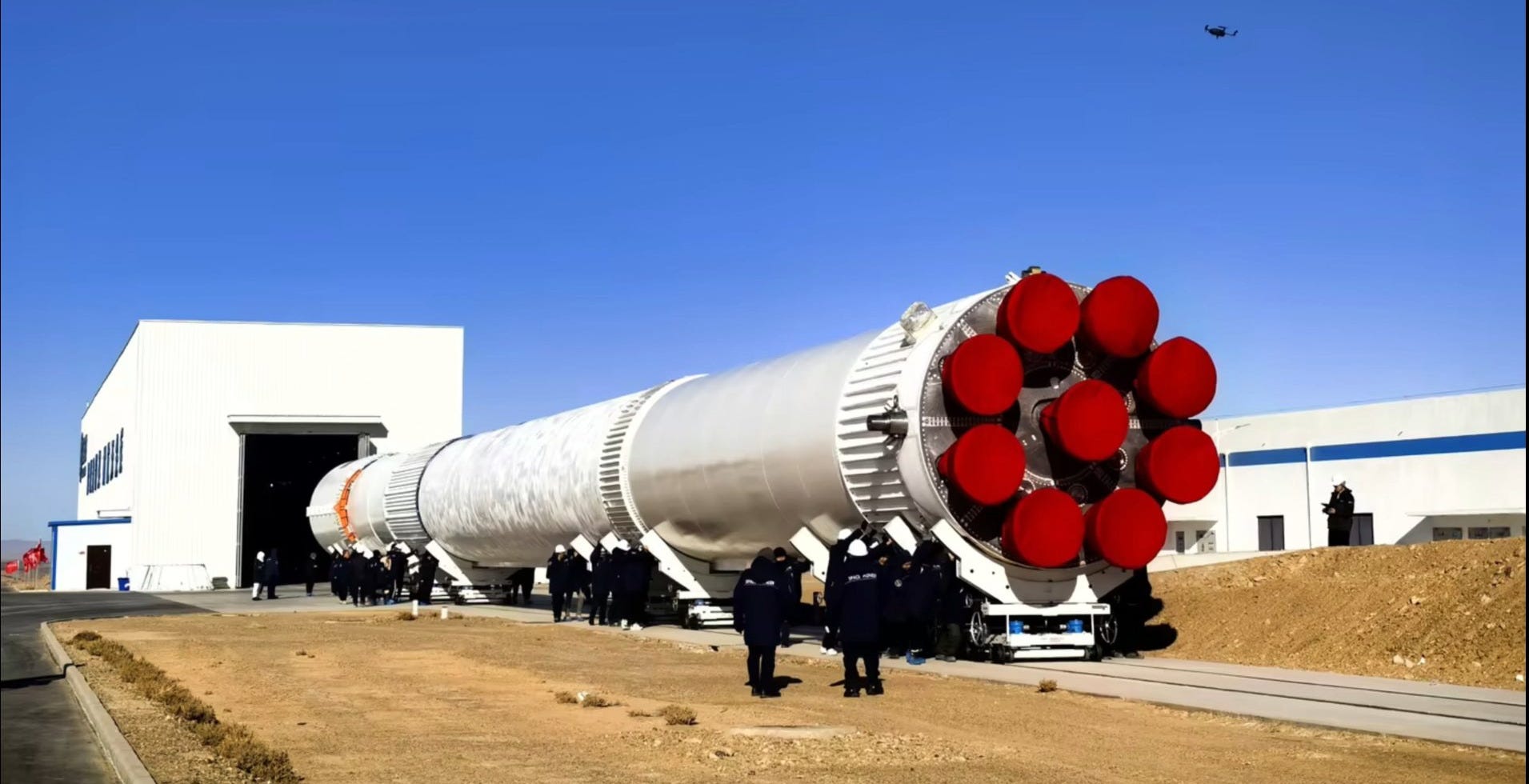
China's commercial space sector suffered a significant blow on Friday when the Tianlong-3 rocket — Beijing-based startup Space Pioneer's most ambitious project to date — failed during its inaugural launch. The vehicle lifted off at 12:17 a.m. Eastern time on April 3 from the Dongfeng Commercial Aerospace Innovation Test Zone at the Jiuquan Satellite Launch Center, deep in China's Gobi Desert.

.
A High-Stakes Debut Ends in Failure
China's commercial space sector suffered a significant blow on Friday when the Tianlong-3 rocket — Beijing-based startup Space Pioneer's most ambitious project to date — failed during its inaugural launch. The vehicle lifted off at 12:17 a.m. Eastern time on April 3 from the Dongfeng Commercial Aerospace Innovation Test Zone at the Jiuquan Satellite Launch Center, deep in China's Gobi Desert.
The mission ended in failure during the ascent phase. Space Pioneer confirmed an anomaly had occurred during flight and apologized to its partners and to all sectors of society who care about the development of commercial spaceflight. The company said it was investigating the exact cause and working with technical experts to ensure the success of future missions.
What Went Wrong
Amateur footage captured during the launch showed one of the rocket's nine engines momentarily over-pressurizing and rupturing its nozzle. While the vehicle has engine-out capability due to its nine-engine configuration, something went wrong either late in the first-stage burn or around the time the second stage was supposed to ignite.
Space Pioneer did not disclose whether any payloads were lost. Rumors circulating in aerospace circles suggested that a batch of prototype satellites for China's Qianfan broadband constellation may have been aboard — but this was not officially confirmed.
A Rocket Designed to Challenge SpaceX
The Tianlong-3 is no ordinary rocket. At 72 meters tall and 3.8 meters in diameter, the two-stage vehicle burns a mix of liquid oxygen and kerosene. It is designed for partial reusability and aims to be directly comparable to SpaceX's Falcon 9. It is capable of carrying between 17,000 and 22,000 kilograms to low Earth orbit.
The first stage is designed to perform an autonomous vertical landing and be reused up to ten times — a capability that, if proven, would dramatically reduce launch costs and give China a competitive edge in the global satellite deployment market.
Space Pioneer has invested heavily in reaching this point. The company raised nearly 2.5 billion yuan (approximately $363 million) six months ago specifically to advance the Tianlong-3 program and next-generation rocket development.
A Pattern of Setbacks
Friday's failure is not the company's first with this rocket. In June 2024, Space Pioneer conducted a routine static fire test of the Tianlong-3's first stage in Gongyi, a city of roughly 800,000 people in central China's Henan Province. The anchoring mechanism failed, and the rocket unexpectedly lifted off — crashing into a nearby hilly area after just 50 seconds and creating a massive fireball. No injuries were reported.
The repeated setbacks underscore the difficulty of what Space Pioneer is attempting. No Chinese company has yet demonstrated the ability to recover and reuse a rocket's main stage — the very capability that defines SpaceX's enormous cost advantage.
China's Larger Race for Reusable Rockets
Space Pioneer is not alone in this pursuit. A number of Chinese firms, both state-owned and private, are developing reusable rocket technology. Commercial firms — with Beijing's blessing — have become an increasingly important part of China's space innovation, mirroring a model that has seen success in the United States.
Among the competitors, LandSpace stands out. The company made history in 2023 with the world's first successful orbital launch of a methane-fueled rocket, the Zhuque-2. Its follow-on vehicle, the Zhuque-3, has completed multiple technical tests to validate its reusable capabilities and is expected to attempt a maiden flight in 2025 or early 2026.
Friday's failure was China's third failed orbital launch attempt of 2026, out of 19 total attempts so far this year. China is targeting approximately 140 launches in 2026.
The Gap With SpaceX Remains Wide
Despite the ambition and funding flowing into China's commercial space sector, the technology gap with SpaceX remains stark. The Falcon 9 has completed hundreds of successful missions and routinely lands and relaunches its first-stage boosters — something no Chinese rocket has yet achieved.
Observers note that China's commercial space industry has gone from essentially nothing in 2015 to a critical new juncture today — but those watching closely say much work remains, and failure is part of the process.
Space Pioneer says it already has a second Tianlong-3 vehicle in advanced preparation. Reports from January indicate that a near-complete second vehicle was shown to journalists, suggesting the company intends to press forward quickly despite the setback.
.
Sources
- SpaceNews — China's commercial Tianlong-3 rocket fails on debut launch (April 3, 2026): https://spacenews.com/chinas-commercial-tianlong-3-rocket-fails-on-debut-launch/
- South China Morning Post — China launches heavyweight rocket to challenge SpaceX's Falcon 9. It fails (April 3, 2026): https://www.scmp.com/news/china/science/article/3348908/china-launches-heavyweight-rocket-challenge-spacexs-falcon-9-it-fails
- CNN — A Chinese reusable booster explodes in historic first orbital test (December 3, 2025): https://www.cnn.com/2025/12/03/science/zhuque-3-launch-china-reusable-rocket-intl-hnk
- Space.com — Not-so-static fire: Private Chinese rocket accidentally launches during test (July 1, 2024): https://www.space.com/space-pioneer-tianlong-3-rocket-accidental-launch
- Wikipedia — Tianlong-3: https://en.wikipedia.org/wiki/Tianlong-3
- China-in-Space.com — Space Pioneer's Tianlong-3 Fails During Maiden Flight (April 3, 2026): https://www.china-in-space.com/p/space-pioneers-tianlong-3-fails-during
.
What's Your Reaction?
 Like
1
Like
1
 Dislike
0
Dislike
0
 Love
1
Love
1
 Funny
0
Funny
0
 Wow
1
Wow
1
 Sad
0
Sad
0
 Angry
0
Angry
0














Comments (0)