

Japan Opens Its Arms: Historic Defence Export Reform Sends a Clear Signal to Beijing
Japan has scrapped most of its post-war restrictions on weapons exports — a move that marks one of the most significant shifts in the country's security policy in decades. The decision has direct strategic implications for China, which is increasingly viewed in Tokyo as a military threat, and comes amid an already tense diplomatic crisis between the two neighbours.

.
A Historic Break With the Past
For decades, Japan's arms export policy was one of the most restrictive in the world. Since the end of World War II, the country had kept its defence industry on a tight leash — rooted in a pacifist constitution and a deep national reluctance to be seen as a military power again.
That era is now over. On Tuesday, April 21, the cabinet of Prime Minister Sanae Takaichi approved the most sweeping overhaul of Japan's defence export rules in generations. The government abolished restrictions that had limited military equipment transfers to just five non-lethal categories, opening the door to exports of lethal weapons such as warships, tanks and missiles.
"No single country can now protect its own peace and security alone," Takaichi said in a public statement following the decision. "Partner countries that support each other in terms of defence equipment are necessary."
What Changes — and What Stays
Until now, Japan could only export military goods in five specific, largely non-combat categories: rescue equipment, transport vehicles, early-warning systems, surveillance tools, and mine-sweeping gear. Everything else was effectively off-limits.
Under the new rules, ministers and officials will instead assess the merits of each proposed sale on a case-by-case basis. Two broad categories are introduced — lethal "weapons" and non-lethal "non-weapons" — with different export processes for each.
Japan will keep its three core export principles: strict screening of buyers, controls on the transfer of weapons to third countries, and a ban on sales to nations involved in active conflict. However, exceptions may be made when deemed necessary for national security.
Among the first potential exports: used warships to the Philippines, according to sources familiar with the negotiations.
The China Factor: Why Now?
The timing is no coincidence. Japan's defence transformation is taking place against the backdrop of a dramatically worsening relationship with China — and a rapidly shifting strategic environment across the Indo-Pacific.
Defence planners in Tokyo increasingly assess that Beijing intends to project military power beyond the so-called First Island Chain — a strategic arc running through Japan, Taiwan and the Philippines that limits China's direct access to the Western Pacific. A Chinese takeover of Taiwan, strategists warn, could leave Japan isolated and vulnerable.
Prime Minister Takaichi herself told Japanese media last November that one of the key drivers of Japan's defence build-up is the possibility that the country might be drawn into a military conflict if China were to invade Taiwan.
China has responded furiously. A Chinese foreign ministry spokesperson accused Tokyo of pursuing an "offensive, expansionist and dangerous defence policy" under the guise of security.
A Diplomatic Crisis Already Underway
The arms export decision does not come in a vacuum — it is the latest escalation in a months-long diplomatic standoff between Tokyo and Beijing.
The crisis began in November 2025, after Prime Minister Takaichi said in parliament that a Chinese attack on Taiwan could constitute an "existential crisis for Japan," potentially triggering Japan's right to act in collective self-defence. Beijing was incensed.
China's retaliation was swift and broad: travel advisories, cultural exchange restrictions, cuts to seafood imports — and, most consequentially, economic pressure. In January 2026, China's Ministry of Commerce prohibited the export of dual-use materials and technologies to Japan where the end-use was assessed as enhancing Japanese military capabilities — a sweeping ban covering advanced minerals, electronics, sensors and aerospace components.
Despite all of this, Takaichi's hardline stance on China was widely credited as a factor in the LDP's landslide victory in Japan's 2026 general election, with the ruling party winning a supermajority in the Lower House. Public sentiment backs her up: a government survey in January 2026 found that 68% of Japanese respondents named Chinese military activities near Japan and in the South China Sea as their top security concern.
Japan as Arms Exporter: The Industrial Logic
Beyond geopolitics, there is a straightforward economic rationale behind the export reform. Japan's defence industry — home to world-class builders of submarines, fighter jets and precision missiles — has long been hampered by its domestic-only market.
Companies like Mitsubishi Heavy Industries have been forced to produce small volumes for a single buyer: Japan's own Self-Defense Forces. The result, as analysts note, has been high unit costs and structural inefficiencies throughout the supply chain.
By opening up export markets, Tokyo hopes to benefit from economies of scale and inject new vitality into Japan's defence industrial base — particularly among smaller subcontractors that form the backbone of production.
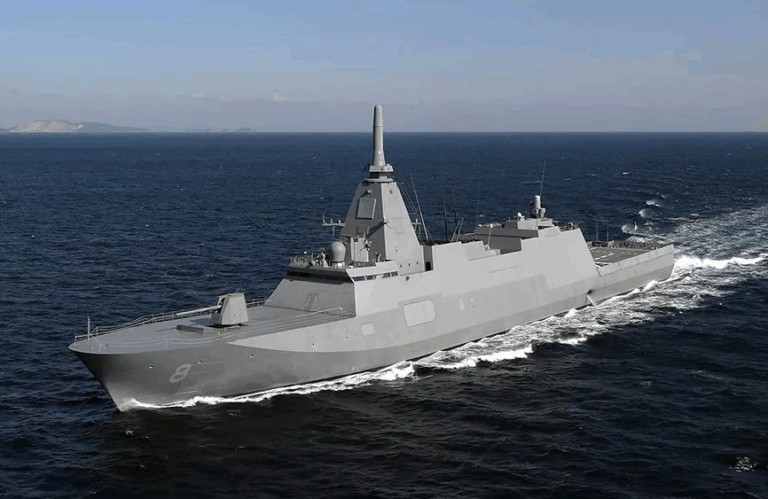
On April 18, Tokyo and Canberra finalised a major naval agreement involving Mitsubishi Heavy Industries building advanced Mogami-class frigates for Australia — an early sign of Japan's ambitions as a global arms supplier.
Allies Welcomed, Rivals Concerned
The response from Japan's security partners was enthusiastic. Philippine Defence Secretary Gilberto Teodoro welcomed the rule change, saying it would give Manila access to defence articles of the highest quality, strengthen domestic resilience and contribute to regional stability through deterrence.
The U.S. Ambassador to Japan, George Glass, called the decision "historic," saying it would not only enhance the capabilities of countries aligned with the Japan-U.S. alliance but also "strengthen our collective capacity to maintain peace throughout the region."
Japan is also actively working to build defence supply chains in Asia that do not rely exclusively on the United States — a goal that has taken on new urgency as allies reassess the reliability of Washington's long-term security commitments under the Trump administration.
What Comes Next
Japan is not slowing down. Defence spending has already reached 2% of GDP, and over 970 billion yen has been earmarked for enhanced long-range "standoff" missile capabilities — including upgraded Type-12 surface-to-ship missiles with a range of approximately 1,000 kilometres.
Tokyo is also co-developing a next-generation stealth fighter jet with the United Kingdom and Italy, expected to enter service in the mid-2030s. And Prime Minister Takaichi has committed to revising Japan's national security strategy further in 2026 — with additional defence spending increases likely to follow.
For Beijing, all of this amounts to a strategic picture it finds deeply uncomfortable: a rearmed, export-capable Japan, surrounded by allied nations increasingly equipped with Japanese-made weapons, forming a tightening arc along China's maritime perimeter.
.
Sources
- Reuters – Japan opens door to global arms market with biggest export rule change in decades (April 21, 2026): https://www.reuters.com/world/china/japan-opens-door-to-global-arms-market-with-biggest-export-rule-change-decades-2026-04-21/
- Al Jazeera – Can Japan's arms industry gain from Trump trust loss? (April 15, 2026): https://www.aljazeera.com/news/2026/4/15/can-japans-arms-industry-gain-from-trump-trust-loss
- International Crisis Group – Embracing Arms: Securing Japan in a "New Era of Crisis" (December 2025): https://www.crisisgroup.org/rpt/asia-pacific/japan-united-states-china/351-embracing-arms-securing-japan-new-era-crisis
- Greenberg Traurig Legal Alert – China Imposes Escalated Export Controls on Dual-Use Items to Japan (February 2026): https://www.gtlaw.com/en/insights/2026/2/china-imposes-escalated-export-controls-on-dual-use-items-to-japan
- Wikipedia – 2025–2026 China–Japan Diplomatic Crisis: https://en.wikipedia.org/wiki/2025%E2%80%932026_China%E2%80%93Japan_diplomatic_crisis
- The Japan Times – Japan scraps limits on lethal arms exports (April 21, 2026): https://www.japantimes.co.jp/news/2026/04/21/japan/politics/japan-lethal-weapons-export-rules-eased/
.
What's Your Reaction?
 Like
1
Like
1
 Dislike
0
Dislike
0
 Love
1
Love
1
 Funny
0
Funny
0
 Wow
1
Wow
1
 Sad
0
Sad
0
 Angry
0
Angry
0














Comments (0)