

Nvidia's H200 Chips Still Blocked From China — Beijing Protects Its Own Industry
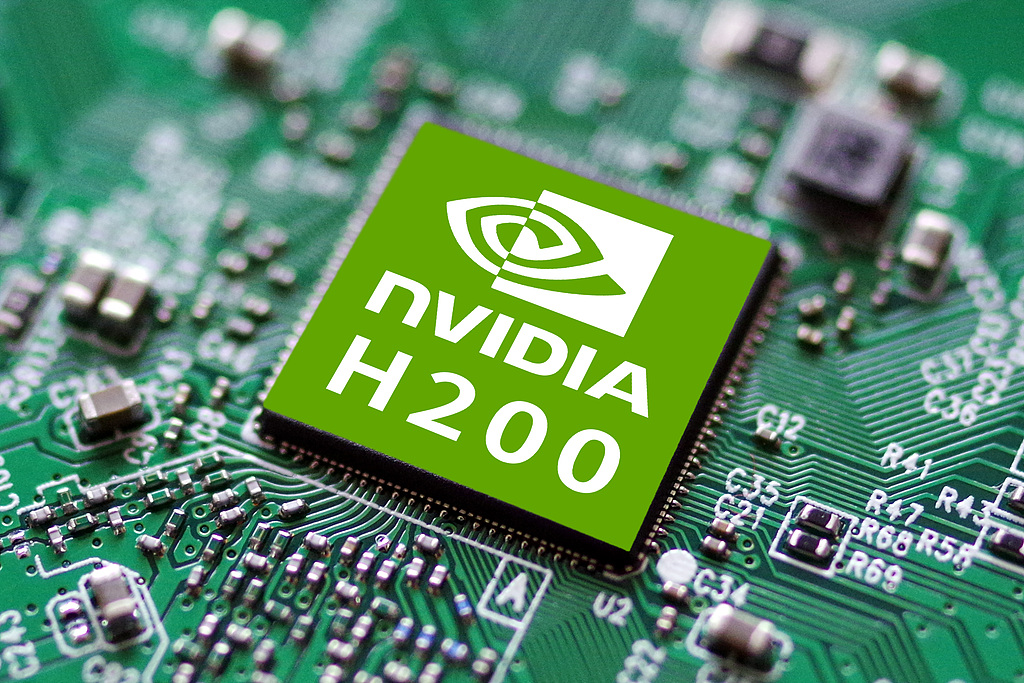
Despite U.S. approval of Nvidia chip sales to China months ago, not a single H200 processor has actually been delivered. Commerce Secretary Howard Lutnick confirmed on Wednesday that Beijing itself is holding back the purchases — a sign that China's domestic tech ambitions now shape the global AI hardware race as much as Washington's export rules do.

.
Washington Gives the Green Light — Beijing Pumps the Brakes
The Trump administration formally approved the export of Nvidia's powerful H200 artificial intelligence chips to China in January 2026, under specific licensing conditions. But as of this week, no chips have changed hands.
Speaking to reporters on Wednesday, U.S. Commerce Secretary Howard Lutnick put the blame squarely on the Chinese side. "The Chinese central government has not let them, as of yet, buy the chips," he said, explaining that Beijing wants its own companies to invest in domestically produced technology. "We have not sold them chips as of yet," he added.
This is a notable twist in what has been one of the most closely watched technology trade disputes of the decade.
China's Strategy: Buy Local, Build Local
Beijing's reluctance is not simply diplomatic posturing. Chinese leadership has made it a national priority to develop homegrown alternatives to American AI chips — companies like Huawei with its Ascend processors are central to that effort. Allowing mass purchases of U.S. hardware could undercut that domestic push.
At the same time, China's leading tech firms — including ByteDance, Alibaba, and Tencent — are under enormous competitive pressure and reportedly eager to get their hands on Nvidia's hardware for their data centers. The tension between Beijing's industrial policy goals and its companies' commercial needs has created a standoff that neither side has fully resolved.
Months of Regulatory Back-and-Forth
The path to this point has been anything but smooth. The U.S. approval in January came with strings attached: export licenses require review by the State, Defense, and Energy Departments, and a so-called "Know-Your-Customer" (KYC) requirement is meant to ensure the chips do not end up in the hands of China's military.
Sources familiar with the situation have said Nvidia had not fully agreed to all proposed license conditions, particularly the KYC requirement. Lutnick told Congress in February that the licensing terms are "very detailed" and were developed jointly with the State Department — and that Nvidia simply "must live with" them.
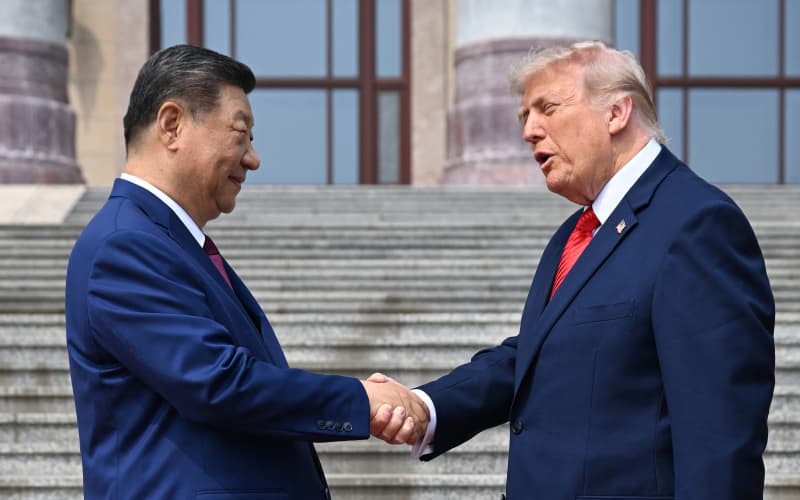
Meanwhile, the broader backdrop is a trade truce brokered by Presidents Trump and Xi Jinping in South Korea in October 2025. As part of that agreement, the U.S. agreed to delay the so-called "affiliates rule" — a regulation that would have restricted American technology shipments to thousands of Chinese companies — by one year.
The "Affiliates Rule" Back in Play
On Wednesday, Lutnick was also pressed on whether the Trump administration would revive that postponed regulation. His answer was carefully balanced.
"I agree that the affiliates rule is a smart thing for the United States of America to consider," he said, "but it is part of the balance of that full trade agreement."
In other words: the rule remains a potential tool, but it is being held in reserve as part of a much larger negotiation between Washington and Beijing — one that encompasses not just chips, but also rare earth minerals and other strategic trade interests.
What's at Stake
The H200 is not Nvidia's newest chip — that would be the Blackwell series — but it remains highly advanced and well-suited for large-scale AI model training. For Nvidia, the Chinese market represents billions of dollars in potential revenue that has been effectively frozen by a combination of U.S. export controls, unresolved licensing disputes, and now Beijing's own hesitation.
Nvidia CEO Jensen Huang said at the company's GTC conference in March 2026 that the firm has received purchase orders from Chinese customers and is in the process of restarting production for that market. Whether those orders can be fulfilled depends on whether both governments — and Nvidia itself — can finally agree on the terms.
For the Trump administration, the chip standoff illustrates the tightrope it walks: keeping American technology ahead of China's military while not permanently shutting U.S. companies out of one of the world's largest technology markets.
.
Sources
- Reuters — Nvidia has not yet sold its H200 AI chips to China, Lutnick says (April 22, 2026): https://www.reuters.com/world/asia-pacific/nvidia-has-not-yet-sold-its-h200-ai-chips-china-lutnick-says-2026-04-22/
- CNBC — Nvidia AI chip sales to China stalled by U.S. security review (February 4, 2026): https://www.cnbc.com/2026/02/04/nvidia-ai-chip-sales-to-china-stalled-by-us-security-review-ft-reports.html
- Axios — Nvidia restarting production for H200 chips for sales in China (March 17–18, 2026): https://www.axios.com/2026/03/17/nvidia-huang-china-h200
- BNN Bloomberg / Reuters — Nvidia must live with guardrails around its AI chip sales to China (February 10, 2026): https://www.bnnbloomberg.ca/business/2026/02/10/nvidia-must-live-with-guardrails-around-its-ai-chip-sales-to-china-lutnick-says/
.
What's Your Reaction?
 Like
0
Like
0
 Dislike
0
Dislike
0
 Love
0
Love
0
 Funny
0
Funny
0
 Wow
0
Wow
0
 Sad
0
Sad
0
 Angry
0
Angry
0












Comments (0)