

Grounded Before Takeoff: How Beijing Blocked Taiwan's Presidential Flight to Africa
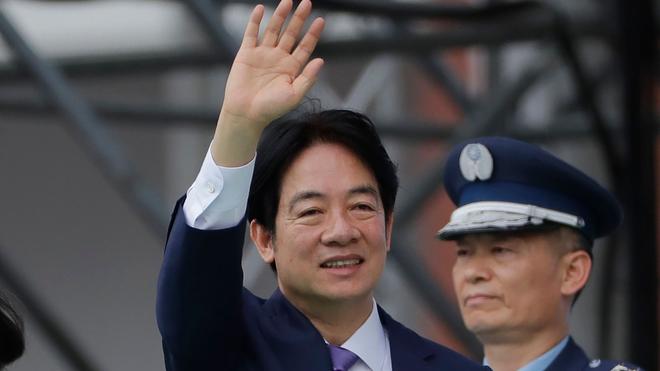
Taiwan's President Lai Ching-te was set to visit Eswatini – his country's only remaining ally on the African continent. Three African island nations revoked his plane's overflight rights at the last minute. Taipei blames direct pressure from Beijing. The incident exposes how far China is willing to go to isolate Taiwan – even in the skies above foreign countries.

.
A Presidential Visit That Never Happened
The plan was straightforward: Taiwanese President Lai Ching-te would fly to Eswatini, a small landlocked kingdom in southern Africa, to attend celebrations marking the 40th anniversary of King Mswati III's rule and his 58th birthday. The trip, scheduled for April 22 to 27, 2026, was to be Lai's first official visit to the African continent since taking office in May 2024.
It never happened.
On Tuesday, April 21, Taiwan's Presidential Office announced that the trip had been cancelled after three countries – the Seychelles, Mauritius, and Madagascar – abruptly withdrew permission for the presidential aircraft to fly through their airspace. No advance warning was given. According to Taipei, the reason was unmistakable: intense pressure from Beijing.
"Three countries unilaterally revoked flight permits for the presidential aircraft without prior warning. The actual reason was intense pressure exerted by Chinese authorities, including economic coercion," Taiwan's Presidential Office said in a statement.
Eswatini: Taiwan's Last Foothold in Africa
Eswatini (formerly Swaziland) holds a unique and increasingly rare status in world diplomacy: it is the only country on the African continent that still officially recognizes Taiwan rather than the People's Republic of China. The two nations have maintained diplomatic ties for 58 years.
That relationship has come under growing pressure. In a recent move widely seen as economic retaliation, Beijing announced it would grant tariff-free access to goods from 53 African nations – with Eswatini deliberately left off the list. Taiwan's Deputy Foreign Minister Chen Ming-chi acknowledged the policy could have a "psychological impact" on Eswatini, even if the direct financial effect was expected to be limited.
President Lai's trip was in direct response to a handwritten invitation from King Mswati III. The visit was meant to signal solidarity and reaffirm that Eswatini would not bow to Chinese pressure. Instead, the trip was derailed before Lai's plane could even leave Taiwan.
Beijing's Playbook: Diplomatic Isolation at Any Cost
The cancellation is not an isolated incident. It is part of a systematic strategy by the Chinese Communist Party (CCP) to strip Taiwan of its remaining diplomatic allies and limit its presence on the world stage.
Over the past decades, Beijing has convinced one country after another to sever ties with Taipei – often through a combination of investment deals, development loans, and political pressure. Taiwan currently maintains formal diplomatic relations with just 12 countries worldwide. A decade ago, that number was significantly higher.
The Stimson Center, a U.S.-based security research institute, has documented how Beijing's use of economic leverage – particularly through its Belt and Road Initiative – has influenced countries in Latin America, the Pacific Islands, and Africa to switch recognition from Taiwan to China. The pattern is consistent: large infrastructure loans come with an unspoken political price tag.
According to data from Singapore's Nanyang Technological University, total trade between China and Africa surged to a record $348 billion in 2025, accompanied by a sharp increase in Africa's trade deficit with China – raising concerns that some countries are becoming increasingly dependent on Beijing. That dependency, observers argue, makes it far easier for China to apply pressure when it matters most.
Taiwan's Approach: A Different Kind of Partnership
Taipei has long positioned itself as an alternative model of international cooperation – one that does not come with hidden conditions or debt obligations.
Unlike China, Taiwan does not tie high-interest loans to politics. Instead, it focuses on cooperation in public health, education, agriculture, women's empowerment, infrastructure, and talent cultivation, Taiwanese officials have emphasized.
In sharp contrast, data from the World Bank showed that the number of Sub-Saharan African countries in or at high risk of debt distress rose from eight in 2014 to 23 in recent years – a trend critics link in part to the financial terms attached to Chinese development projects.
Taiwan and Eswatini's bilateral trade totals roughly $8 million annually – modest in scale, but significant in symbolic terms. Taipei has supported the kingdom in sectors ranging from agriculture to information technology, and cross-party politicians from across sub-Saharan Africa had publicly welcomed President Lai's planned visit.
A Show of Strength — or an Act of Desperation?
The forced cancellation of Lai's trip may serve Beijing's immediate goal of keeping him grounded. But it also sends a clear message to the international community: China is willing to pressure third-party nations into denying basic aviation rights to a democratically elected head of state.
Taiwan's Foreign Minister Lin Chia-lung had said before the trip that China would likely protest Taiwan's international engagement, but that any such reaction would not influence the Taiwan-Eswatini relationship. Events have now tested that confidence.
Eswatini has resisted pressure to switch recognition to Beijing even as most African states have aligned with China. King Mswati III attended President Lai's inauguration two years ago, reinforcing the durability of the partnership. Whether that partnership can survive the full weight of Beijing's economic and political reach remains an open question.
What is clear is this: the Chinese Communist Party views Taiwan's diplomatic existence as an existential threat – and is prepared to deploy every tool at its disposal, including pressuring small island nations to close their skies, to isolate it further.
.
Sources:
- Reuters – Taiwan president cancels Eswatini trip, blames Chinese pressure on African countries (April 21, 2026): https://www.reuters.com/world/china/taiwan-president-cancels-eswatini-trip-blames-chinese-pressure-african-countries-2026-04-21/
- Focus Taiwan (CNA) – China's duty-free policy for Africa to not affect Eswatini: MOFA (April 15, 2026): https://focustaiwan.tw/politics/202604150008
- Taipei Times – Lai's Eswatini trip frames Taiwan as reliable partner in Global South (April 13, 2026): https://www.taipeitimes.com/News/taiwan/archives/2026/04/13/2003855527
- Taipei Times – African politicians welcome Lai ahead of Eswatini trip (April 20–21, 2026): https://www.taipeitimes.com/News/front/archives/2026/04/20/2003855928
- Stimson Center – Economic Coercion from the People's Republic of China (2025): https://www.stimson.org/2025/economic-coercion-from-the-peoples-republic-of-china/
- Focus Taiwan – Lai to visit Eswatini on second overseas trip as president (April 13, 2026): https://focustaiwan.tw/politics/202604130008
.
What's Your Reaction?
 Like
1
Like
1
 Dislike
0
Dislike
0
 Love
1
Love
1
 Funny
0
Funny
0
 Wow
1
Wow
1
 Sad
0
Sad
0
 Angry
0
Angry
0












Comments (0)