

The Ships Are Moving Again — A Closer Look at What's Flowing Through Hormuz
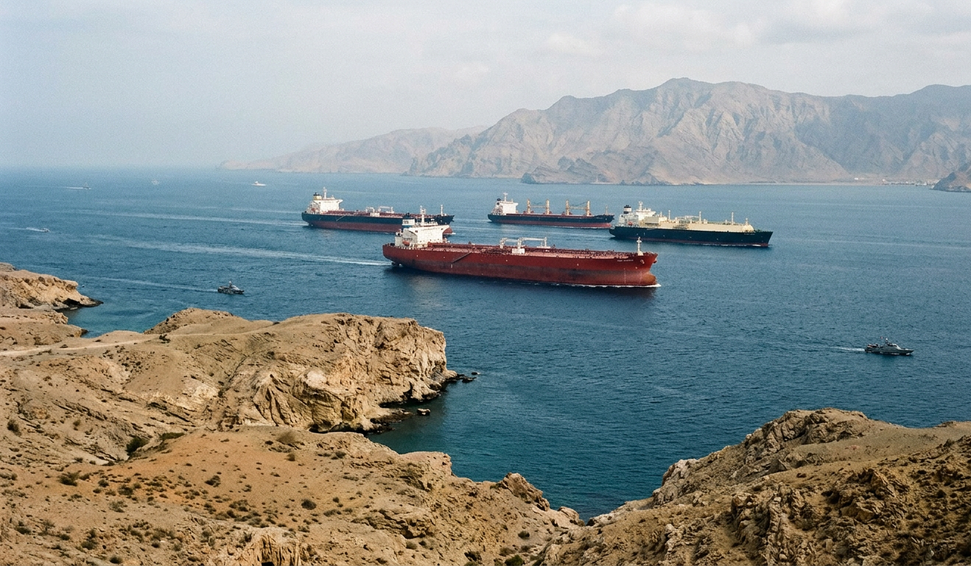
After weeks of near-standstill, the Strait of Hormuz saw more than 20 vessels pass through on Saturday, April 19 — the highest single-day traffic since early March. It's a small number by normal standards, but in the current climate, every ship tells a story.

.
An update from April 18, 2026: https://udumbara.net/strait-of-hormuz-reopens-but-the-crisis-is-far-from-over
.
One Passage, Twenty Ships, a World Watching
Imagine one of the world's busiest shipping corridors reduced to a trickle — fewer ships passing in a week than usually transit in a single day. That has been the reality at the Strait of Hormuz since the outbreak of the U.S.-Israeli military campaign against Iran in late February. For weeks, the narrow waterway connecting the Persian Gulf to the open ocean effectively froze, sending energy markets into a tailspin and supply chains into emergency mode.
Then came Saturday. According to data compiled by shipping analytics firm Kpler, more than 20 vessels made it through the strait on April 19 — the largest single-day movement since March 1. It's a number that would barely raise an eyebrow in normal times. Right now, it amounts to a cautious, closely watched sign of life.
What Was Actually on Those Ships?
The Kpler data offers a window into just how interconnected global trade really is — and how many different countries depend on this single narrow passage.
Five of the vessels that transited on Saturday had most recently loaded cargo in Iran itself, ranging from oil products to metals. Three of those were liquefied petroleum gas (LPG) carriers — the kind of ships that transport the gas used for cooking and heating in millions of homes across Asia. One LPG tanker was heading to China, another to India.
The remaining ships painted an equally diverse picture. A large crude carrier flying the Liberian flag was transporting around 2 million barrels of Saudi oil toward Mailiao port in Taiwan. A Liberian-flagged tanker was shipping roughly half a million barrels of UAE naphtha (a refined petroleum product used in plastics and fuel) to South Korea. An Indian-flagged vessel loaded with UAE crude was heading to Sri Lanka. A bulk carrier called Merry M was hauling petroleum coke from Saudi Arabia all the way to Ravenna, Italy.
Even fertilizer made the list — a Qatari shipment bound for the UAE.
Normal? Far From It.
To understand why 20 ships matters, consider the baseline. On a typical day before the conflict began, the Strait of Hormuz handled traffic equivalent to roughly one-fifth of the world's entire seaborne oil supply. Dozens of tankers and cargo vessels would pass through without incident, almost invisibly. The idea of analysts tracking every single ship by name would have seemed absurd.
Today, it is routine. Every vessel that moves through is logged, its origin and destination analyzed, its cargo noted. The strait has gone from being a logistical fact of life to a daily geopolitical indicator.
The reason is simple: the waterway remains fragile. Iran has declared that military vessels and ships linked to what it calls hostile nations are still barred. Commercial ships must now coordinate their passage with Iran's Islamic Revolutionary Guard Corps — a requirement that adds uncertainty and risk to every crossing. On top of that, the U.S. Navy has warned mariners that the threat from sea mines in portions of the waterway is, in its words, "not fully understood."
A Ceasefire Window — But Narrow
Saturday's traffic came in the context of a 10-day ceasefire between Israel and Lebanon announced earlier that week, which also prompted Iran to declare the strait partially open for commercial navigation. Iran's government welcomed the resumption of traffic while making clear that the broader political situation remained unresolved.
Tehran has insisted the American naval blockade of Iranian ports must end before any permanent normalization can occur. Washington has said the blockade stays until a broader agreement is reached. That gap has not closed.
What the Saturday transit numbers suggest is that, at a minimum, some shipping operators felt confident enough to test the waters — literally. Whether that confidence holds through the coming days depends entirely on whether the diplomatic tracks keep moving.
The Bigger Picture
The Strait of Hormuz has always been more than a shipping lane. It is a chokepoint — one of only a handful of places on earth where a single decision, or a single mine, can affect energy prices on every continent simultaneously.
For countries like China, India, Japan, and South Korea — all of which receive significant portions of their oil through the strait — the past weeks have been a sobering reminder of how exposed modern economies remain to geopolitical disruption. For European nations that receive Gulf-region petrochemicals and fertilizers, the ripple effects have been equally real.
Saturday's 20-ship convoy is not a resolution. It is a data point — one that analysts, traders, and governments around the world are watching with cautious relief and considerable unease in equal measure.
The ships are moving again. But no one is quite ready to call it normal.
.
Sources:
- Reuters – Kpler shipping data, Strait of Hormuz vessel transits, April 20, 2026: https://www.reuters.com/world/china/more-than-20-vessels-pass-strait-hormuz-saturday-kpler-data-shows-2026-04-20/
- U.S. Energy Information Administration – Strait of Hormuz fact sheet: https://www.eia.gov/todayinenergy/detail.php?id=61683
- AP News – Strait of Hormuz shipping and Iran conflict coverage: https://apnews.com/hub/iran
- BBC News – Middle East conflict and Hormuz shipping impact: https://www.bbc.com/news/world-middle-east
.
What's Your Reaction?
 Like
0
Like
0
 Dislike
0
Dislike
0
 Love
0
Love
0
 Funny
0
Funny
0
 Wow
0
Wow
0
 Sad
0
Sad
0
 Angry
0
Angry
0












Comments (0)