

China Warns U.S.-Philippines-Japan War Games Could Destabilize Asia-Pacific
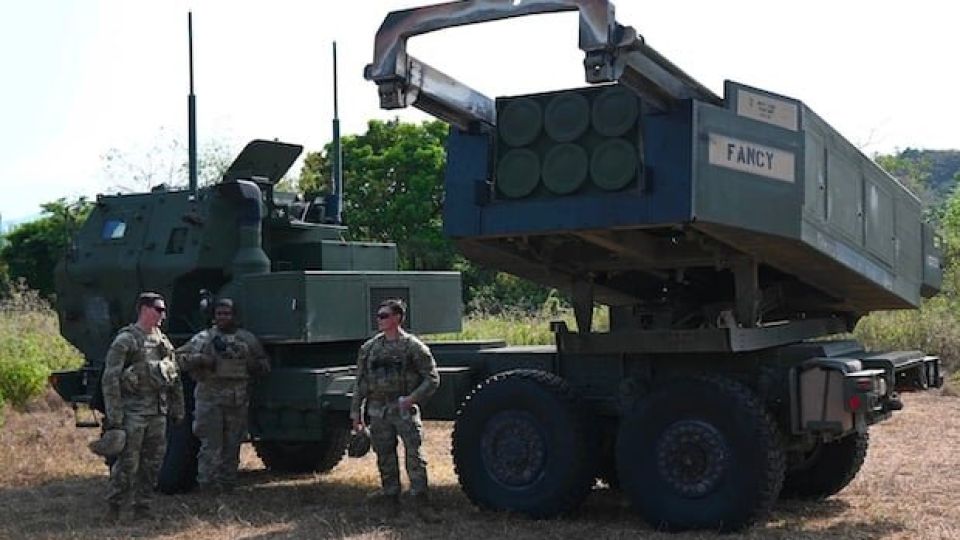
As the largest Balikatan military exercises in history kick off in the Philippines today — involving over 17,000 troops from seven nations — Beijing is pushing back sharply, warning that the drills undermine regional trust and could trigger dangerous escalation.

.
Beijing Issues Blunt Warning as Balikatan 2026 Begins
China's foreign ministry did not mince words on Monday as the annual U.S.-Philippines joint military exercises — this year expanded to include Japanese combat forces for the first time in eight decades — officially got underway.
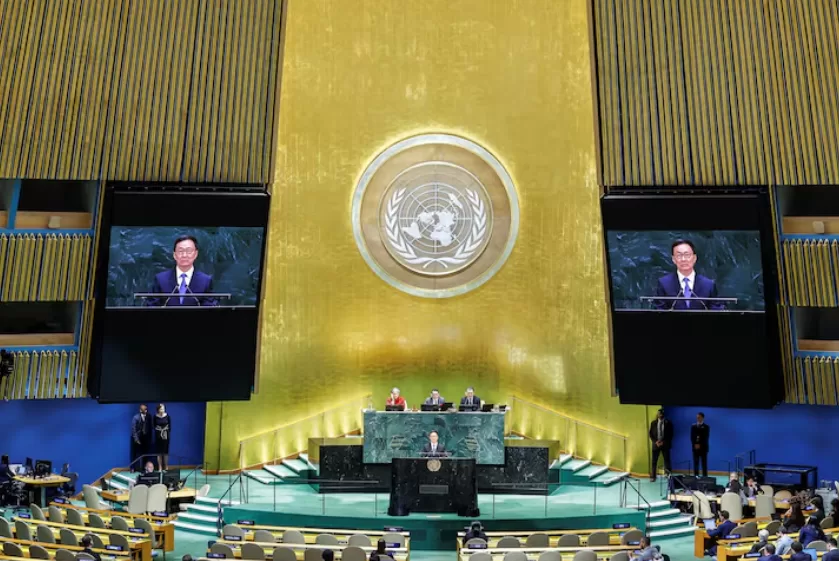
At a regular press briefing in Beijing, ministry spokesperson Guo Jiakun warned that military cooperation between countries "should not undermine mutual understanding and trust among regional countries." He added a barely veiled threat, cautioning that nations "persisting in tying themselves together on security" risk setting themselves "on fire and backfiring."
The statement from Beijing signals rising anxiety about a shifting strategic landscape in Southeast Asia — one increasingly shaped by U.S. alliances rather than Chinese influence.
The Biggest Balikatan Ever — And a Historic First
More than 17,000 troops from the United States and six allied nations will train across the Philippines from April 20 to May 8 during the annual Balikatan exercise, U.S. and Philippine officials confirmed. The participating countries include the Philippines, the United States, Australia, Japan, Canada, France, and New Zealand.
The 2026 edition marks the 41st iteration of the exercise and covers a wide range of scenarios — from conventional warfare to foreign disaster response.
But the headline development this year is Japan's unprecedented role. Japan's Self-Defense Forces have deployed combat-capable units to the exercise, marking the first time Japanese combat troops have set foot on Philippine soil since World War II. Armed Forces of the Philippines Chief of Staff General Romeo Brawner Jr. summed it up starkly: "Before, we were on opposite sides. This time, we find ourselves on the same side."
Japan's Self-Defense Forces have contributed approximately 1,400 personnel to Balikatan 2026, making Japan the third-largest participant after the United States and the Philippines. Ground, maritime, and air units are all taking part — as well as cyber and medical teams.
Why Japan Is Here — Taiwan's Shadow Looms Large
Tokyo's expanded role is no accident. Analysts say the move reflects Tokyo's growing focus on Taiwan's defense and the broader Indo-Pacific security environment. As retired U.S. Marine and security expert Grant Newsham put it, "Japan has provided considerable military support to the Philippines and seems to be focusing efforts there. Tokyo considers this as related to Taiwan's defense."
The Taiwan dimension hangs heavily over the entire exercise. Philippine President Ferdinand Marcos said last November that given his country's proximity to the self-ruled island and its surrounding waters, "a war over Taiwan will drag the Philippines, kicking and screaming, into the conflict." Marcos' home province of Ilocos Norte, where some of the drills are being held, sits less than an hour's flight from Taiwan.
Japan's expanded participation followed the entry into force of the Japan-Philippines Reciprocal Access Agreement in September 2025, which simplified procedures for the deployment of troops and military equipment between the two countries.
What the Drills Actually Involve
This is not just a symbolic show of flags. Training will include maritime security, coastal defense, and the integration of combined fires — as well as logistics exercises such as ship-to-shore offloads and sustained movement of supplies and equipment.
American forces will have the option of firing Tomahawk and NMESIS anti-ship missiles. Integrated air and missile defense systems will also be tested, including technology for countering drones.
Japan is contributing its advanced Type 88 surface-to-ship missile system for live-fire exercises — a first for the Balikatan drills. Japanese Defense Minister Shinjiro Koizumi is expected to observe the maritime strike phase of the exercises in person.
The South China Sea Backdrop
China's irritation is not hard to understand when viewed against the broader regional context. In the West Philippine Sea, Chinese maritime forces have continued to harass Philippine vessels in defense of territorial claims that an international tribunal deemed invalid in 2016.
That tribunal ruled overwhelmingly in favor of the Philippines, determining that major elements of China's claim — including its so-called nine-dash line — were unlawful under international law. Beijing has consistently refused to accept the ruling, dismissing it as "null and void."
Philippine military spokesman Col. Dennis Hernandez has been emphatic that the drills have no aggressive intent. According to Reuters, he stated that the exercises are designed to enhance regional security cooperation — not to target any particular nation.
Alliance Building — A Long-Term Shift
What China sees as provocation, Manila and Washington frame as responsible deterrence. President Marcos considers the Philippines' 1951 mutual defense pact with Washington a bedrock of national security and has been steadily building security ties with Western nations. Over the past two years, Manila has signed visiting forces agreements with Japan, New Zealand, Canada, and France.
Security analysts describe Balikatan 2026 not merely as a single exercise, but as part of a longer-term effort to build interoperability, legal access arrangements, and a more durable security architecture in the maritime Indo-Pacific.
For Beijing, that architecture looks increasingly like strategic encirclement. For the nations building it, it looks increasingly necessary.
.
Sources:
- Reuters — China warns joint US, Philippines and Japan drills risk regional trust (April 20, 2026): https://www.reuters.com/world/china/china-warns-joint-us-philippines-japan-drills-risk-regional-trust-2026-04-20/
- The Diplomat — Japan to Send Combat Units to Philippines-US Balikatan Exercises for the First Time: https://thediplomat.com/2026/03/japan-to-send-combat-units-to-philippines-us-balikatan-exercises-for-the-first-time/
- Stars and Stripes — US, allies to deploy 17,000 troops for Philippine military exercise: https://www.stripes.com/theaters/asia_pacific/2026-04-14/balikatan-exercise-philippines-china-21370121.html
- The Manila Times — PH, US begin war games: https://www.manilatimes.net/2026/04/20/news/ph-us-begin-war-games/2323599
- Rappler — Balikatan 2026: 17,000 troops in 'biggest' edition of PH-US war games yet: https://www.rappler.com/newsbreak/explainers/philippines-united-states-balikatan-2026-biggest-joint-exercise/
- U.S.-China Economic and Security Review Commission — South China Sea Arbitration Ruling: https://www.uscc.gov/research/south-china-sea-arbitration-ruling-what-happened-and-whats-next
- Vision Times — Japan Joins US-Philippines Military Drills in South China Sea: https://www.visiontimes.com/2026/04/16/japan-joins-us-philippines-military-drills-in-south-china-sea-indo-pacific.html
.
What's Your Reaction?
 Like
1
Like
1
 Dislike
0
Dislike
0
 Love
0
Love
0
 Funny
0
Funny
0
 Wow
1
Wow
1
 Sad
0
Sad
0
 Angry
0
Angry
0











Comments (0)