

China’s Expanding Satellite Network Poses Major Threat to Global Security: Analysts

.
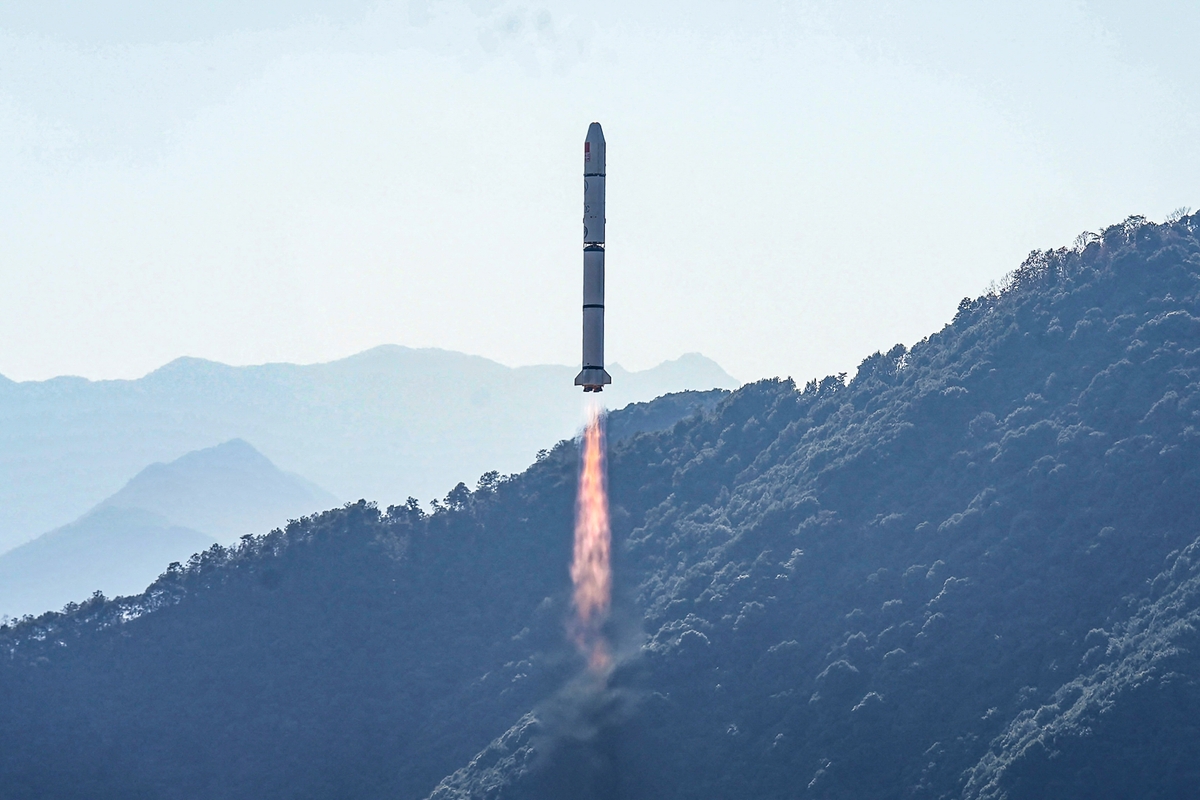
Beijing’s expanding surveillance satellite network is designed to serve military conflicts, posing a significant challenge to the Indo-Pacific and the world, experts warn.
These suspected intelligence satellites transit Japanese airspace roughly six times an hour, The Yomiuri Shimbun reported on March 15.
The Japanese daily’s analysis of publicly available U.S. Space Force tracking data revealed that 10 spacecraft within the Yaogan Chinese reconnaissance satellite constellation take approximately two hours to fly over bases in Japan operated by the Self-Defense Forces and the U.S. military.
These satellites also pass over the South China Sea and Guam.
It said that, as of December 2025, roughly 80 of the 160 Yaogan satellites are confirmed to remain active based on orbital altitude adjustments over the past three years.
Space-Based Reconnaissance
Mark Cao, a U.S.-based military tech analyst, said that the Chinese Communist Party’s (CCP’s) massive fleet is alarming because it has expanded to achieve comprehensive surveillance coverage across high, medium, and low Earth orbits.“China currently operates the world’s second-largest fleet of reconnaissance satellites behind only the U.S., utilizing optical, infrared, and synthetic aperture radar (SAR) technologies to achieve all-weather, ground-observation capabilities,” Cao, who is also the host of the Chinese-language military news YouTube channel “Mark Space,” told The Epoch Times.
“The ultimate purpose of these reconnaissance satellites is naturally to serve military conflicts,” Cao said. “Possessing vast amounts of data on an enemy’s deployments provides crucial advanced intelligence to locate high-value targets and assess strike effectiveness.”
Cao pointed out that these satellites can also strengthen the surveillance of rival forces during peacetime, even without an immediate need for combat.
“They can provide timely updates on an adversary’s movements, including the relocation of personnel and equipment as well as the deployment of new assets, achieving total situational awareness,” he said.
Cao said that Beijing also uses the network to supply intelligence to its allies, with Moscow relying on Yaogan imagery for its war in Ukraine, and Iran depending on the Chinese regime’s space reconnaissance to locate military targets in Gulf states.
“It is clear that the CCP has become the core provider of intelligence resources for the anti-Western bloc known as ‘CRINK,’” Cao said.
Eyes on Taiwan
According to The Yomiuri Shimbun report, the 80 active satellites primarily operate between 35 degrees north and south latitudes, including areas over Taiwan.Tokyo is closely scrutinizing the constellation due to concerns that Beijing will leverage it to monitor Japanese and U.S. activities during a potential Taiwan contingency, the report said.
Taiwan is a self-governed democracy that the CCP has never ruled but has vowed to annex by force.
.
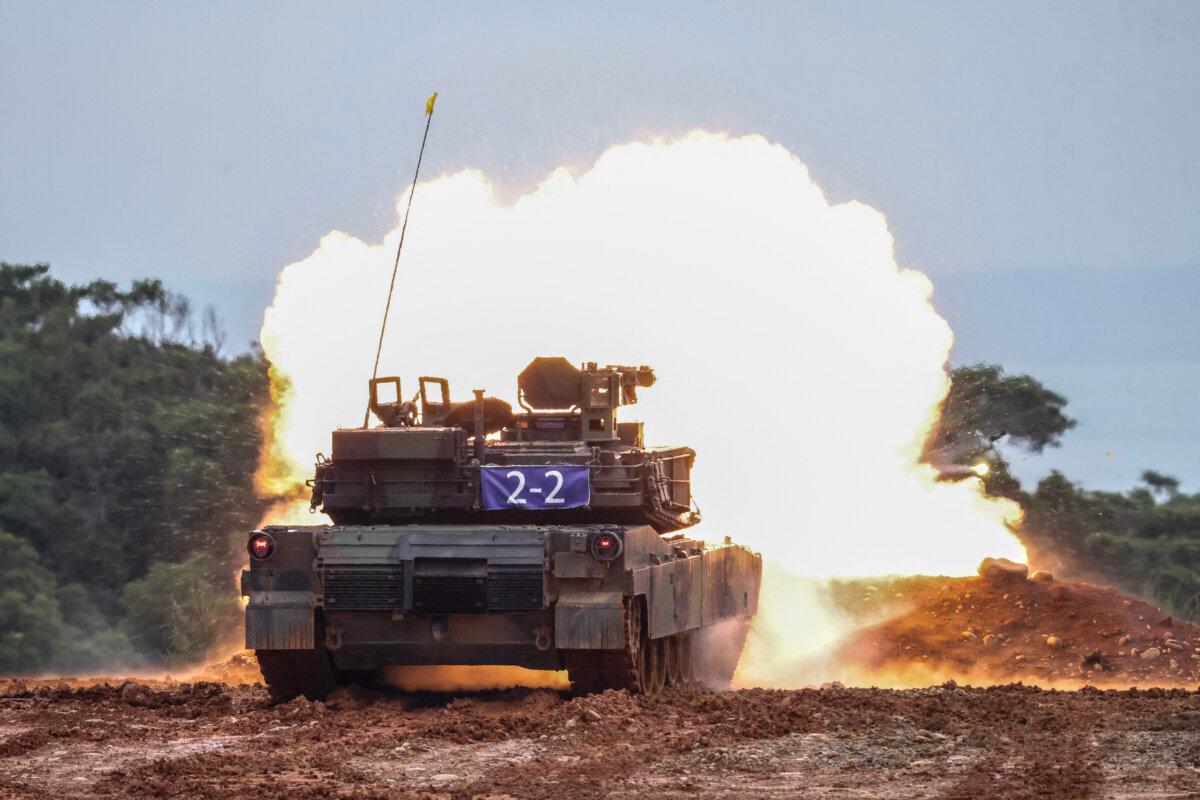
The Taiwanese army holds a live-fire exercise for Taiwan's first batch of advanced U.S.-made M1A2T Abrams tanks, which takes place separately from the annual Han Kuang military exercise, in Hsinchu on July 10, 2025. I-Hwa Cheng/AFP via Getty Images
.
Cao said that because the Taiwan Strait remains the CCP’s core strategic focus, the PLA inevitably relies on this satellite network to heavily monitor the first island chain—a strategic buffer encompassing Japan and Taiwan that analysts believe limits the Chinese regime’s naval and air forces from freely projecting power into the Pacific Ocean.
“While this is unrelated to when the CCP might decide to attack Taiwan since the use of force is a political decision, securing timely remote sensing intelligence in advance is a crucial prerequisite for guaranteeing the success of any military operation,” Cao said.
Targeting US Bases
Beyond focusing on Taiwan, the Yaogan network allows Beijing to broaden its surveillance footprint across the Indo-Pacific region, according to Clayton Swope, deputy director of the Aerospace Security Project and a senior fellow in the Defense and Security Department at the Center for Strategic and International Studies.“China has a growing fleet of reconnaissance satellites in orbit and continues to launch more satellites at a rapid pace,” Swope told The Epoch Times.
“These satellites would play a critical role in PLA joint operations and would pose a threat to forces on the other side of a potential conflict with China.”
Cao said that the regime’s expanding surveillance capabilities pose “a significant challenge” by exposing nearly all ground deployments belonging to the United States and its Indo-Pacific allies to constant monitoring.
“If Beijing decides to launch a broader offensive in the Indo-Pacific, it must inevitably strike U.S. bases in the region first, making the prioritization and categorization of target threats the decisive factor for victory,” Cao said.
Global Military Threat
Cao said that China’s space technology advancements would benefit the global community if the country were a Western ally, but its divergent trajectory instead poses a major threat not only to the Indo-Pacific but to the wider world.“The CCP harbors hostility toward liberal democratic values and uses Western capital and technology to strengthen itself, making its vigorous development of space capabilities a tool to serve the ultimate goal of destroying democratic systems,” he stated.
Cao warned that as Beijing continues to align itself with authoritarian regimes worldwide, the satellite network will increasingly serve as a tool for destabilization rather than development.
“This system could be leveraged to help rogue organizations and nations carry out future terrorist strikes,” Cao said.
“China’s expanding satellite capabilities will only plunge the world into greater conflict and severely compromise global security.”
.
What's Your Reaction?
 Like
0
Like
0
 Dislike
0
Dislike
0
 Love
0
Love
0
 Funny
0
Funny
0
 Wow
0
Wow
0
 Sad
0
Sad
0
 Angry
0
Angry
0












Comments (0)