

China's Fallen Property Tycoon: Evergrande Founder Pleads Guilty to Fraud
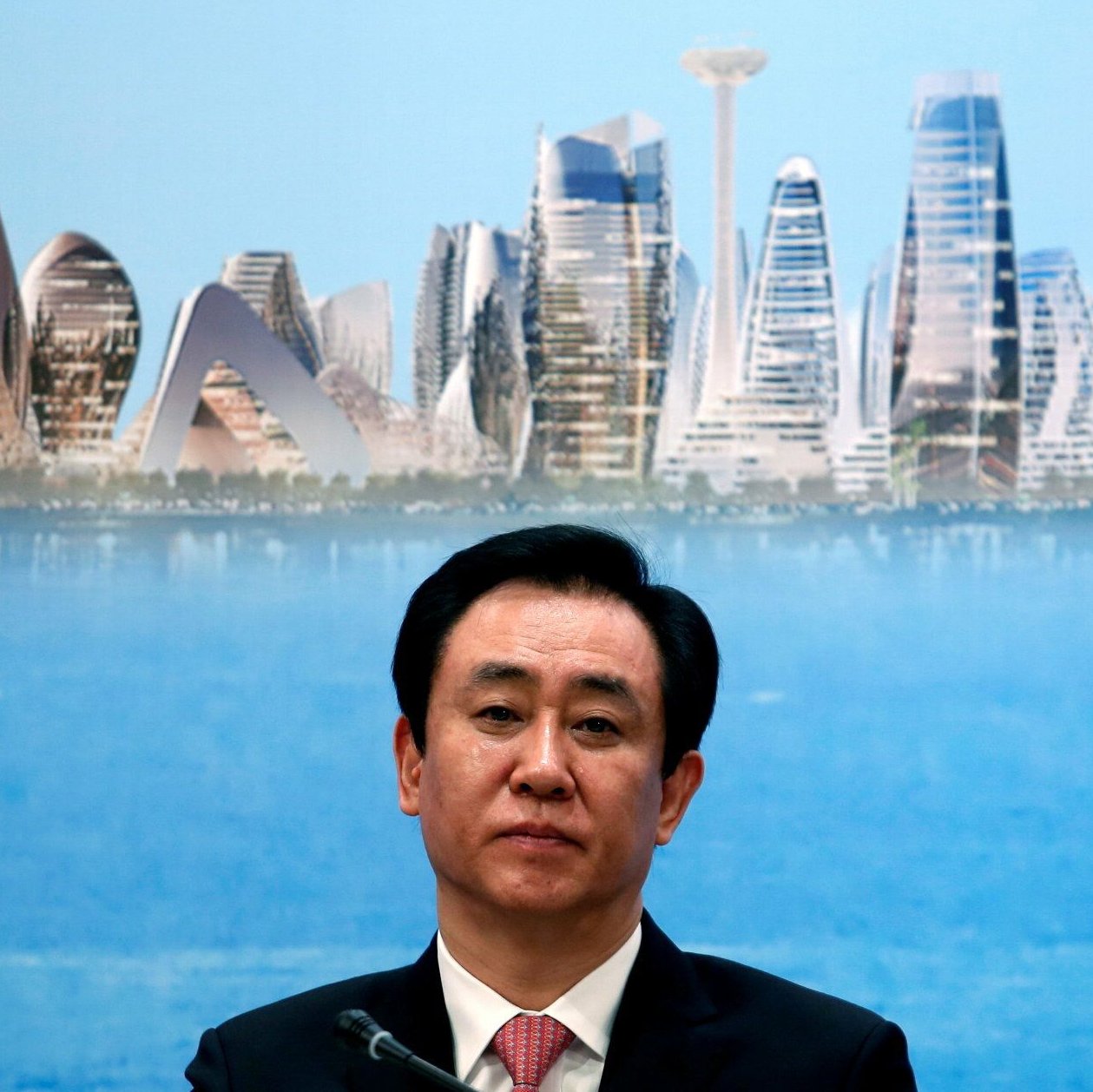
Hui Ka Yan — also known by his Mandarin name Xu Jiayin — was born in 1958 and rose from humble origins in rural China to become one of the wealthiest people on the planet. He founded Evergrande in 1996, building it into China's biggest property developer by sales volume as of 2016. At its peak, Evergrande carried a stock market valuation of more than $50 billion. Hui himself was once Asia's richest person, with a personal fortune estimated at $42.5 billion in 2017. The company grew beyond real estate into electric vehicles, food and beverages, and even professional football — owning Guangzhou FC, China's top club at the time.

.
The man who once built the world's most indebted real estate empire has admitted in a Chinese court to fraud, misuse of funds, and illegally collecting public money. Hui Ka Yan's guilty plea marks the end of one of the most dramatic falls from grace in modern business history.
.
Who Is Hui Ka Yan?
Hui Ka Yan — also known by his Mandarin name Xu Jiayin — was born in 1958 and rose from humble origins in rural China to become one of the wealthiest people on the planet. He founded Evergrande in 1996, building it into China's biggest property developer by sales volume as of 2016.
At its peak, Evergrande carried a stock market valuation of more than $50 billion. Hui himself was once Asia's richest person, with a personal fortune estimated at $42.5 billion in 2017. The company grew beyond real estate into electric vehicles, food and beverages, and even professional football — owning Guangzhou FC, China's top club at the time.
The Guilty Plea
On April 14, 2026, the Shenzhen Municipal Intermediate People's Court announced that Hui Ka Yan had pleaded guilty to charges including misuse of funds, fundraising fraud, and illegally taking public deposits. The court stated that Hui "pleaded guilty and expressed remorse" during trial proceedings held on Monday and Tuesday.
Additional charges include embezzlement of corporate assets and corporate bribery. The court has indicated a verdict will be issued at a later date, though no timeline has been given. Evergrande's liquidators declined to comment, and Hui has not been seen publicly since Chinese authorities detained him in 2023.
How Did It Come to This? The Rise and Fall of Evergrande
A Business Built on Borrowed Money
Evergrande Group was established in 1996 at a time when China was urbanizing rapidly and the government was dismantling its system of state-provided housing. Its core business was property development, but it diversified broadly into electric vehicles, finance, health care, and tourism over the decades.
China saw its urban population increase from 172 million in 1978 to 882 million in 2022 — a historic shift that drove enormous demand for housing. For two decades, Evergrande rode this wave profitably. But the business model relied heavily on debt: Evergrande accumulated $300 billion in liabilities, using new borrowing to cover old obligations while continuing aggressive expansion.
Beijing Pulls the Plug
Starting in August 2020, Chinese regulators attempted to curb excess borrowing in the real estate sector by capping developers' debt ratios through a set of guidelines known as the "three red lines." These restrictions backfired and tipped the property industry into crisis by aggravating market stress and impairing developers' balance sheets.
Unable to shore up cash fast enough to meet debt payments, Evergrande defaulted in December 2021, triggering a market panic. A wave of defaults followed, and China's vast real estate market has yet to fully recover. Construction was suspended on dozens of projects, leaving many buyers who had pre-paid for homes with nothing but debt.
Fraud Behind the Facade
The collapse revealed deeper problems than just excessive debt. China's securities regulator found that Evergrande's main onshore unit had inflated its 2019 revenues by 214 billion yuan ($29.7 billion) by booking sales in advance, and then repeated the fraud the following year. In total, revenues were overstated by nearly $78 billion — a figure that dwarfs major corporate fraud scandals in Western markets, including Enron's $600 million profit inflation and Worldcom's $11 billion fraud, according to Bloomberg.
The court also heard that the company had diverted millions of dollars in pre-sale funding from potential homebuyers that were never used for construction.
A System-Wide Crisis
Evergrande's downfall was not an isolated event. Since the default, over 50 developers have defaulted on their debts, and thousands of people have lost jobs in real estate. Sales of newly built homes in China fell significantly, returning to levels not seen since 2016.
An estimated two-thirds of Evergrande's obligations were to ordinary homebuyers who had pre-paid for close to 1.4 million residential properties that remain unbuilt. These are not wealthy investors — they are middle-class families who put their savings into a home that may never be delivered.
The property sector constitutes nearly 30 percent of China's economic activity. Evergrande's bankruptcy delivered a severe confidence shock to Chinese households, further depressing housing demand and dragging down the broader economy.
The Personal Reckoning
The legal consequences for Hui have been accumulating for years. In March 2024, China's securities regulator fined him $6.5 million and imposed a lifetime ban from China's capital markets for his role in the revenue fraud.
A Hong Kong court also appointed Evergrande's liquidators as receivers of Hui's personal assets after he failed to comply with a court order requiring him to disclose all worldwide assets valued above HK$50,000. The judge found there had been "a total failure" to comply with the disclosure order.
Most recently, in March 2026, a Hong Kong court approved the sale of a flat owned by Hui in Tsim Sha Tsui to partially cover a debt exceeding RMB 5.3 billion owed to a single creditor.
Hui's net worth has collapsed from an estimated $45.3 billion at its peak in 2017 to less than $1 billion by late 2023. Once a fixture at Communist Party advisory sessions and national celebrations, he has been invisible since his detention.
What Comes Next
A verdict in the Shenzhen trial has not yet been scheduled. Meanwhile, China's property slump has now stretched into a fourth year, with prices, sales, investment, and construction activity continuing to falter across the country.
The consolidation of the sector around state-backed developers appears increasingly inevitable, as the years of crisis have left homebuyers deeply cautious. There is now a clear preference for state-owned developers and completed properties over pre-sales.
The Evergrande case stands as a warning about what happens when unchecked corporate expansion, state-encouraged speculation, and financial fraud intersect — and about who ultimately pays the price when the system unravels. In this case, it was millions of ordinary Chinese citizens.
.
Sources
- Reuters – Evergrande founder pleads guilty to fraud in Shenzhen court (April 14, 2026): https://www.reuters.com/sustainability/boards-policy-regulation/china-evergrande-founder-pleads-guilty-fraud-shenzhen-court-xinhua-reports-2026-04-14/
- BBC / Yahoo Finance – Founder of China's Evergrande pleads guilty to fraud: https://finance.yahoo.com/markets/stocks/articles/founder-chinas-evergrande-pleads-guilty-052601262.html
- Council on Foreign Relations – Does Evergrande's Collapse Threaten China's Economy?: https://www.cfr.org/in-brief/does-evergrandes-collapse-threaten-chinas-economy
- Fortune – Evergrande founder accused of inflating revenue by $78 billion: https://fortune.com/asia/2024/03/19/csrc-alleges-evergrande-hui-ka-yan-inflate-sales-revenue-china-real-estate-crisis/
- CNBC – Evergrande's $50 billion rise and fall leaves scars on China's property sector: https://www.cnbc.com/2025/08/25/evergrandes-rise-and-fall-leaves-scars-on-chinas-property-sector.html
- Radio Free Asia – Evergrande collapse casts long shadow on China's troubled property market: https://www.rfa.org/english/news/china/evergrande-china-property-01302024015407.html
- Wikipedia – Hui Ka Yan: https://en.wikipedia.org/wiki/Hui_Ka_Yan
.
What's Your Reaction?
 Like
0
Like
0
 Dislike
0
Dislike
0
 Love
0
Love
0
 Funny
0
Funny
0
 Wow
0
Wow
0
 Sad
0
Sad
0
 Angry
0
Angry
0













Comments (0)