

China Offers Interest Subsidies for Loans Amid Sluggish Economy


The Chinese regime has announced it will provide interest subsidies for personal consumer loans and service sector loans for businesses in an attempt to boost domestic consumption amid the country’s sluggish economy.
The Chinese regime’s Ministry of Finance, China’s central bank—the People’s Bank of China—and the National Financial Regulatory Administration on Aug. 12 jointly announced the interest subsidies of one percentage point on loans to qualified businesses and individual consumers. The subsidy policies will be effective from Sept. 1, 2025, to Aug. 31, 2026.
Lending institutions to participate in the subsidy program include six state-owned commercial banks, 12 national joint-stock commercial banks, and five designated consumer lenders.
The state will cover 90 percent of the subsidy, while provincial authorities will cover 10 percent, said officials.
Businesses that are qualified to receive the interest subsidy are limited to eight consumer sectors: catering and accommodation, health, elderly care, childcare, housekeeping, culture and entertainment, tourism, and sports.
The maximum loan amount eligible for the interest subsidy for a single entity is 1 million yuan (US$139,095).
Limited Effect
Analysts said that the new policies may have little effect and are in conflict with some other regulations the Chinese communist regime recently announced.Wang Guo-chen, an assistant researcher at the Chung-Hua Institution for Economic Research in Taiwan, told The Epoch Times that the Chinese regime’s loan interest subsidy policy is “a disguised interest rate cut.”
This “is difficult to reverse with short-term [subsidy] policies,” Wang Guo-chen said.
He said that the impact of the interest subsidy policies on boosting China’s economic growth “will likely be minimal, primarily because consumers are unwilling and unable to consume,” adding that the ongoing uncertainty for Chinese businesses and consumers is exacerbated by the continuing tariff disputes between the United States and China.
Wang Guo-chen said he is pessimistic about the possibility of reaching an agreement due to the fundamental differences between the two countries. “I expect the U.S.-China trade negotiations will inevitably break down, so China’s economic situation will only get worse,” he said.
U.S.-based China affairs observer Wang He also believes that the effect of the interest subsidy policies will be very limited.
“China’s household deposits have surged in recent years to over 160 trillion yuan [US$22.3 trillion], equivalent to over 120 percent of its GDP. Many wealthy Chinese people are reluctant to spend. The interest rate subsidy for consumer loans is only a percentage point, and there’s a limit. This provides little support for those willing to spend. And for wealthy people, if they don’t spend their money, the loan is meaningless,” he told The Epoch Times on Aug. 13.
The interest subsidy policy is “designed to increase individual Chinese citizens’ debt to save the Chinese regime’s economy,” Xu Zhen, a senior professional in China’s capital market, told the Epoch Times on Aug. 13.
“However, it has little impact on boosting consumption. Instead of investing in the consumer market to stimulate the economy, the money remains trapped in the financial system,” Xu said.
He added that many Chinese households already have high debt ratios, and if it’s not absolutely necessary, they won’t borrow to spend.
.
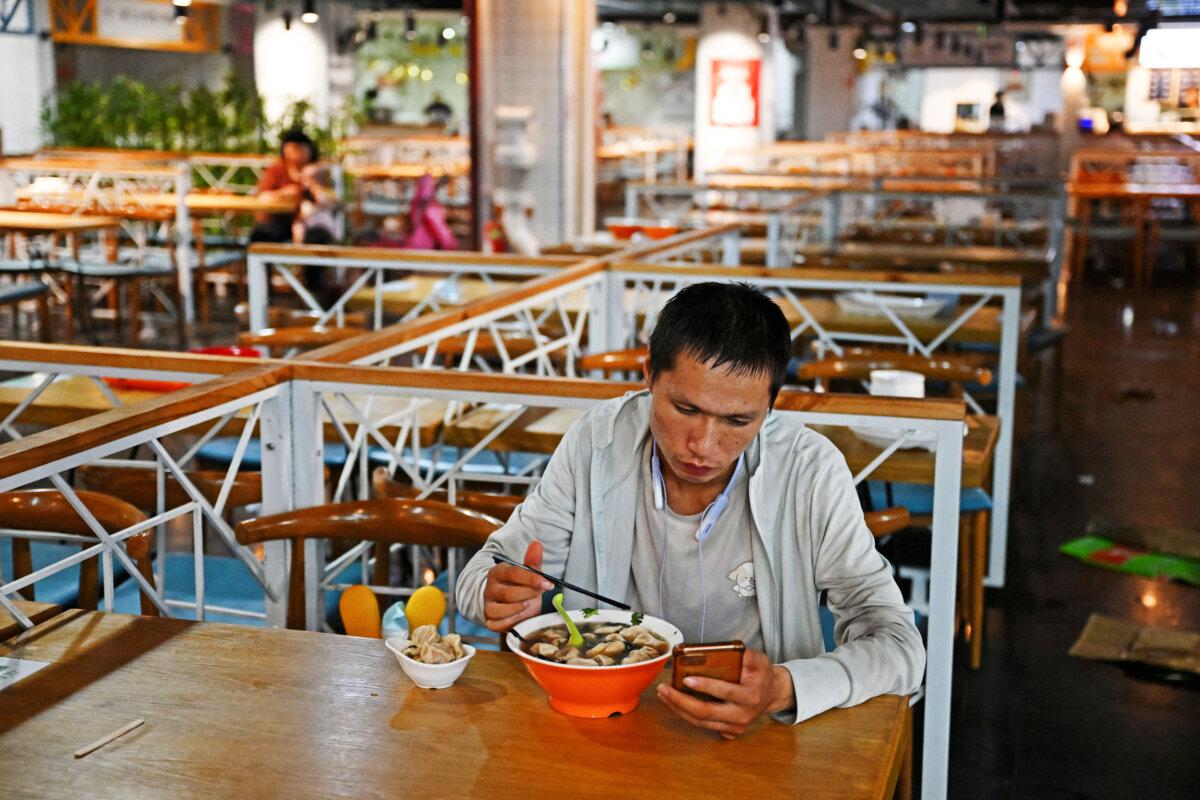
Wang Guo-chen said that the Chinese regime’s policies conflict with each other. “They are stimulating consumption [through the subsidy policies] on the one hand, while suppressing it on the other, such as last month’s alcohol and dining out ban on civil servants.”
He noted that the same day that loan interest subsidies come into force, social security contributions also become mandatory, which will impact numerous small and privately owned businesses in China, such as restaurants and shops. “This could lead to a sharp drop in consumption and services across mainland China,” he said.
In addition, Wang Guo-chen pointed out that the Chinese regime’s government debt is already very high, and “this kind of fiscal [loan interest] subsidy will cost the government money, which will increase government debt. The subsequent bad debts of banks may continue to rise.”
What's Your Reaction?
 Like
0
Like
0
 Dislike
0
Dislike
0
 Love
0
Love
0
 Funny
0
Funny
0
 Wow
0
Wow
0
 Sad
0
Sad
0
 Angry
0
Angry
0















Comments (0)