

Beijing's Long Arm Reaches Into Jimmy Lai's Bank Accounts — Hong Kong Moves to Seize $16 Million
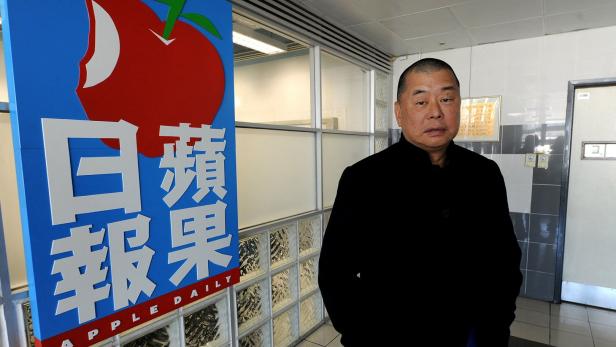
Hong Kong's government is seeking to confiscate over $16 million in assets from jailed media mogul Jimmy Lai — a man many consider a symbol of the city's vanishing freedoms. The move follows his 20-year prison sentence under Beijing's national security law and signals a sweeping financial reckoning against one of China's most prominent critics.

.
The Government Moves to Take Everything That's Left
Hong Kong authorities are not done with Jimmy Lai. Months after sentencing the 78-year-old media tycoon to 20 years in prison, the government has now filed a court writ seeking to seize more than HK$127 million — roughly $16.2 million — in assets linked to him.
The writ, released Tuesday by the High Court, lists bank accounts held across more than 50 institutions, shares in two privately held companies, several small factory properties, and even HK$12 million ($1.53 million) in bail funds that Lai had previously deposited. The case is scheduled to be heard on July 8. Lai's legal team declined to comment.
Who Is Jimmy Lai?
To understand why this case matters, you need to know who Jimmy Lai is — and what he represented.
Lai grew up in poverty in mainland China and fled to Hong Kong as a teenager with little more than the clothes on his back. He built a fortune in the garment business, then turned his attention to media. In 1995, he founded Apple Daily, a fiercely independent newspaper that became Hong Kong's most vocal platform for pro-democracy voices and criticism of Beijing.
The newspaper was eventually forced to close in June 2021 after police raids and the freezing of its assets. Amnesty International described the closure as a "brazen attack on press freedom."
A Sentence That Shocked the World
In February 2026, Lai was sentenced to 20 years in prison — the longest sentence yet handed down under Beijing's national security law — meaning he would not be eligible for parole until his late 90s.
He was convicted on two counts of conspiracy to collude with foreign forces and one count of publishing seditious materials. His six former Apple Daily colleagues received sentences ranging from six years and three months to ten years.
The verdict was met with global condemnation. Amnesty International called it "a cold-blooded attack on freedom of expression" and described it as marking "another grim milestone in Hong Kong's transformation from a city governed by the rule of law to one ruled by fear."
The Committee to Protect Journalists declared that "the rule of law has been completely shattered in Hong Kong" and called the decision "the final nail in the coffin for freedom of the press."
The Legal Tool Behind the Seizure
The asset seizure is made possible by the implementing rules of Beijing's national security law, which was imposed on Hong Kong in 2020. Legal experts say these rules give authorities broad powers to freeze and ultimately confiscate property tied to national security cases — with limited room for challenge.
In March 2026, Hong Kong's government expanded those powers further, granting customs and law enforcement agencies the authority to freeze, restrict, confiscate, or seize property involved in national security cases — and even items considered to carry "seditious intent."
Assets linked to three companies associated with the now-defunct Apple Daily had already been frozen, and analysts noted that the newly amended rules could significantly expand the scope of potential forfeitures against figures like Lai.
Beijing's Pattern: Silence Critics, Then Strip Their Assets
The seizure is not just about money. It is part of a broader and increasingly systematic effort by Beijing and its Hong Kong proxies to dismantle any infrastructure — financial, institutional, or symbolic — that supported the city's pro-democracy movement.
Since Beijing imposed the national security law in 2020, dozens of opposition figures have been arrested. Lai is the most prominent among those convicted, and his trial demonstrated Beijing's resolve to stamp out political dissent in the once-freewheeling financial hub.
According to Reporters Without Borders, at least 900 Hong Kong journalists lost their jobs in the four years following the law's enactment.
Pro-Beijing officials have consistently labeled Lai a traitor and foreign agent. The March 2026 rule changes also introduced a new regulatory framework targeting so-called "agents of foreign forces," requiring individuals and organizations to declare activities, funding, and assets — with criminal penalties for non-compliance.
International Pressure — and Donald Trump
Lai is a British citizen, and London has taken notice. British Foreign Minister Yvette Cooper vowed to "rapidly engage further" on Lai's case, and Britain announced an expanded visa route for Hong Kong residents wishing to relocate to the UK. Beijing's response was swift: a Chinese embassy spokesperson called on Britain to "stop shielding criminals."
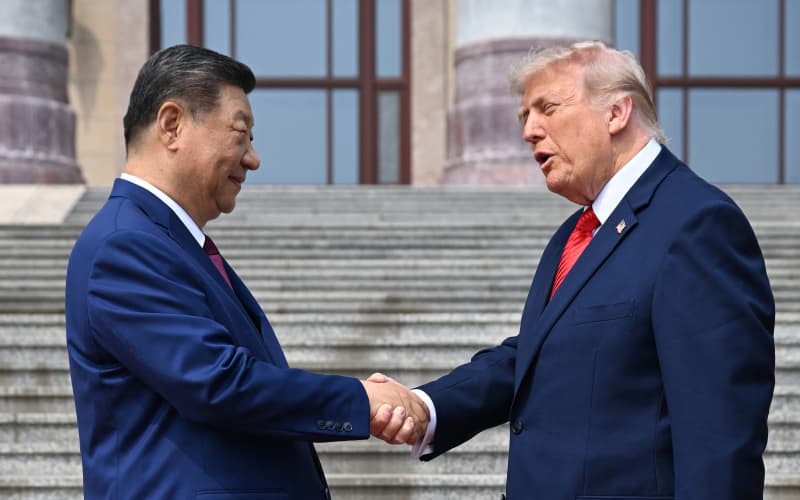
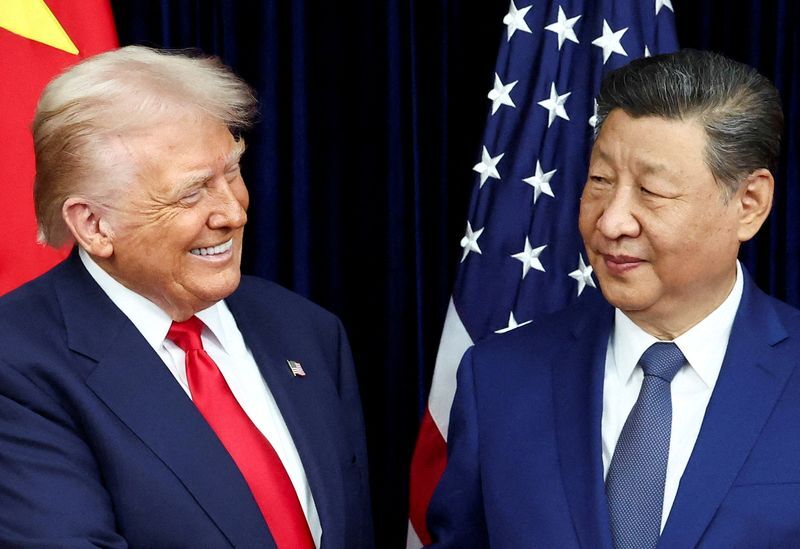
US President Donald Trump, who had previously vowed to "get him out," has been closely watching the case. Many of Lai's supporters are lobbying Trump to raise the matter directly with Chinese President Xi Jinping during an expected visit to China.
Lai's son Sebastien, also a British citizen, has been outspoken in public. He called his father's sentence "devastating" and described it as the "total destruction" of Hong Kong's legal system, warning that without urgent action, his father could die in prison.
What Comes Next
With the asset seizure hearing set for July, Lai's legal team faces an uphill battle in a judicial environment that critics say has been reshaped to serve political ends. Lai retains the right to appeal his conviction, though the process typically takes years and carries a slim chance of success.
For many observers, the seizure is less a legal proceeding than a political statement: that in today's Hong Kong, dissent carries not just a prison sentence — but the loss of everything you've built.
.
Sources:
- Reuters – Hong Kong government seeks to seize $16 million from jailed tycoon Jimmy Lai: https://www.reuters.com/business/finance/hong-kong-government-seeks-seize-16-million-jailed-tycoon-jimmy-lai-2026-04-21/
- Al Jazeera – Jimmy Lai sentenced to 20 years in prison: https://www.aljazeera.com/news/2026/2/9/hong-kong-media-mogul-jimmy-lai-faces-sentencing-in-national-security-trial
- Amnesty International – Jimmy Lai jail sentence a cold-blooded attack on freedom of expression: https://www.amnesty.org/en/latest/news/2026/02/hong-kong-jimmy-lai-jail-sentence-a-cold-blooded-attack-on-freedom-of-expression/
- CNN – Jimmy Lai sentenced to 20 years in prison: https://www.cnn.com/2026/02/08/china/jimmy-lai-sentenced-20-years-intl-hnk
- Vision Times – Hong Kong Security Law Expansion Raises Stakes for Convicted Figures Like Jimmy Lai: https://www.visiontimes.com/2026/03/27/hong-kong-security-law-expansion-raises-stakes-for-convicted-figures-like-jimmy-lai.html
- Bloomberg – Jimmy Lai Sentencing: How China's National Security Law Has Changed Hong Kong: https://www.bloomberg.com/news/articles/2026-02-10/jimmy-lai-sentencing-how-china-s-national-security-law-has-changed-hong-kong
- Strider Intel – Recent Updates to Hong Kong's National Security Law: https://www.striderintel.com/blog/recent-updates-to-hong-kongs-national-security-law/
.
What's Your Reaction?
 Like
0
Like
0
 Dislike
0
Dislike
0
 Love
0
Love
0
 Funny
0
Funny
0
 Wow
0
Wow
0
 Sad
0
Sad
0
 Angry
0
Angry
0













Comments (0)