

New Zealand Stands Firm: Military Patrol Jet Was Hunting North Korean Sanctions Busters, Not Spying on China
China has lodged a formal protest against New Zealand, accusing a Royal New Zealand Air Force aircraft of harassment near its coastline. Wellington has pushed back firmly, saying the mission was a long-running United Nations operation to monitor North Korean sanctions violations — and that everything was done by the book.

.
Beijing Cries Foul Over Patrol Flight
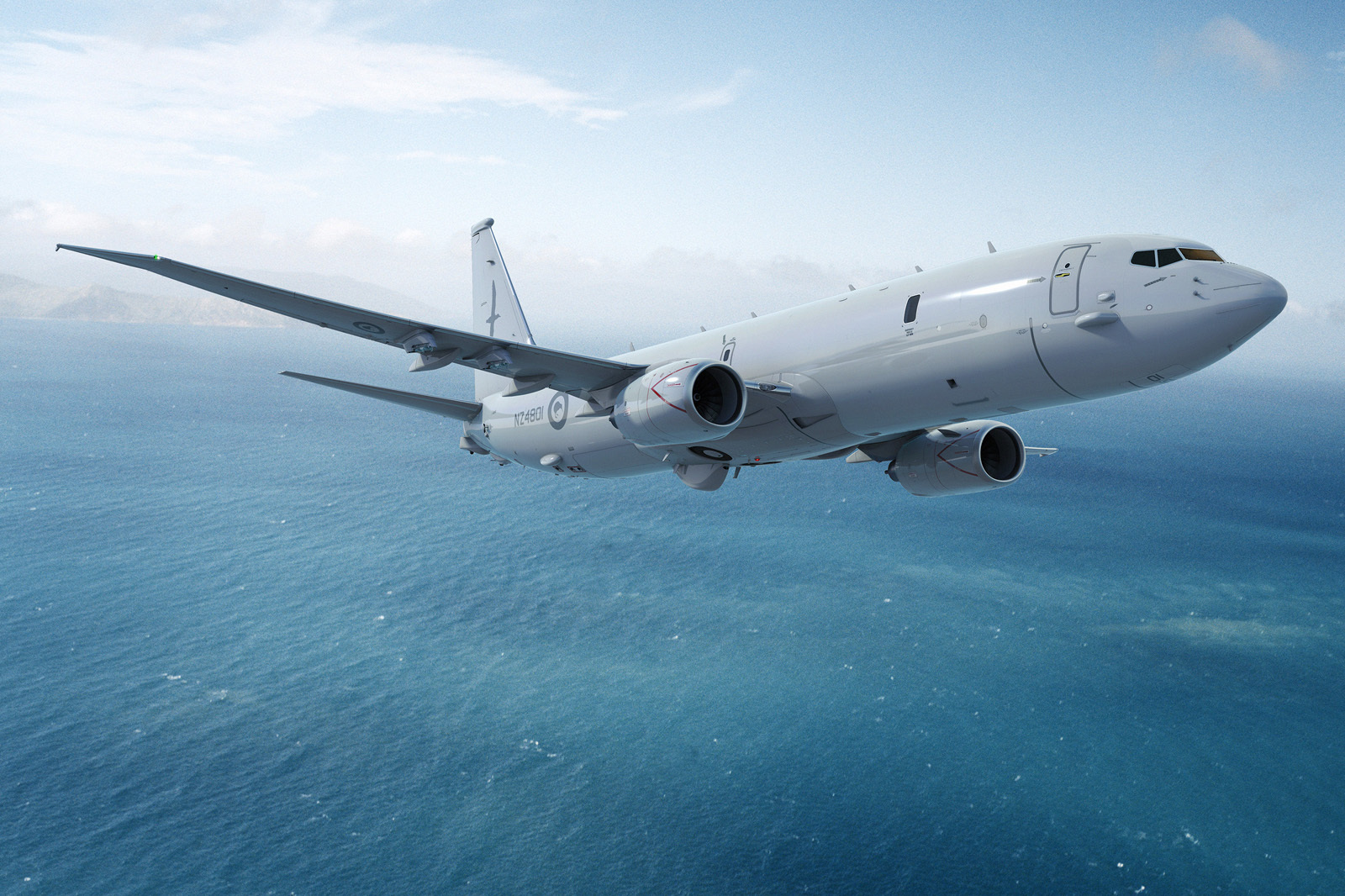
A diplomatic row erupted this week after China's foreign ministry publicly condemned a New Zealand military aircraft for flying close to its coast. Beijing claimed the P-8A Poseidon — a sophisticated maritime patrol aircraft used by several Western nations — had conducted repeated reconnaissance runs over the Yellow Sea and East China Sea, allegedly disrupting commercial air traffic and undermining Chinese security.
China's foreign ministry spokesperson Guo Jiakun called the flights provocative and said Beijing had filed a formal diplomatic complaint. The Chinese Ministry of National Defence also weighed in, calling the mission a threat to Chinese sovereignty. The language used by Beijing was unusually sharp for what is, by military standards, a fairly routine type of operation.
Wellington's Response: We Were Chasing North Korean Smugglers
New Zealand did not flinch. The New Zealand Defence Force (NZDF) issued a clear and direct rebuttal: the aircraft was not gathering intelligence on China. It was enforcing United Nations Security Council sanctions against North Korea — a mission Wellington has been contributing to since 2018.
The NZDF stated that the crew "operated professionally and in accordance with international law and civil aviation procedures." The force also said it reviewed all flight data and found no evidence the aircraft disrupted any civil aviation activity — directly contradicting China's central claim.
"These activities are not directed at China but rather aim to monitor evasions of United Nations sanctions on North Korea, which do occur in the Yellow Sea and East China Sea," the NZDF said in its official statement.
The mission was based out of Kadena Air Base in Okinawa, Japan. Tokyo had publicly announced in March that a New Zealand P-8A would be deployed to the region between mid-March and mid-April specifically to track illicit ship-to-ship transfers — a common method used to smuggle fuel and goods to North Korea in violation of UN resolutions.
Why the Yellow Sea?
North Korea has long used the waters of the Yellow Sea and East China Sea to evade international sanctions. Vessels suspected of transferring oil, coal, and other banned goods at sea frequently operate in these areas. Monitoring these transfers requires aircraft with advanced surveillance capabilities — exactly what the P-8A Poseidon is designed for.
The UN Security Council, of which both China and New Zealand are stakeholders, passed resolutions mandating member states to enforce these sanctions. New Zealand's participation is therefore not a unilateral action — it is part of a multilateral, treaty-based framework explicitly authorized under international law.
Experts Say China's Anger May Run Deeper
Some analysts believe China's unusually loud response may reflect wider frustrations rather than a genuine legal grievance. University of Otago Professor Robert Patman suggested that what appears to be an overreaction to a routine flight could signal other irritants in the Chinese leadership's relationship with Wellington.
He pointed to a joint statement issued in March by New Zealand and Australia's defence ministers that was sharply critical of Chinese military behavior — a statement Beijing dismissed at the time as "inexplicable."
The broader strategic picture matters here. China has been steadily expanding its military reach across the Pacific and Southern Ocean in recent years. In February 2025, a Chinese naval formation conducted two live-fire exercises in the Tasman Sea — waters between Australia and New Zealand — forcing dozens of passenger aircraft to divert their routes mid-flight. New Zealand's Defence Minister at the time called it unprecedented and expressed serious concern about the weapons systems deployed.
A Relationship Under Pressure
New Zealand and China share significant economic ties, with China being New Zealand's largest trading partner. But the security relationship has grown increasingly strained. New Zealand Foreign Minister Winston Peters described the 2025 Tasman Sea episode as a "failure" in the bilateral relationship, while still acknowledging China's legal right to operate in international waters.
Ironically, Beijing now levels complaints that echo those Wellington raised just over a year ago — about military operations conducted near another country's shores, disrupting civilian aviation. The key difference, New Zealand insists, is that its mission was carried out under an explicit UN mandate, with full transparency and in compliance with international aviation standards.
The Bigger Picture: Who Decides What's "Harassment"?
The incident highlights a fundamental tension in the Indo-Pacific region. Western democracies and their partners argue that freedom of navigation and overflight in international airspace is a cornerstone of the rules-based order — one that China itself invokes when it suits Beijing's interests. China, meanwhile, has increasingly attempted to define a broader "security perimeter" around its coastline that clashes with these established norms.
New Zealand's position is clear: enforcing UN sanctions is a global responsibility, and operating in international airspace above international waters is not harassment — it is lawful. Wellington shows no sign of backing down.
.
Sources:
- New Zealand Defence Force — Official Statement on P-8A Flight: https://www.nzdf.mil.nz/media-centre/news/nzdf-statement-in-response-to-chinas-claims-regarding-p-8a-aircraft-flight/
- RNZ — China lodges 'serious protest' over NZ Air Force conduct: https://www.rnz.co.nz/news/political/592746/china-lodges-serious-protest-over-nz-air-force-s-conduct-near-its-air-space-nzdf-denies-disruption
- RNZ — Expert: China complaint could signal wider concerns: https://www.rnz.co.nz/news/political/592774/china-s-complaint-over-nzdf-harassment-could-be-sign-of-other-concerns-expert
- South China Morning Post — China complains of 'harassment' from NZ aerial patrols: https://www.scmp.com/news/china/diplomacy/article/3350508/china-complains-harassment-new-zealand-aerial-patrols-close-coastline
- CNN — Chinese warship live-fire drills in Tasman Sea: https://www.cnn.com/2025/02/24/world/china-live-fire-drills-rattle-nz-aus-intl-hnk/
- Reuters — New Zealand defends military patrol flight near China: https://www.reuters.com/world/china/new-zealand-defends-military-patrol-flight-near-china-2026-04-18/
.
What's Your Reaction?
 Like
0
Like
0
 Dislike
0
Dislike
0
 Love
0
Love
0
 Funny
0
Funny
0
 Wow
0
Wow
0
 Sad
0
Sad
0
 Angry
0
Angry
0












Comments (0)