

As Trump Rules Out Using Force in Greenland, Analysts Weigh Other Options


.
NATO Secretary-General Mark Rutte recently said a framework deal on Greenland reached with U.S. President Donald Trump would require NATO allies to strengthen Arctic security. While the Chinese communist regime has downplayed any competition with the United States over Greenland, China’s state-run media urged Europe to reduce its reliance on U.S. security guarantees.
Analysts told The Epoch Times that the core of U.S. security policy regarding Greenland has not changed, but there are other options to move forward with respect to Greenland and the Arctic region. They also warned that China is trying to drive a wedge between the United States and its allies, while actively expanding its influence in the region.
Trump met with Rutte during the World Economic Forum in Davos, Switzerland, on Jan. 21. The president said he formed a framework for a future deal for Greenland and the greater Arctic region during the meeting.
Rutte, speaking in Davos, called for NATO unity and said Trump was right about ensuring Arctic security.
Details of any framework agreement over the island were not made available.
While aboard Air Force One, Trump said on Jan. 23 that “there is no time limit” in the deal.
Possible Options
With Trump ruling out seizing Greenland by force, and Denmark insisting its sovereignty over the island is not up for discussion, analysts told The Epoch Times that there are different ways the United States could move forward.The most feasible approach in the short term would be to address urgent security issues, including expanding the military presence of the United States or NATO in the region, Shen Ming-shih, research fellow at Taiwan’s Institute for National Defense and Security Research, said.
“The United States will explore various possibilities through negotiation, purchase, or even a referendum, rather than directly confronting its European allies,” he said. “This shows that the United States is trying to strike a balance between its strategic objectives and the stability of its alliances.”
Chung Chih-tung, associate research fellow at Taiwan’s Institute for National Defense and Security Research, said Denmark could exchange partial sovereignty for a security commitment from the United States.
“This involves relinquishing some sovereignty, primarily the territorial sovereignty over the areas where the United States has existing military bases,” he said. “Previously, the UK had a similar situation in Cyprus, where the bases were considered British territory.”
.
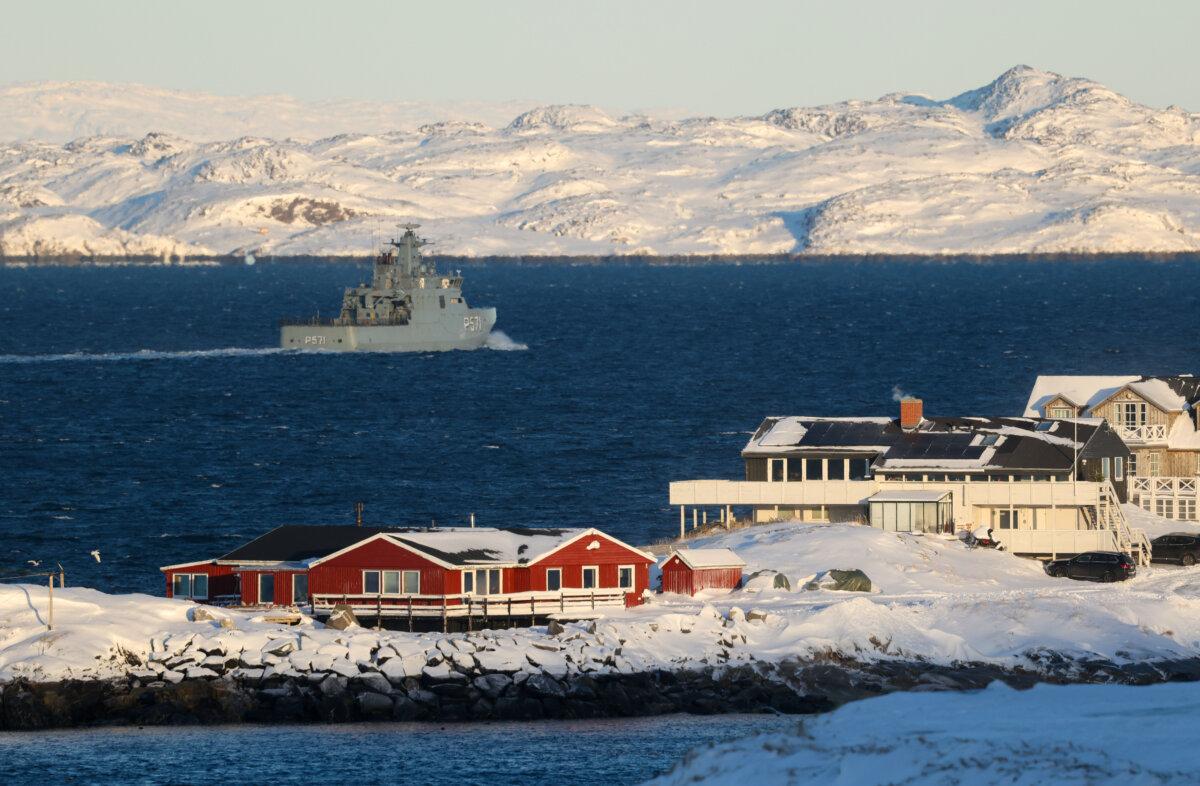
The chances of the United States buying Greenland are not high, Chung said.
“Renting is one option, but how long to rent and how to rent are still questions,” he said.
Chung anticipated that the future deal would also include details regarding how to ensure Arctic security, the security of U.S. territory, and the allocation and use of Greenland’s natural resources, including potential joint development.
It’s also possible that talk of a deal is a delaying tactic by European countries, a negotiation strategy to buy them some time, Chung noted.
“Trump’s term has three years left, and if he and the Republican Party lose control of the Senate and House of Representatives after the U.S. midterm elections, the negotiations over Greenland and the U.S.’s stance on Greenland may not be the same as Trump’s.”
As for NATO unity, Shen said that “it cannot be ruled out that NATO countries, including the United States, will jointly station troops in Greenland to specifically counter the expansion of China and Russia in this region.”
“We’ve seen the NATO countries have already fragmented, so how to unite is the first crucial point in countering China and Russia’s expansion in the Arctic,” Chung said.
He said that the key is to demonstrate NATO’s capabilities and ambitions in defending the Arctic, not just Greenland, through concrete actions, such as a strong military presence, “to show NATO’s current control in the Arctic and its resolve to prevent any potential threats or challenges from China and Russia.”
.

Russian President Vladimir Putin said on Jan. 21 that Greenland’s ownership was of no concern to Russia but was a matter for the United States and Denmark.
As to why the Chinese regime is distancing itself from the Greenland issue now, Chung said that “Greenland is not a core interest of China, yet Trump places such importance on it. Therefore, it’s understandable that China wouldn’t want to clash with the United States over such an issue.”
China could use the Greenland issue as leverage in negotiations with the United States over other issues, Chung said.
‘Polar Silk Road’
The Chinese communist regime published its first official Arctic policy in a white paper in 2018 to articulate its ambitions in the region. It tied itself to the region through scientific research and said it was a “near-Arctic state.”The paper shows China’s ambitions regarding Greenland and the entire Arctic, Chung said.
China and Russia are jointly conducting military patrols in the Arctic region “to contain and pressure NATO and other Western countries,” he said. “This is another instance of China working with Russia to construct its ‘Polar Silk Road,’ using it to actively develop shipping routes, commercialize the Arctic, and exploit resources.”
BRI, formerly known as the “One Belt, One Road,” is the CCP’s global foreign policy project launched in 2013.
It aims to recreate ancient China’s two main trading routes, the land Silk Road and the maritime Silk Road, connecting countries in Asia, Europe, and Africa in the 21st century. The initiative invests Chinese capital in the construction of various high-cost projects in participating countries. It has been criticized for creating debt traps for those countries and for serving as a means to extend the Chinese regime’s political influence.
.
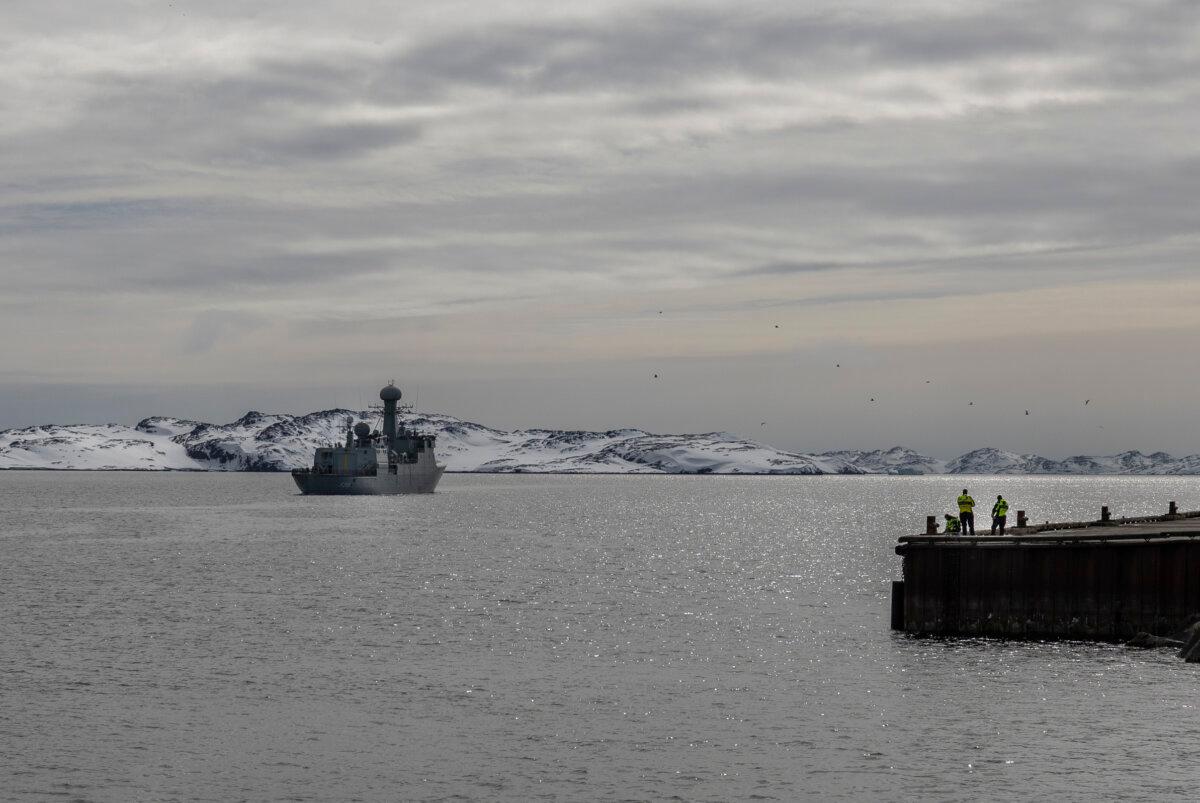
A third route, the Polar Silk Road, was formally introduced in 2018 under the BRI framework. It aims to develop Arctic shipping lanes, particularly the Northern Sea Route, and invest in infrastructure along the corridor.
Shen said that the CCP’s claim that China is a “near-Arctic” country is far-fetched because Beijing is “about 3,000 kilometers (1864 miles) away from the Arctic.”
“However, it wants to use the Polar Silk Road to go around the Arctic from the Sea of Japan and then to Europe,” he added.
Shen warned that if Chinese warships also sail along Arctic routes, the northeastern United States would be threatened.
“Alternatively, if Chinese and Russian nuclear-powered submarines approach the Arctic and launch attacks on U.S. targets, it would likely inflict significant damage on the United States,” he said.
From a geopolitical and military strategic perspective, the Arctic is extremely important to the United States, Shen noted.
Driving a Wedge between EU, US
The Chinese communist regime’s leveraging of the Greenland dispute to warn Europe to reduce its security reliance on the United States is an attempt to drive a wedge between the United States and its EU allies, Chung said.“The division between the US and Europe is actually a success for China. By dividing the United States and its Western allies, China is constructing what it calls a multilateral international order, thereby striking at the U.S. influence and indirectly highlighting China’s status as a major power, while also strengthening its influence,” he said, noting that recently, leaders from European countries such as France and the UK have started to visit China one after another.
.
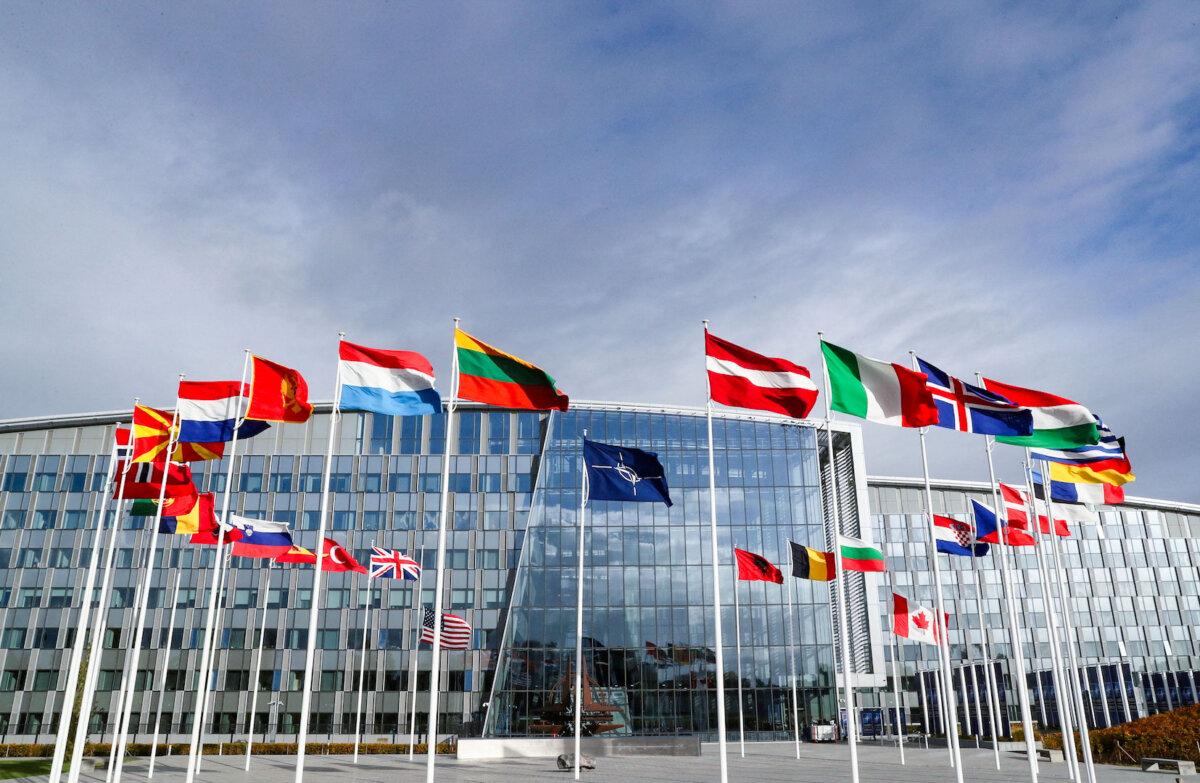
Chung said that European countries are now “purely focused on doing business with China.”
Structural problems involved in China–Europe relations continue to exist, which makes it almost impossible for China to divide Europe from the United States and to improve relations with Europe, he said, such as “the persisting structural problem of trade imbalance, fundamental ideological differences, and China’s support for Russia in the Russia-Ukraine war.”
He added that when conflicts arise between China and Europe and Europe is unable to confront the challenge from China, it will still turn to its traditional ally, the United States, within the existing NATO framework to jointly deal with the Chinese threat.
“Therefore, we don’t foresee any change in Europe’s strategic positioning toward China in the short term,” Chung said.
What's Your Reaction?
 Like
0
Like
0
 Dislike
0
Dislike
0
 Love
0
Love
0
 Funny
0
Funny
0
 Wow
0
Wow
0
 Sad
0
Sad
0
 Angry
0
Angry
0


















Comments (0)