

Washington Takes Iran to the UN — With Teeth This Time
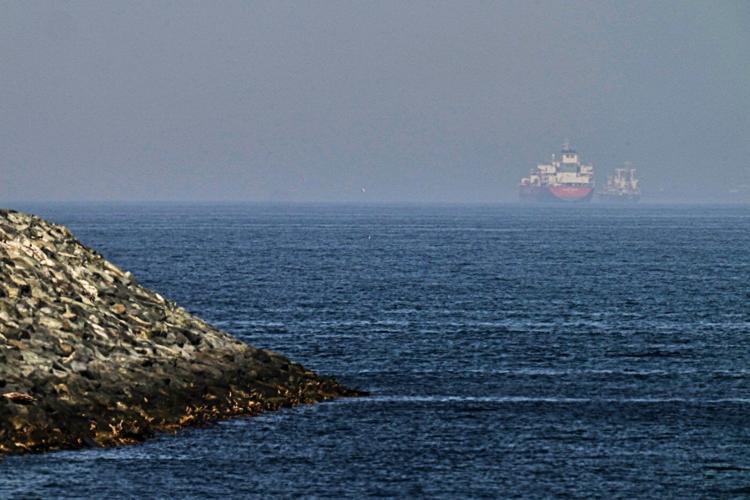
The United States and Bahrain are pushing a new UN Security Council resolution that could pave the way for sanctions against Iran over its blockade of the Strait of Hormuz. The move comes as Washington simultaneously launched a naval escort operation and proposed a broader multinational maritime coalition — while Russia and China once again threaten to block any meaningful action.

.
A New Draft — and a Ticking Clock
UN Security Council members began closed-door talks on Tuesday on a new draft resolution co-sponsored by the United States and Bahrain, targeting Iran's ongoing interference with commercial shipping in the Strait of Hormuz. According to three Western diplomats briefed on the matter, the draft could open the door to sanctions — and potentially broader measures — if Tehran fails to comply.
The timing is deliberate. Washington is aiming for a final draft to circulate by May 8 and a council vote as early as next week.
The resolution is being drafted under Chapter VII of the UN Charter — the part of international law that gives the Security Council its real teeth. Chapter VII allows the council to authorize measures ranging from economic sanctions to the use of military force. However, the new draft carefully avoids explicit force language, in a bid to secure broader support after a previous attempt collapsed in failure.
Still Standing in the Rubble of April's Veto
This is not the first attempt. On April 7, the Security Council voted on a Bahrain-led resolution that sought to guarantee freedom of navigation through the strait. Eleven of fifteen member states voted in favor. But Russia and China used their permanent-member veto to kill it.
China's UN Ambassador Fu Cong said the April draft "failed to capture the root causes and the full picture of the conflict in a comprehensive and balanced manner." Russia's envoy Vasily Nebenzya called it "unbalanced, inaccurate and confrontational."
The two countries, both of which maintain close economic ties to Tehran, have since been working on a competing counter-proposal — one that analysts say is likely to focus on calls for a general ceasefire and a return to diplomacy, without placing specific demands on Iran.
The new US-Bahrain draft takes the April failure into account. It avoids an explicit reference to Chapter VII while still retaining the determination that Iran's actions near and around the Strait of Hormuz constitute a threat to international peace and security. It also calls on Iran to immediately halt attacks on shipping, disclose the locations of any sea mines it has laid, and cooperate with UN efforts to establish a humanitarian corridor through the strait — citing disruptions to aid deliveries, fertilizer shipments, and other essential goods.
If Iran fails to comply within 30 days, the council would reconvene to consider next steps, including possible sanctions.
Project Freedom: Ships Moving, Shots Fired
The UN diplomatic push is happening in parallel with an escalating military situation on the water. On Monday, Washington launched "Project Freedom" — a US-led naval operation to escort trapped commercial vessels out of the strait.
President Trump framed the initiative as a humanitarian mission to assist "neutral and innocent" ships trapped in the strait amid months of escalating conflict. According to US Central Command, the deployment includes destroyers, more than 100 aircraft, unmanned platforms, and approximately 15,000 service members.
The first transits happened quickly — including a Maersk vessel that crossed the strait with US military escort. The US sank several small Iranian boats while Iran launched attacks on UAE infrastructure and ships in the strait.
Iran's response was swift and defiant. An Iranian lawmaker declared that "any interference in the new maritime regime of the Strait of Hormuz will be considered a violation of the ceasefire."
The Maritime Freedom Construct: Building for What Comes After
Washington's strategy is not just about the next few days. Alongside the UN resolution, the US has also circulated a proposal to allied governments for a new standing multinational coalition — the Maritime Freedom Construct (MFC).
The MFC is a broader State Department initiative aimed at improving coordination and information-sharing among international partners in support of maritime security in the strait. It is designed as a long-term post-conflict security architecture — something to stabilize the waterway once fighting stops.
The MFC is envisioned as running alongside a separate Franco-British mission involving around 30 countries. That initiative, which grew out of the existing Operation Aspides framework, was announced by French President Emmanuel Macron in March and is described as "purely defensive, purely support" in nature. France's position has been consistent: any use of force must be strictly limited to self-defense.
Some allied governments have already signaled they will not commit military assets without a formal UN mandate — which is precisely why Washington wants the Security Council vote to happen fast.
The China Problem — Again
For readers who have been following our ongoing Hormuz coverage, none of this will be a surprise. As we reported in our earlier analysis "China Holds the Key to the Hormuz Crisis — and Washington Knows It", Beijing sits at the center of this crisis in ways that go far beyond UN procedure.
China currently absorbs the vast majority of Iran's energy exports — making the Chinese Communist Party (CCP) the primary financial backer of the government running the blockade. At the same time, Beijing vetoed the April resolution, shielding Tehran from international accountability, while simultaneously presenting itself to the world as a neutral peacemaker.
That posture is becoming harder to sustain. US Treasury Secretary Scott Bessent has already called out Beijing directly, publicly demanding that China use its leverage over Iran to reopen the strait. And the Trump-Xi summit, set for May 14-15 in Beijing, is expected to put that pressure front and center.
The CCP's strategy has been one of calculated ambiguity — neither supporting the US position nor openly endorsing Iran's blockade. But with Project Freedom now active, Iranian missiles striking Gulf infrastructure, and a UN vote days away, the window for that ambiguity is narrowing.
What Happens Now
The immediate question is whether Russia and China will veto again. Their competing text — expected to focus on de-escalation and diplomacy rather than demands on Iran — signals that Moscow and Beijing are still running interference for Tehran.
Analysts at the International Crisis Group have noted that Russia and China see any Chapter VII-linked resolution as "too escalatory and not capturing the need for impartial and consistent diplomacy."
Washington is betting that a carefully worded draft — one that names the problem without handing critics an obvious target — can at least force Russia and China into a harder veto posture ahead of the Beijing summit. Whether that gamble pays off may determine not just the fate of the Strait of Hormuz, but the credibility of the UN Security Council itself as a mechanism for managing conflict in an era of great-power rivalry.
As one US analyst put it, the shifting US objectives now reflect a narrowing of aims: "At the beginning of this conflict, the stated objectives were regime change and dismantling Iran's nuclear and missile capabilities. Those goalposts have shifted towards a more economic outcome focused on the Strait of Hormuz."
For now, ships are moving. Shells are flying. And diplomats in New York are quietly counting votes.
.
Sources:
- Reuters – US and Bahrain push UN-backed action for Hormuz as Washington seeks maritime coalition (May 5, 2026): https://www.reuters.com/world/china/us-bahrain-push-un-backed-action-hormuz-washington-seeks-maritime-coalition-2026-05-05/
- UN News – Security Council: Russia and China veto resolution on Strait of Hormuz (April 7, 2026): https://news.un.org/en/story/2026/04/1167261
- Al Jazeera – Trump's 'Project Freedom': Can US Navy 'guide' stuck ships out of Hormuz? (May 4, 2026): https://www.aljazeera.com/news/2026/5/4/trumps-project-freedom-can-us-navy-guide-stuck-ships-out-of-hormuz
- Al-Monitor – China, Russia veto scaled-back Hormuz resolution at UN Security Council (April 7, 2026): https://www.al-monitor.com/originals/2026/04/china-russia-veto-scaled-back-hormuz-resolution-un-security-council
- Security Council Report / What's In Blue – Vote on a Draft Resolution on the Strait of Hormuz: https://www.securitycouncilreport.org/whatsinblue/2026/04/middle-east-crisis-vote-on-a-draft-resolution-on-the-strait-of-hormuz.php
- gCaptain – US Launches 'Project Freedom' to Escort Ships Out of Hormuz (May 2026): https://gcaptain.com/u-s-launches-project-freedom-to-escort-ships-out-of-hormuz-as-risks-of-clash-with-iran-loom/
- Newsweek – Trump Vows US Escort for Trapped Ships in Strait of Hormuz (May 4, 2026): https://www.newsweek.com/trump-vows-us-escort-for-trapped-ships-in-strait-of-hormuz-11908634
.
What's Your Reaction?
 Like
1
Like
1
 Dislike
0
Dislike
0
 Love
1
Love
1
 Funny
0
Funny
0
 Wow
1
Wow
1
 Sad
0
Sad
0
 Angry
0
Angry
0












Comments (0)