

Trump Heads to Beijing with a Clear Message: America Leads in AI
U.S. President Donald Trump is set to meet Chinese leader Xi Jinping in Beijing on May 14–15, 2026. Trump says the trip is important – and he intends to make one thing crystal clear: the United States is winning the race for artificial intelligence. The summit comes as tensions between the world's two superpowers over trade, technology, and human rights remain high.

.
A High-Stakes Meeting in Beijing
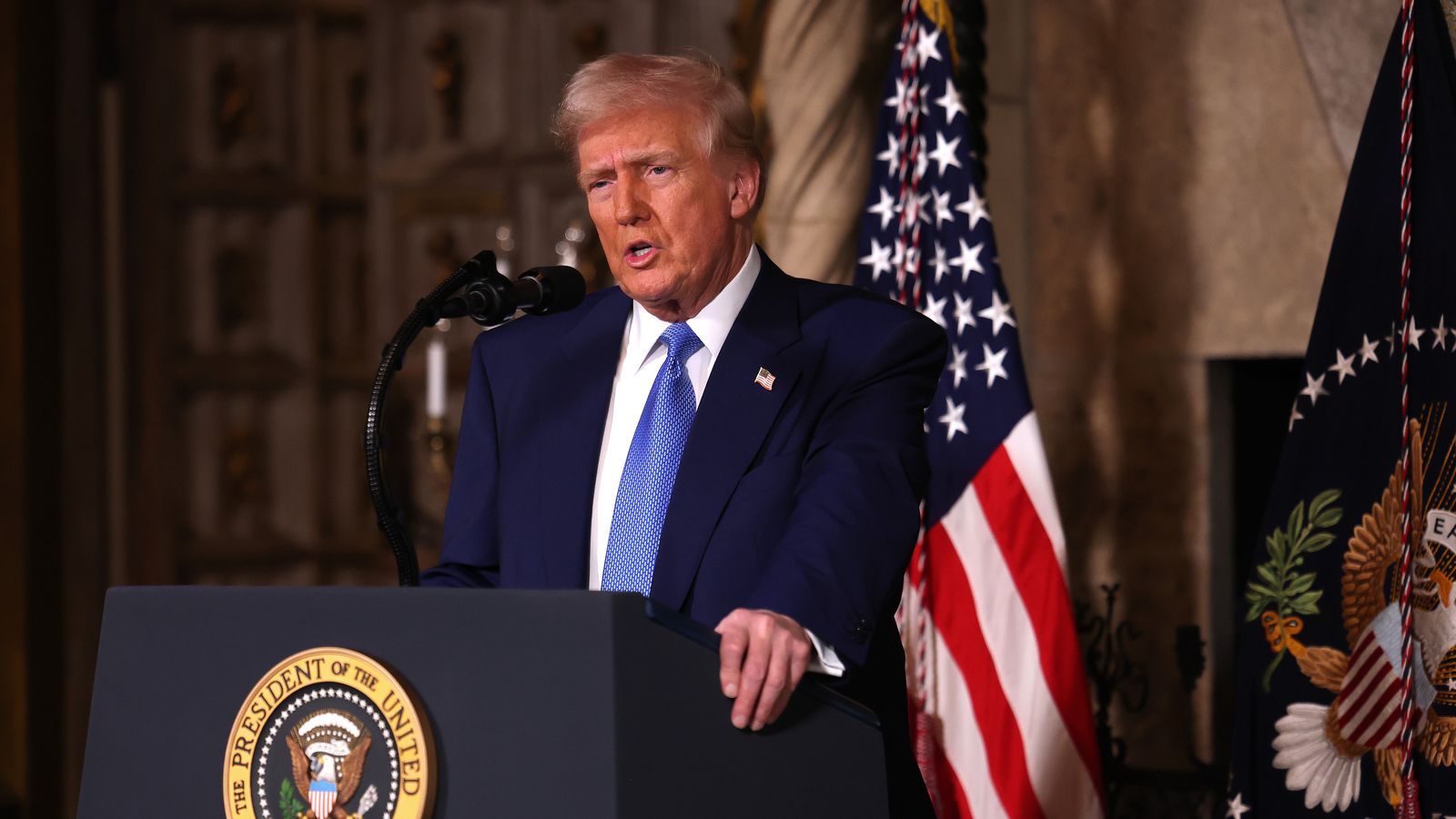
President Donald Trump announced on Monday, May 4, that he looks forward to meeting Chinese President Xi Jinping later this month. Speaking at a White House event, Trump described the upcoming trip as an important one. At the center of his message: a firm reminder to Beijing that the United States is ahead in artificial intelligence (AI) – the technology many experts consider the most decisive factor in global economic and military power for decades to come.
The summit is scheduled for May 14–15 in Beijing. It follows an earlier meeting between the two leaders in Busan, South Korea, in October 2025.
AI at the Heart of U.S.-China Competition
Artificial intelligence has become the defining battleground between Washington and Beijing. The United States currently holds a significant lead in advanced chip design and the manufacturing equipment needed to produce cutting-edge semiconductors – the hardware that powers AI systems. To protect that advantage, Washington has introduced strict export controls, limiting China's access to the most powerful chips.
Beijing has not stood still. Under Xi Jinping, China has poured resources into building its own AI and technology industries. In April 2026, the White House publicly accused China of large-scale theft of AI-related intellectual property – a charge that added another layer of friction ahead of the summit. China, in turn, has used its control over rare earth minerals – essential materials for batteries and electronics – as a counter-pressure tool.
Trade War Background: Still No Resolution in Sight
The technology dispute is part of a broader economic rivalry. A fragile trade truce, brokered in Busan, remains in place – but it is set to expire in November 2026, creating urgency on both sides to reach some form of understanding. Export license delays in the semiconductor sector have already caused real damage: a recent survey by the Center for Strategic and International Studies (CSIS) found that more than half of semiconductor firms reported losing business as a direct result of policy-driven bottlenecks.
Neither side appears willing to fundamentally change course. According to a 2026 CSIS survey, 57 percent of U.S. experts do not believe the relationship is stabilizing. Yet both governments have signaled a preference for managed competition over outright confrontation.
Human Rights: The Issues That Should Not Be Ignored
Human rights advocates are urging Trump to use the Beijing summit to do more than talk trade and technology. Freedom House, a leading democracy watchdog, has called on the administration to raise the cases of political prisoners held by the Chinese Communist Party (CCP) – including Hong Kong publisher Jimmy Lai and Christian pastor Ezra Jin, who was detained for leading an unregistered church network.
Freedom House experts also called attention to the ongoing repression of Uyghurs, Tibetans, and other minorities under CCP rule – as well as Beijing's continued threats against Taiwan and its dismantling of freedoms in Hong Kong. These issues, advocates argue, must not be traded away in pursuit of a trade deal.
What's at Stake
The May summit carries weight well beyond the immediate agenda. The outcome could affect global markets, the future of export controls, and the broader question of whether the world's two largest economies can manage their rivalry without triggering a deeper crisis.
For Trump, the trip is also politically significant at home. His approval rating has faced pressure from rising energy prices and economic uncertainty linked to ongoing Middle East tensions. A strong showing in Beijing – whether on trade, AI leadership, or human rights – could help reframe the narrative.
For the rest of the world, the message from Washington is straightforward: when it comes to artificial intelligence, the United States intends to stay ahead – and it will not let Beijing forget it.
.
Sources:
- Reuters / Al-Monitor – Trump calls Xi meeting important trip, says US leads in AI (May 4, 2026): https://www.al-monitor.com/originals/2026/05/trump-calls-xi-meeting-important-trip-says-us-leads-ai
- The Diplomat – The Real Role of a Trump-Xi Meeting (May 2026): https://thediplomat.com/2026/05/the-real-role-of-a-trump-xi-meeting/
- World Economic Forum – What's next for US–China relations? (May 2026): https://www.weforum.org/stories/2026/05/us-china-relations-trump-xi-summit-areas-cooperation/
- Freedom House – What Trump Should Discuss with Xi in Beijing: https://freedomhouse.org/article/freedom-house-experts-what-trump-should-discuss-xi-beijing
- Eurasia Review – What To Expect From The Trump-Xi Jinping 14-15 May Summit (May 4, 2026): https://www.eurasiareview.com/04052026-what-to-expect-from-the-trump-xi-jinping-14-15-may-summit-analysis/
.
What's Your Reaction?
 Like
0
Like
0
 Dislike
0
Dislike
0
 Love
0
Love
0
 Funny
0
Funny
0
 Wow
0
Wow
0
 Sad
0
Sad
0
 Angry
0
Angry
0










Comments (0)