

China Holds the Key to the Hormuz Crisis — and Washington Knows It
With a major U.S.-Iran war raging and global oil prices in turmoil, U.S. Treasury Secretary Scott Bessent is publicly pressing Beijing to use its unique leverage over Iran — and the diplomatic pressure is set to intensify when Presidents Trump and Xi meet in Beijing on May 14–15.

.
Bessent Fires a Direct Warning at Beijing
U.S. Treasury Secretary Scott Bessent put China squarely on the spot on Monday. Speaking live on Fox News, he demanded that Beijing step up its diplomatic efforts to persuade Iran to reopen the Strait of Hormuz — the narrow waterway through which roughly one-fifth of the world's oil normally flows.
"China, let's see them step up with some diplomacy and get the Iranians to open the strait," Bessent said.
His message was blunt and backed by an uncomfortable fact: China currently purchases around 90 percent of Iran's energy exports. In Washington's view, that makes Beijing not merely a bystander, but a direct financial backer of a government the U.S. designates as the world's leading state sponsor of terrorism.
The Hormuz Crisis: What's at Stake
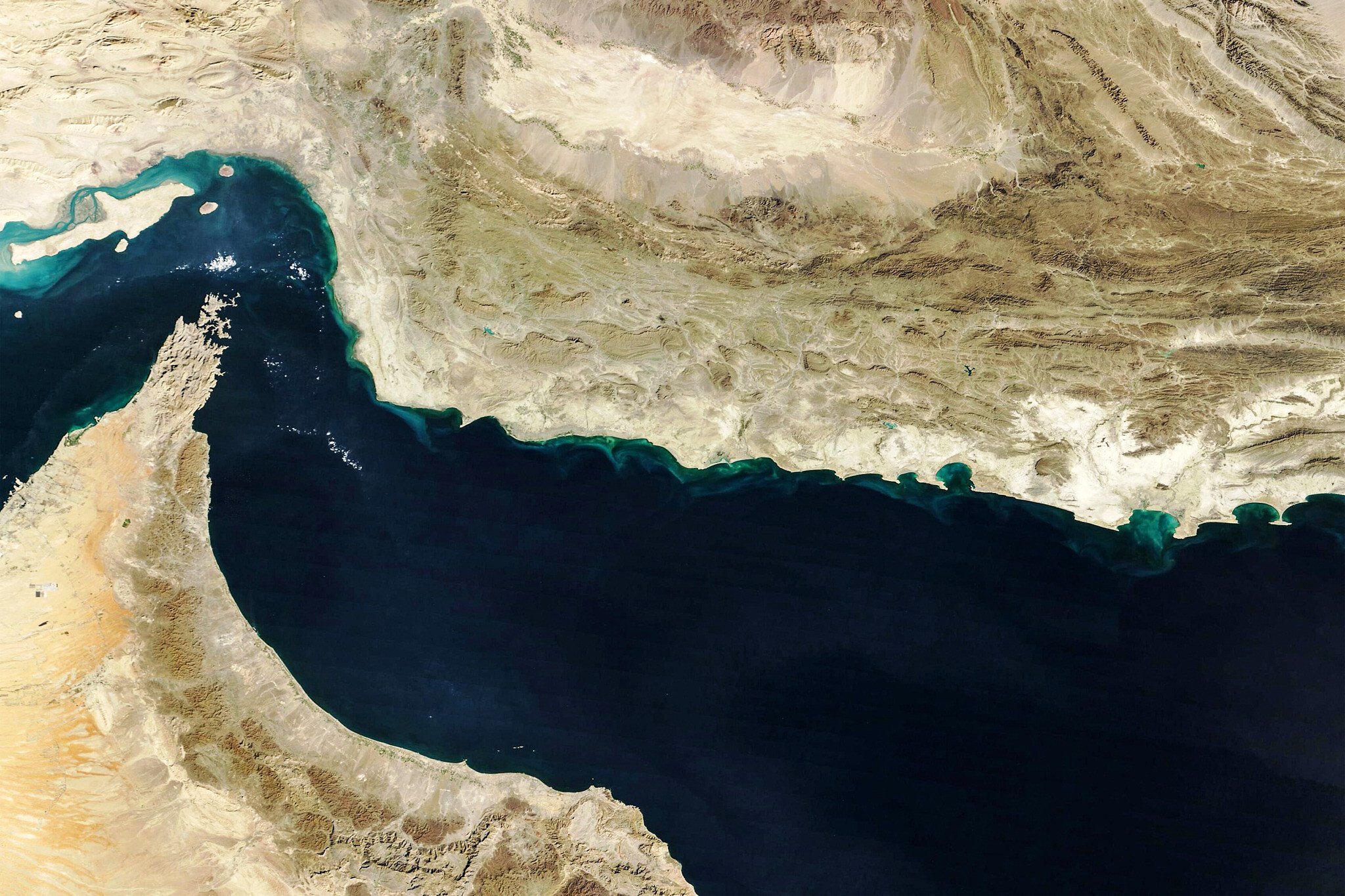
The Strait of Hormuz is one of the most critical chokepoints in global trade. Located between Iran and the Arabian Peninsula, it serves as the transit route for approximately 38 percent of globally traded crude oil, along with significant volumes of liquefied natural gas and refined petroleum products.
Since the United States and Israel launched military operations against Iran on February 28, 2026, Iran has effectively halted international shipping through the strait. The result has been an immediate and painful spike in global energy prices. The International Monetary Fund has already cut its 2026 growth outlook, citing the risk of a broader recession.
For the United States, reopening the strait is not just a strategic goal — it is also a domestic political priority. High fuel prices are hitting American consumers hard, and the White House is feeling the pressure.
Washington's Call to Action — and China's Silence
Bessent made clear that the United States is not asking China to deploy naval forces. Instead, he urged Beijing to exercise political and diplomatic influence over Tehran — influence that no other nation possesses to the same degree.
He also called on both China and Russia to stop blocking international efforts at the United Nations. In early April, both countries vetoed a UN Security Council resolution that would have encouraged nations to coordinate defensive escort missions for merchant shipping through the Hormuz corridor. Eleven of fifteen Security Council members voted in favor of the resolution; China and Russia voted it down, claiming the draft was biased against Iran.
Beijing's UN ambassador argued that the resolution failed to address the root causes of the conflict. Critics, however, pointed out that China's veto effectively protected a blockade that is strangling global trade.
The Trump-Xi Summit: A High-Stakes Meeting
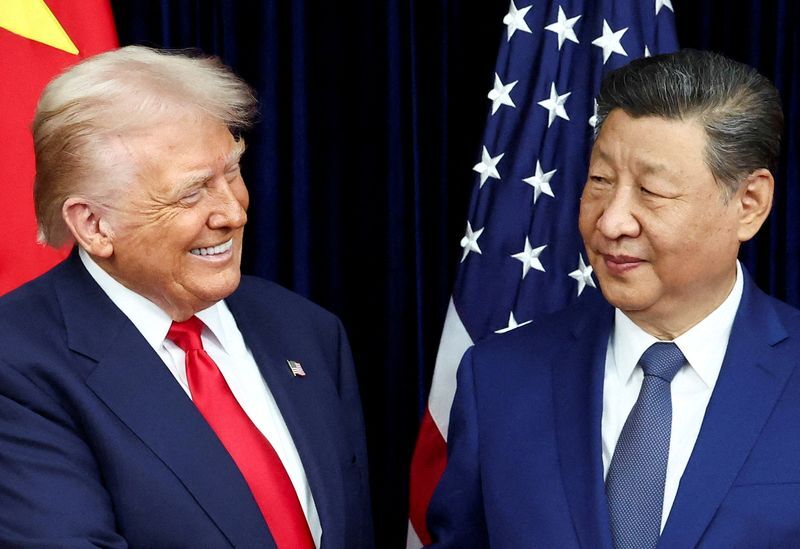
Bessent confirmed that the Iran crisis and the Hormuz situation will be formally addressed when President Donald Trump meets Chinese President Xi Jinping in Beijing on May 14 and 15. The summit will be the first visit by a sitting U.S. president to China since Trump's 2017 trip during his first term.
The meeting is being held against the backdrop of a carefully maintained bilateral truce. Trump and Xi reached a one-year trade ceasefire last October in Busan, South Korea — stepping back from the brink of a full-scale trade war that had seen tariffs on both sides briefly soar into triple digits. Bessent emphasized that both leaders remain committed to preserving that stability.
"We've had great stability in the relationship, and again, that comes from the two leaders having great respect for each other," Bessent said.
Oil Prices: Temporary Pain or Deeper Problem?
Despite mounting public concern, Bessent struck a confident tone on energy markets. He argued that the United States effectively controls the Strait of Hormuz through its naval blockade of Iranian shipping, and that a new U.S. Navy operation guiding commercial vessels through the waterway will bring prices down in the coming weeks.
"I am also confident on the other side of this, prices are going to come down very quickly," he said, describing the current price spike as a temporary disruption — painful in the short term, but manageable.
Whether that optimism proves justified will depend in large part on what Beijing decides to do next. China has long feared that its energy supply lines could be cut off by external powers. Now, with the Hormuz strait already partially disrupted by a war it did not start, Beijing faces a delicate calculation: how far to push Tehran, and how much goodwill to spend with Washington — all while hosting the American president in less than two weeks.
CCP's Calculated Ambiguity
China's ruling Communist Party has so far walked a careful line. Xi has repeatedly called for peace and positioned Beijing as a force for global stability — while simultaneously vetoing UN resolutions, continuing to absorb sanctioned Iranian oil, and shielding domestic refiners from U.S. penalties through legal injunctions issued by the Ministry of Commerce.
Analysts at the Council on Foreign Relations have noted that Beijing stands to gain geopolitically from prolonged U.S. military entanglement in the Middle East. As one observer put it: "The U.S. is fighting without winning; China is winning without fighting."
Whether that strategy survives contact with a determined Trump administration — and what deal, if any, emerges from the Beijing summit — may well shape the global energy order for years to come.
Sources:
- Reuters – Bessent urges China to step up diplomacy on Iran ahead of Trump-Xi summit (May 4, 2026): https://www.reuters.com/business/energy/bessent-urges-china-step-up-diplomacy-iran-ahead-trump-xi-summit-2026-05-04/
- CNN – An unfinished Iran war could give Xi the upper hand in Trump talks (May 4, 2026): https://www.cnn.com/2026/05/04/china/china-us-talks-iran-intl-hnk
- UN News – Security Council: Russia and China veto resolution on Strait of Hormuz (April 2026): https://news.un.org/en/story/2026/04/1167261
- Al Jazeera – Russia and China block UN resolution on Strait of Hormuz (April 7, 2026): https://www.aljazeera.com/news/2026/4/7/russia-and-china-block-un-resolution-on-strait-of-hormuz
- CNBC – Trump signals possible delay to Beijing summit as U.S. pressures China to help reopen Strait of Hormuz (March 16, 2026): https://www.cnbc.com/2026/03/16/trump-possible-delay-beijing-summit-china-iran-strait-of-hormuz-.html
- The Spokesman-Review – Trump risks showdown with Xi before summit over Hormuz blockade (April 15, 2026): https://www.spokesman.com/stories/2026/apr/15/trump-risks-showdown-with-xi-before-summit-over-ho/
.
What's Your Reaction?
 Like
1
Like
1
 Dislike
0
Dislike
0
 Love
1
Love
1
 Funny
0
Funny
0
 Wow
1
Wow
1
 Sad
0
Sad
0
 Angry
0
Angry
0












Comments (0)