

Wake up to Gout Pain? Natural Solutions for Relief and Uric Acid Balance


.
An overweight 8‑year‑old boy in Taiwan had a body mass index of 27. When he started to limp, his family took him to the doctor. To their surprise, the child was diagnosed with an acute gout attack as well as several other chronic health problems.
2 Effective Ways for Fast Pain Relief
Gout attacks often strike suddenly, typically in the middle of the night or early morning. The classic symptoms are intense burning heat, swelling, and severe pain in the big toe.1. Ice the Affected Area
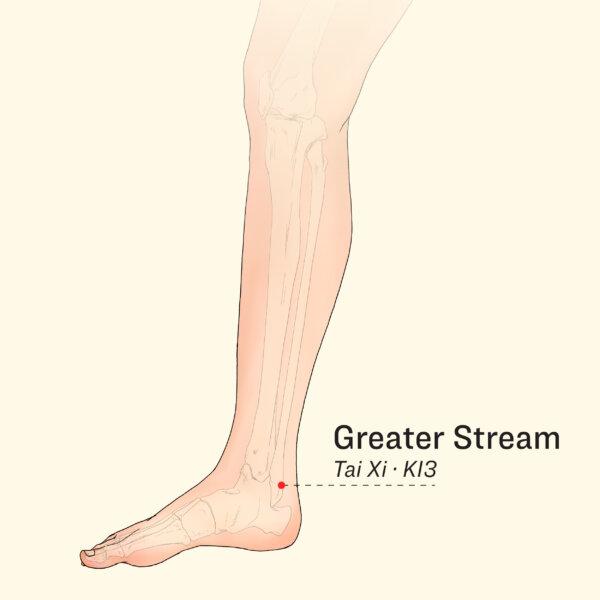
Wrap ice cubes in a towel and apply them to the red, swollen area to help lower the local temperature, reduce swelling, and alleviate pain.2. Press the Greater Stream Acupoint
.
The Epoch Times
.
Find the Greater Stream (Taixi, K13) point—it’s in the depression between the tip of the inner ankle bone (medial malleolus) and the Achilles tendon. Gently massage or press firmly on each side. This powerful Kidney meridian point can bring rapid relief during an attack and, when used regularly, supports kidney health, helping clear uric acid and prevent future flare-ups.
External Application of Natural Herbs for Pain Relief
Dr. Shu Rong, director of the Dr. Rong Clinic in Cambridge, UK, told The Epoch Times that certain common gout medications can strain the kidneys. For example, “Painkillers, steroids, and colchicine are all harmful to the kidneys, and are even more disadvantageous for gout patients with poor kidney function.”- Eggplant: Mash fresh purple eggplant into a pulp, add a small amount of honey, and mix into a paste.
- Dandelion: Rinse to clean, remove excess moisture, then mash it to a mud-like consistency, and add a little honey. Animal studies have found that dandelion leaf extract reduces uric acid levels. Fresh dandelions can be collected from field edges or roadsides.
- Plantago asiatica (Che Qian Cao): The preparation method is the same as for dandelion external application. Animal studies have found that the plantain herb’s effect in treating gout is comparable to that of the prescription anti-inflammatory medication, colchicine. Fresh Plantago asiatica can also be collected from roadsides.
- Cinnamon: Mix cinnamon powder with honey to form a paste.
- Fresh Ginger: Roast or warm a piece of fresh ginger, then mash it into a pulp.
TCM Diet Therapy for Uric Acid Excretion
Beyond external pain relief, preventing gout recurrence requires addressing underlying metabolic imbalances. The medicinal dietary soup Si Shen Tang (Four Gods Soup) is an ideal remedy for regulating metabolic function and promoting uric acid excretion, Hu said.Si Shen Tang (Four Gods Soup)
Ingredients*- 30 grams Coix seed (Job’s tears, or Yi Ren)
- 25 grams Poria cocos (Fu Ling)
- 60 grams Gordon euryale seed (Qian Shi)
- 60 grams lotus seeds
- 30 grams Chinese yam (Huai Shan, or Shan Yao)
- 1 to 2 chicken drumsticks
- 2 quarts water
- Soak Chinese yams in warm water for half an hour before use. Most bright white Chinese yams on the market have been treated with sulfur to preserve them.
- Cut chicken drumsticks into small pieces and blanch in boiling water; set aside.
- Wash all ingredients thoroughly, then add to a pot with the water. Bring to a boil over high heat, then reduce heat and simmer for approximately one hour. Add salt to taste, and it’s ready to serve.
Red Bean and Coix Seed Porridge
Physician Li Yingda from Cihang TCM Clinic in Taoyuan, Taiwan, recommends a dietary therapy recipe to promote uric acid excretion:- 50 grams adzuki beans (red small beans)
- 50 grams Coix seeds
- 6–8 cups of water
Wash ingredients thoroughly, then add to a pot with the water. Bring to a boil, reduce heat, and simmer for one hour. Then it’s ready to eat.
- Coix seeds can promote uterine contractions, so they are not suitable for pregnant women, especially in the first 3 months of pregnancy when the embryo is not yet stable, as there may be a risk of miscarriage.
- Adzuki beans are rich in potassium, so patients with kidney disease should not consume them in excess.
- The ingredients for both recipes are typically available at Asian supermarkets or health food stores.
Foods to Favor and Forgo
Medicinal therapies alone are insufficient—their full effectiveness depends on maintaining an appropriate daily diet, Li said. Without it, the benefits of treatment may be vastly reduced. He recommends that patients with gout drink sufficient water and increase their intake of fruits and vegetables. Adequate water intake increases urine volume, helping to flush out uric acid and reduce salt deposits; the mostly alkaline nature of vegetables and fruits can inhibit the crystallization of uric acid, lowering the risk of flare-ups.Hu suggests that increasing milk intake can help prevent gout, as the whey protein and casein in milk support uric acid excretion. For those who do not drink milk, unsweetened yogurt is a suitable alternative.
When it comes to foods to avoid, Hu advises caution based on the stage of the condition. During acute flare-ups, patients should avoid red meat, seafood, alcoholic beverages, and high-purine foods, including organ meats and fish skin. In the chronic phase, it is recommended to limit fried foods, alcohol, sugary drinks, and excessive intake of salt and sugar, and to avoid excessively spicy foods.
.
What's Your Reaction?
 Like
0
Like
0
 Dislike
0
Dislike
0
 Love
0
Love
0
 Funny
0
Funny
0
 Wow
0
Wow
0
 Sad
0
Sad
0
 Angry
0
Angry
0














Comments (0)