

Taiwan Should Deepen Trade With Democracies, Not China, Taiwanese President Says


.
TAIPEI, Taiwan—Taiwan should prioritise economic cooperation with other democracies rather than China, Taiwanese President Lai Ching-te said on Feb. 3, as his administration set out plans for deeper cooperation with the United States in key sectors, including artificial intelligence (AI) and critical minerals.
Speaking at a news conference at the Presidential Office, Lai praised the outcome of the sixth round of the U.S.–Taiwan Economic Prosperity Partnership Dialogue in Washington last week.
“Taiwan is on the right economic path and is striding confidently as it engages with the world. We have both the strength and the confidence to work with fellow democracies to steer the next generation of prosperity,” Lai said in Mandarin, according to a translation provided by his office.
“[My] administration will continue to pursue two major objectives: deepening Taiwan–U.S. economic and trade relations and diversifying our global presence in terms of technology. This will enable Taiwan’s industries to remain firmly rooted in Taiwan while further expanding their global presence and marketing worldwide.”
In 2025, Taiwan’s exports reached about $640 billion, with the United States overtaking China and Hong Kong as the top spot, according to Taiwan’s Central News Agency, citing Ministry of Finance data. The United States accounted for 30.9 percent of total exports, compared with 26.6 percent for China and Hong Kong combined.
Following the sixth round of talks, Lai said the cooperation between Taiwan and the United States wouldn’t be limited to a single industry, but it would encompass AI, digital infrastructure, criminal minerals, and drones.
“I would like to emphasize that industrial complementarity and regulatory reliability are like two legs that together keep Taiwan–US cooperation standing,” Lai told reporters. “Accordingly, Taiwan will accelerate alignment with international trade standards, ensure a predictable and transparent legal environment, and enhance industrial alignment with the US on the basis of mutual trust and mutual benefits, jointly building resilient and competitive global supply chain networks.”
A day before Lai’s news conference, KMT’s Deputy Chairman Hsiao Hsu-tsen arrived in China for a think-tank exchange with the Chinese Communist Party (CCP). According to a readout released by the party, Hsiao told the opening of the forum that “peaceful development” serves Chinese and Taiwanese interests.
“We should cooperate across the Taiwan Strait to earn money from the world, rather than oppose each other across the strait and let foreign countries reap the benefits, exploiting Taiwan and hollowing it out,” Hsiao said.
When asked about Hsiao’s trip to China, Lai said Taiwan was willing to engage in talks with Beijing, but only if they were conducted on the basis of parity and mutual respect, and if China respected the existence of the Republic of China, Taiwan’s official name.
China’s communist regime, officially called the People’s Republic of China, seeks to bring Taiwan under its control, viewing the self-governing island as a breakaway province that must be united with the mainland.
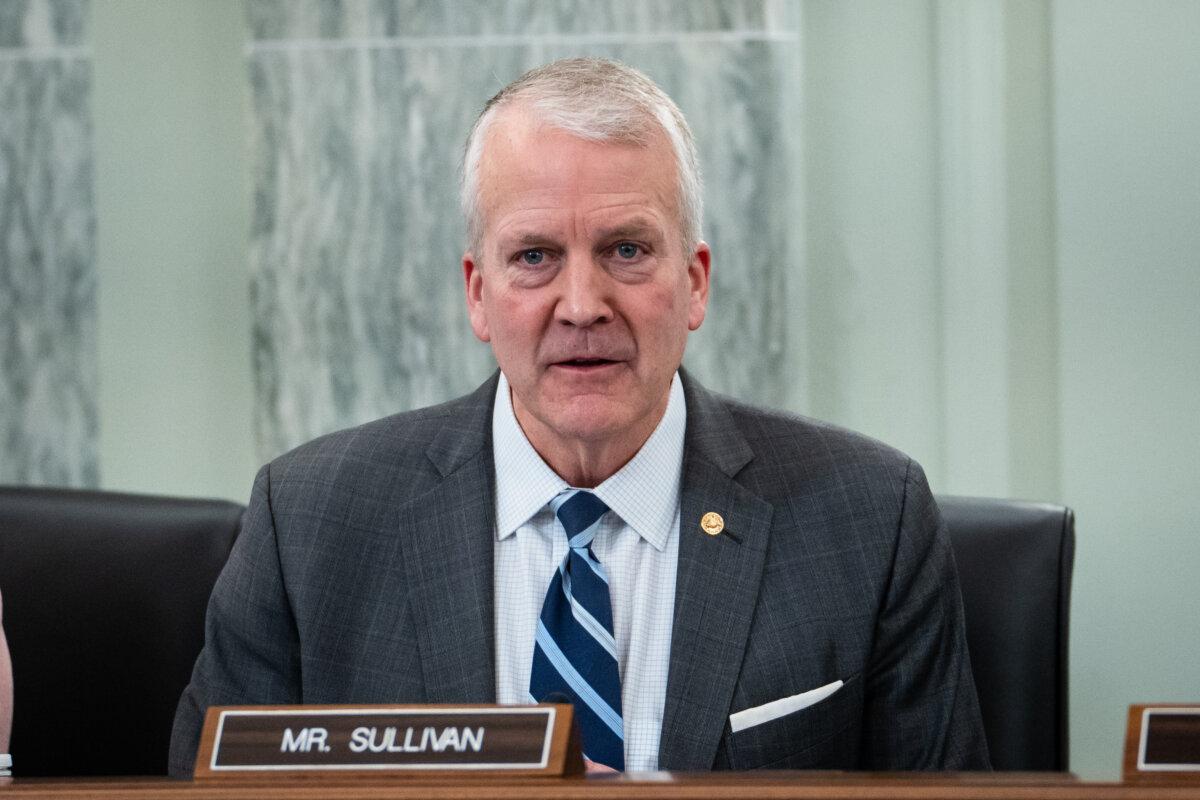
In a Feb. 2 post on X, U.S. Sen. Dan Sullivan (R-Alaska) said that Lai’s special defense budget was important.
“Taiwan’s legislature adjourned last week without passing the budget necessary for Taiwan to defend itself. Meantime, the leadership of the opposition party responsible for this, the KMT, is in Beijing meeting with the CCP and planning bigger engagements,” Sullivan wrote.
“It doesn’t take a genius to figure out what’s going on here. I’ve warned before - short changing Taiwan’s defense to kowtow to the CCP is playing with fire.”
When asked about Sullivan’s remarks, Lai pointed to the economic achievements of the past 10 years under DPP governments led by himself and his predecessor, Tsai Ing-wen.
“Do we want to continue collaborating with the U.S., Japan, Europe, and other allied nations, or again lock ourselves into China?” Lai told reporters at the news conference.
What's Your Reaction?
 Like
0
Like
0
 Dislike
0
Dislike
0
 Love
0
Love
0
 Funny
0
Funny
0
 Wow
0
Wow
0
 Sad
0
Sad
0
 Angry
0
Angry
0













Comments (0)