

Rubio Meets With Chinese Minister in Munich Ahead of Trump’s China Visit


.
Secretary of State Marco Rubio met with Chinese Foreign Minister Wang Yi on Feb. 13 in Germany on the sidelines of the Munich Security Conference.
The officials did not give remarks before or after the meeting, and the departments have not yet released readouts.
Rubio spoke to reporters before his departure for Munich on Feb. 12, referring to the conference as taking place “at a defining moment” in a fast-changing world.
“The old world is gone,” Rubio said. “We live in a new era in geopolitics, and it’s going to require all of us to sort of reexamine what that looks like and what our role is going to be.”
Rubio said he was scheduled to meet with Ukrainian President Volodymyr Zelenskyy during his two-day trip, and would also have conversations with Slovakia and Hungary about their purchasing of Russian energy. He said meetings with Russia were not on the agenda.
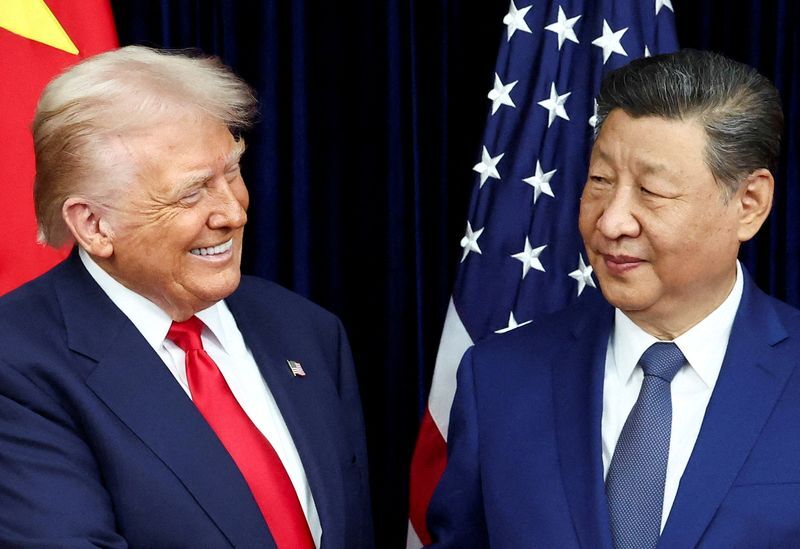
This is Rubio and Wang’s second meeting and comes ahead of a planned trip for President Donald Trump to China in April as the two countries maintain a trade truce after last year’s heightened tensions.
He said trade, military, Taiwan, Iran, and the war between Russia and Ukraine were discussed, along with his upcoming trip. Trump has also said that Xi will be visiting Washington sometime this year.
In a Truth Social post after the Feb. 4 call, Trump said China had committed to increasing its purchases of U.S. soybeans to 25 million metric tons the next season.
The “extremely good” relations Trump described come after market-rocking trade actions taken by the two nations last year, which were rolled back after the bilateral meeting between Trump and Xi in October 2025. The countries largely agreed to one-year pauses on various tariffs, fees, and other restrictions, and the United States secured Chinese cooperation in curbing the fentanyl crisis.
One of the most significant moratoriums was the one placed on Beijing’s new licensing regime for global sales of anything containing critical minerals mined and processed in China. The move was seen as highly disruptive to the global supply chain and widely condemned by the international community.
After the October bilateral meeting in South Korea, Beijing agreed to pause the export controls for a year, and Trump administration officials previewed “warp speed” measures to counter Beijing’s monopoly on the critical minerals used in nearly all manufacturing of electronics.
What's Your Reaction?
 Like
0
Like
0
 Dislike
0
Dislike
0
 Love
0
Love
0
 Funny
0
Funny
0
 Wow
0
Wow
0
 Sad
0
Sad
0
 Angry
0
Angry
0















Comments (0)